Bidspirit auction | [D. JOSÉ I / D.
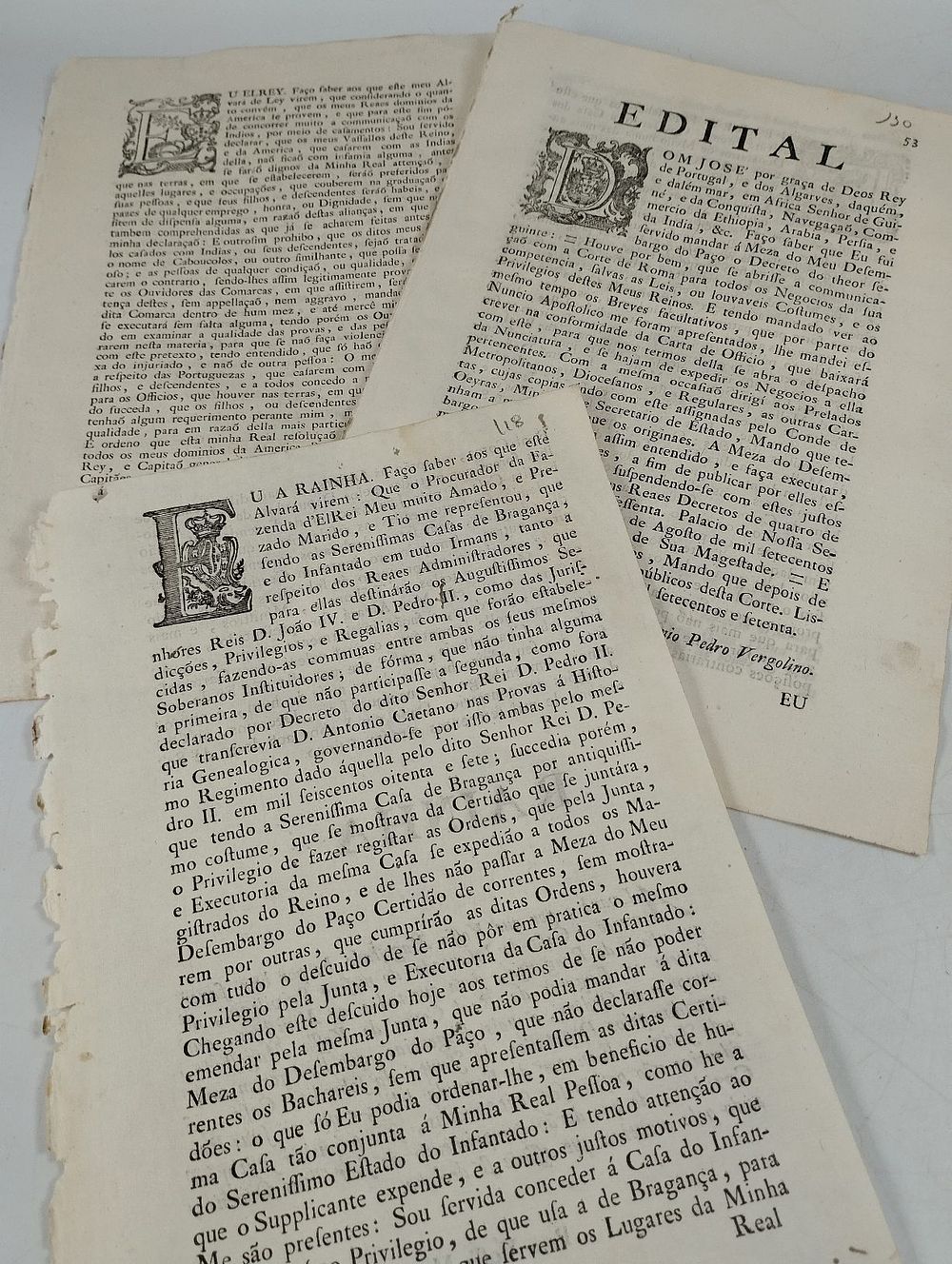
[D. JOSÉ I / D. MARIA I]. NOBREZA — Privilégios, Confisco e Casamentos Mistos. 1755–1785. - [D. JOSÉ I / D. MARIA I] NOBREZA — Privilégios, Confisco e Casamentos Mistos . 1755–1785. 3 diplomas: 1 Alvará de Lei, 2 Alvarás. A set of three decrees concerning the legal status of nobles and the upper classes of Portuguese society: the equalization of privileges between the Royal Houses, the confiscation of property due to unworthiness, and the policy of integrating the indigenous people of Brazil through marriages with Portuguese citizens. The three decrees document different—and not always obvious—aspects of the nobility and the honors policy of the Josephite and Marian states. March 22, 1755 (King José I) — Declares that vassals of the Kingdom and of America who marry Indigenous women from Brazil will not suffer any infamy; on the contrary, they will be worthy of royal attention and preferred in lands and occupations; the same applies to Portuguese women who marry Indigenous men and their descendants; a fundamental decree of the policy of integrating the Indigenous peoples of Brazil. August 31, 1770 (King José I) — Declares Estevão Soares de Mello and his sister Teresa de Mello unworthy and deprived of all Crown property, Orders and patrimonies, transferring them to their successor Henrique de Mello de Sousa e Lacerda; an example of confiscation for unworthiness applied to a noble family. September 2, 1785 (Queen Maria I) — Grants the House of Infantado the same privileges as the House of Braganza, imposing on royal ministers the obligation to obey the orders of the Deputies of her Junta; equalization of the privileges of the two main Portuguese Royal Houses. The collection documents, in three decrees of very different nature and scope, the fluidity of noble categories in the Josephite and Marian policies: on the one hand, the openness to miscegenation with the indigenous people of Brazil as a colonization policy; on the other, the punishment of unworthiness with the total confiscation of property; and also the reorganization of privileges among the Royal Houses. This documentation is of interest for the study of the nobility, colonial politics, and the social history of 18th-century Portugal. ⚑ Auto-translated via Google Translate