Bidspirit auction | [D. JOSÉ I / D.
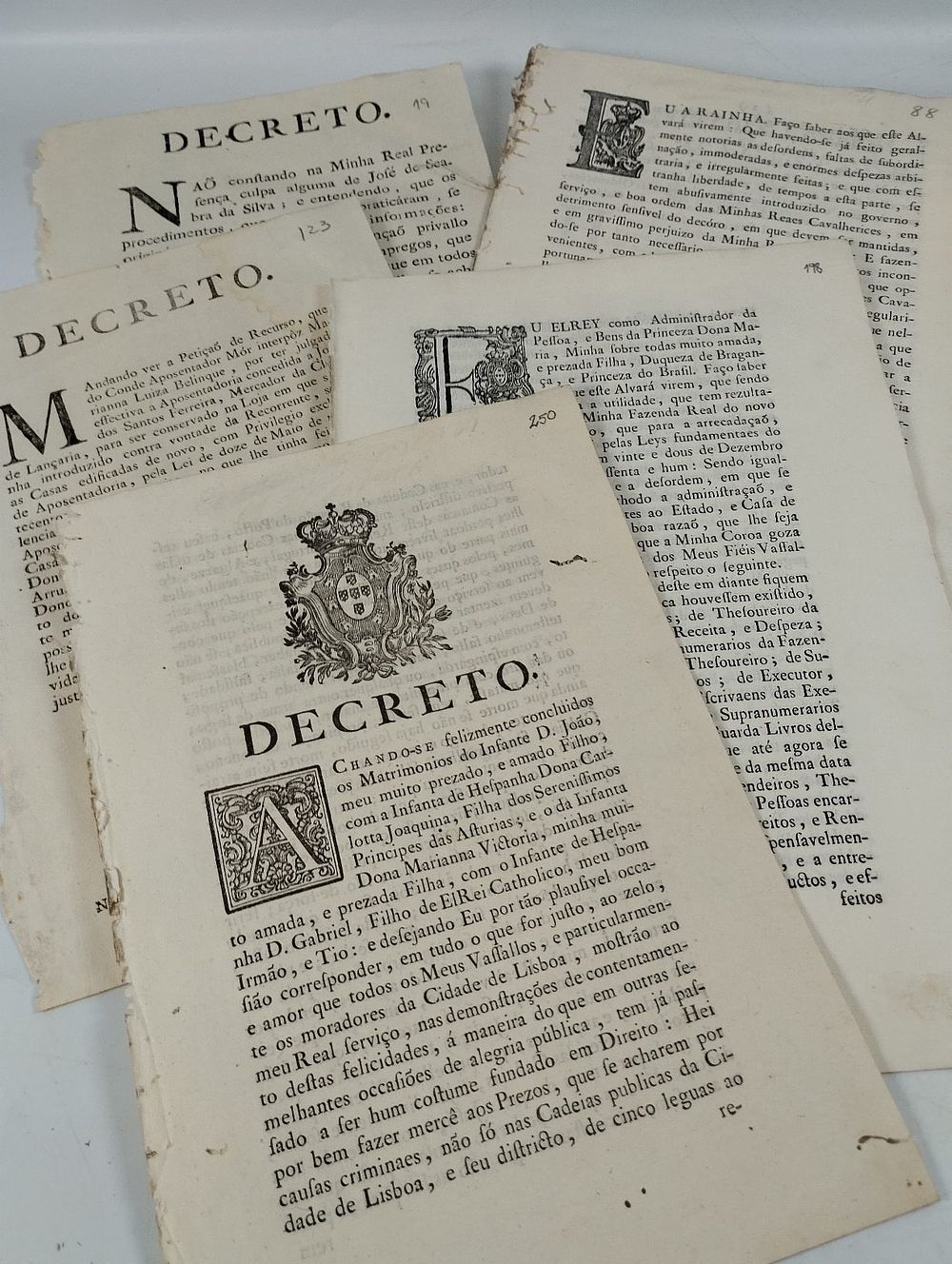
[D. JOSÉ I / D. MARIA I]. GRAÇA E MERCÊ RÉGIA — Indultos, Reabilitações e Privilégios. c. 1765–1787. - [D. JOSÉ I / D. MARIA I] GRAÇA E MERCÊ RÉGIA — Indultos, Reabilitações e Privilégios . c. 1765–1787. 5 diplomas: 3 Decretos, 1 Alvará, 1 Alvará. A collection of five decrees concerning the exercise of royal grace and mercy: rehabilitations of persecuted individuals, general pardons, regulation of Royal Knighthood, management of the House of Braganza, and decisions on retirement appeals. Royal grace—the monarch's ability to pardon, rehabilitate, and grant favors—was one of the most visible manifestations of sovereignty, distinguished from common justice by its arbitrary and personal nature. The decrees gathered here document different facets of this dimension of royal power. c. 1765 (King Joseph I) — King Joseph I, as Administrator of the Person and Property of Princess Maria (Duchess of Braganza and Princess of Brazil), establishes a new method for the collection and distribution of the Revenues of the House and State of Braganza; a decree governing the management of the main dynastic domain. October 21, 1778 (Queen Maria I) — Order to erase from all books any order registered against José de Seabra da Silva, acknowledging false information; reinstatement of honors and employments; license to print; reinstatement of a political figure exiled during the Pombaline period. February 12, 1783 (Queen Maria I) — Orders the Instructions and Orders attached to the same Royal Decree to be observed and kept as Regulations for the government of the Royal Knights, until a separate set of Regulations is published. July 2, 1787 (Queen Maria I) — Decides on appeal that the Chief Chamberlain acted justly in confirming the retirement of João dos Santos Ferreira (Lance Merchant) to new houses; royal resolution of a retirement dispute. April 12, 1785 (Queen Maria I) — On the occasion of the marriages of Prince John with Carlota Joaquina of Spain and of Princess Mariana Victoria with Prince Gabriel of Spain, she grants royal pardon to prisoners convicted of criminal offenses in the jails of Lisbon and its district, with the exception of the enumerated serious crimes; general pardon on the occasion of dynastic marriages. The collection documents the gracious dimension of royal power in five distinct modalities: the management of the Braganza domain, the rehabilitation of political prisoners, the regulation of chivalry, the resolution of retirement conflicts, and the general pardon on the occasion of dynastic alliances. This documentation is of interest for the study of the Portuguese monarchy and its governing practices during the Marian period. ⚑ Auto-translated via Google Translate