Bidspirit auction | [ÁLBUM DE RECORDAÇÕES]. Lisboa. 1861-1866.
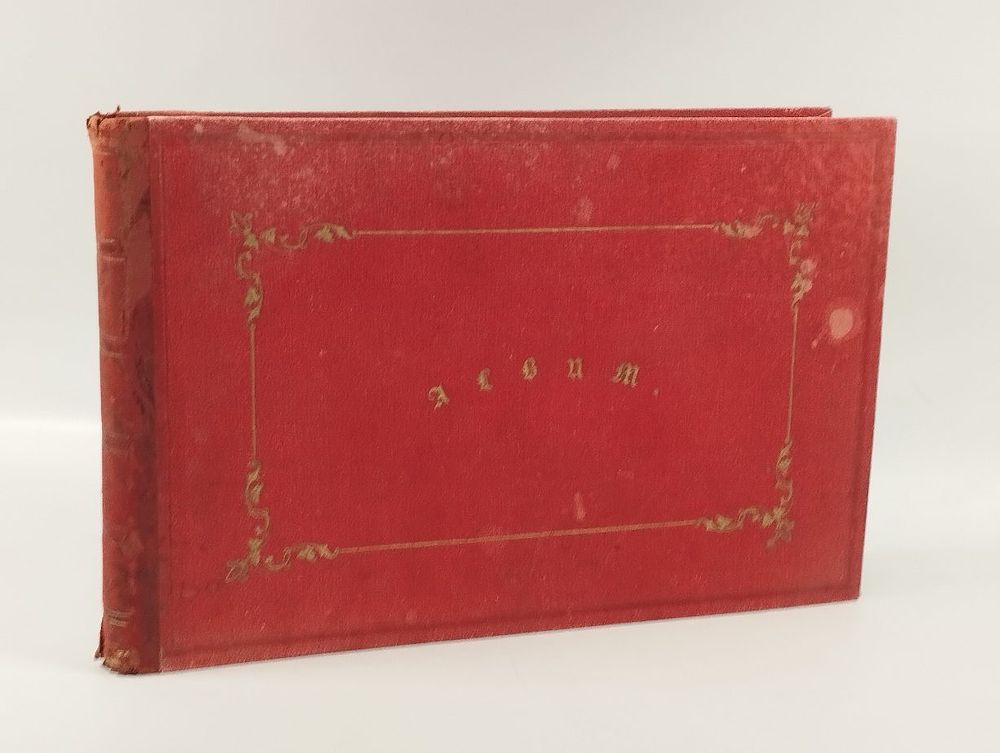
[ÁLBUM DE RECORDAÇÕES]. Lisboa. 1861-1866. - [ÁLBUM DE RECORDAÇÕES] . [Álbum de autógrafos, poesia manuscrita e desenho e aguarela originais, com contribuições de diversas mãos]. Lisboa, 1861-1866. manuscrito e ilustrado sobre papel; 18 fls. com conteúdo (tarjas manuscritas com nomes autógrafos, poesia autógrafa, desenho e aguarela originais), num total de 64 ff.; profusamente ilustrado com desenhos a lápis e a pena e aguarelas originais, assinados por diferentes mãos; encadernação da época em tela vermelha com ferros a ouro na pasta anterior (”ALBUM”);190x290 mm. A Lisbon souvenir album, with autograph dates between 1861 and 1866, bringing together in a single volume three types of testimony: two pages of handwritten labels, drawn in trompe l'oeil style, each with the autograph name of a family member or friend; handwritten poetry offered by different authors; and a collection of original drawings and watercolors. Among the labels are names from 19th-century Lisbon society, including the Baron and Baroness of Villa Cova. The poetic component includes dated and signed compositions, such as ”Amo a Patria” (I Love the Country), by António Florêncio de Sousa Pinto (Lisbon, 1861), and verses in Portuguese followed by a dedication in French by Maria Victoria d'Almeida Júnior (Lisbon, August 4, 1866): ”La vie est un passage rapide, il faut savoir profiter de ce rapide voyage ! C'est pour cela que je ne m'excuse pas d'écrire dans votre Album.” (Life is a fleeting passage, one must know how to take advantage of this rapid journey! That is why I excuse myself from writing in your album.) The graphic component stands out above all: a pen drawing entitled Aurora , signed by Rodrigues (1861), an allegorical figure of good execution; landscapes and scenes in pencil and pen signed by Aguiar and C. Pereira (1861-1862); and two watercolors of ornithological and entomological subject matter of careful execution, apparently by the same hand that signs ”Emília C. ... de Oliveira” - possibly identifiable with Emília Carlota Freire de Oliveira whose name also appears in the album. A piece of necessarily unique nature, whose interest lies primarily in the quality and variety of the original artistic component and in the portrait it offers of the family and social circles of Lisbon in the 1860s. ⚑ Auto-translated via Google Translate