Bidspirit auction | The Esnoga a monument to
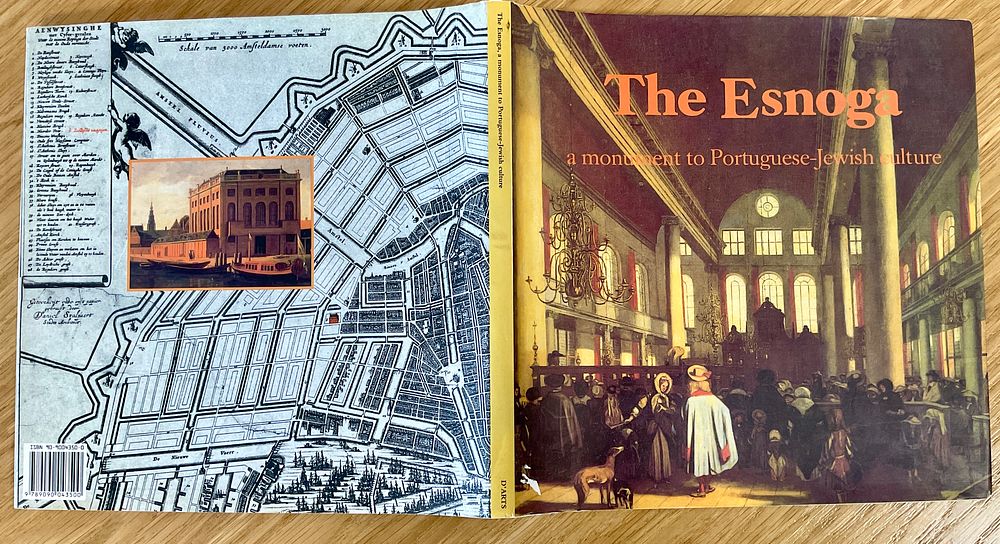
The Esnoga a monument to Portuguese Jewish Culture. Amsterdam. Second edition. 2001. 95 pages. HC. DJ. Good condition. 21.5 x 21.5 cm. 550 grams - ”The Esnoga: A Monument to Portuguese-Jewish Culture” is a well-known publication dedicated to the history, architecture, and cultural significance of the Portuguese Synagogue—often called the Esnoga or Snoge—in Amsterdam. The second edition, released in 2001, builds on the work of its initial publication, offering updated research, enriched illustrations, and refined scholarly insights into one of the most important symbols of Jewish heritage in the Netherlands. Historical Context of the Esnoga: The Portuguese Synagogue in Amsterdam, completed in 1675, was founded by Sephardic Jews who originally hailed from the Iberian Peninsula (Portugal and Spain). Having fled religious persecution—first from Spain’s 1492 expulsion, then later from pressures under Portuguese rule—they eventually found refuge in the more religiously tolerant Dutch Republic. By the mid-17th century, Amsterdam’s Sephardic Jewish community had grown in both wealth and influence, enabling them to erect one of the largest and most imposing synagogues of its time. This monumental building, known as the Esnoga, quickly became a beacon of Jewish religious life, scholarship, and cultural expression. Architectural Significance: The Esnoga’s structure is striking for its simplicity, majesty, and adherence to a classical Baroque style. It was designed by the noted architect Elias Bouman and remains renowned for its vast wooden interior, soaring pillars, and abundant natural light filtering through high-set windows. Uniquely, the synagogue was constructed without interior columns interrupting the congregation’s view of the bimah (pulpit), a daring choice at the time. A sign of the community’s self-confidence and new freedoms, the Esnoga was deliberately monumental—both as an architectural feat and as an affirmation of Jewish identity after centuries of oppression. Cultural and Religious Importance: Beyond its architecture, the Esnoga became a hub for Sephardic Jewish life. It housed an unparalleled collection of Judaica, religious manuscripts, and a rich intellectual tradition nurtured by prominent rabbis and scholars. Over the centuries, it withstood changes in the political and social landscape, surviving World War II intact, and today continues as an active place of worship. Even now, candles (rather than electric lights) illuminate many services and commemorations, preserving historical ambiance and tradition.