Bidspirit auction | Weimar Jewry and the Crisis
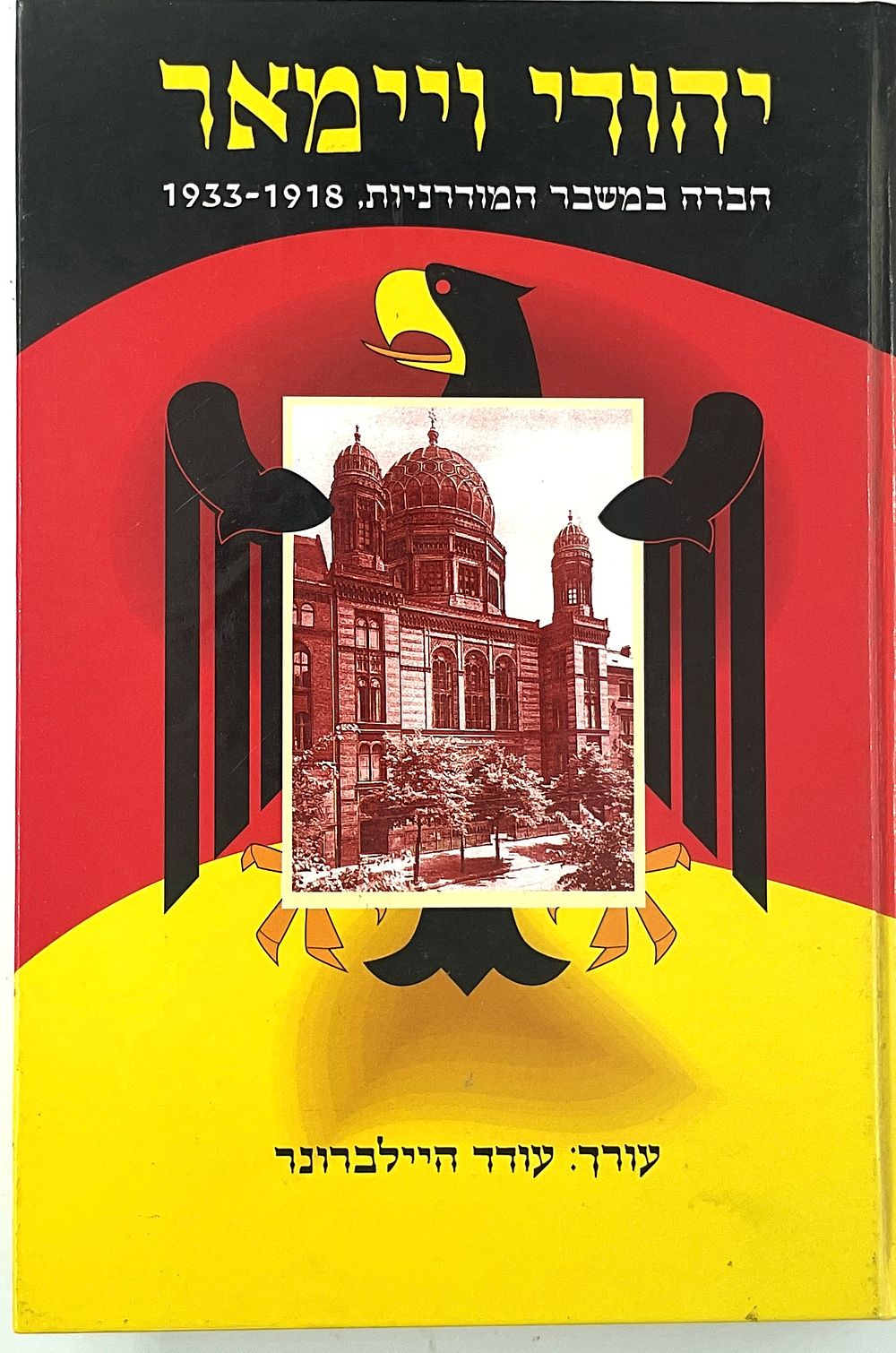
Weimar Jewry and the Crisis of Modernization 1918-1933. 1994. 318 pages. HC. Quite good condition. 600 grams - This book explores Jewish life in Germany during the Weimar Republic (1918–1933) — not merely as a prelude to the Holocaust, but as a rich, dynamic period in its own right. It portrays a vibrant and multifaceted Jewish society that faced both opportunity and upheaval within the broader context of German modernity. Why It’s Significant The book examines how German Jews were not a separate enclave, but an integral part of the social and cultural fabric of the Weimar era — a time of openness, modernization, and creativity, yet also of anxiety and deep societal tension. It challenges the common narrative that views the Weimar years only as a tragic “interlude” before catastrophe, instead highlighting the achievements, intellectual energy, and cultural experimentation that flourished during this time. The central theme — the crisis of modernity — allows readers to see how Jews navigated the rapid transformations of urban life, technology, economics, and politics, all while negotiating questions of identity, belonging, and visibility. Rather than a story of inevitable decline, the book presents Weimar Jewry as living within a paradox: a community at the height of modern integration, yet standing on unstable ground. Main Insights How German Jews — particularly in the Weimar years — redefined their social and civic place in a post-war democracy that promised equality but was shaken by uncertainty. The internal tensions between integration and distinctiveness, between religious tradition and secular modernity, between confidence in progress and fear of backlash. The fragility of modern life — as economic depression, political instability, and the rise of extremist ideologies reshaped both German society and its Jewish citizens. A nuanced understanding of German history between the wars: how both Jews and non-Jews alike experienced modernity as a source of creativity and crisis. Who Will Find It Valuable Readers interested in Jewish and European history who wish to understand the Weimar period on its own terms — as more than a prelude to tragedy. Students and scholars of modernity, urban culture, or identity studies, looking for a Hebrew-language work that synthesizes leading historical research. Anyone seeking to understand how Jewish modernity unfolded within — and contributed to — one of Europe’s most turbulent and fascinating decades. Structure and Publication The volume is a collection of scholarly essays under a unifying editorial vision by Oded Heilbronner. Published by Magnes Press in collaboration with the German History Center at the Hebrew University of Jerusalem, it runs about 324 pages. Its style combines historical analysis with cultural interpretation, offering a deeply contextualized portrait of Jewish life amid the transformation — and disintegration — of modern Germany.