Bidspirit auction | Gabriele Basilico
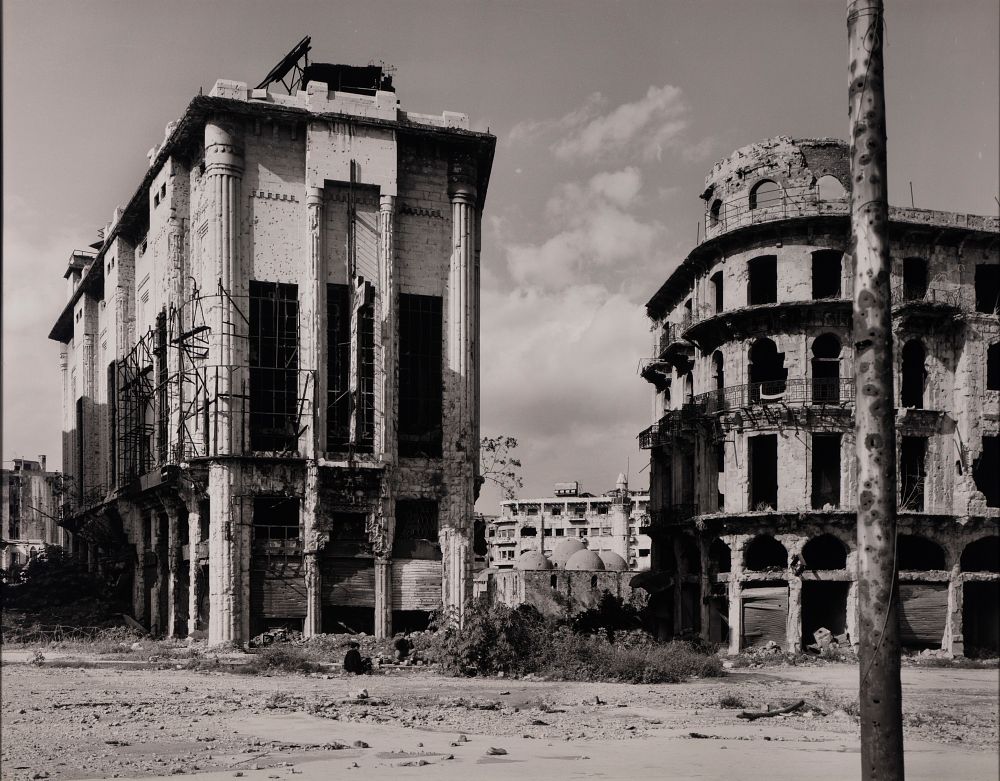
Gabriele Basilico - Gabriele Basilico (1944 - 2013) - Beirut (Rue Dakar), 1991. Gelatin silver print, mounted on dibond, printed in 2007 cm 120 x 150 | 47.2 x 59.1 in. Edition 14 of 15 Photographer's caption label signed in black ink on the verso Framed PROVENANCE VM artecontemporanea, Rome EXHIBITIONS Exemplar in other edition in permanent collection at Castello di Rivoli Museo d'Arte Contemporanea, Rivoli-Turin LITERATURE Basilico. Beyrouth, Art&, Udine, 1994 Basilico. Beyrouth, La Chambre Claire, Paris, 1994 Gabriele Basilico, Beirut 1991 (2003), Baldini Castoldi Dalai Editore, Milan, 2003 Opera accompagnata da Certificato d'autenticità rilasciato da VM21 artecontemporanea, Roma firmato dal fotografo After graduating in architecture, Gabriele Basilico (Milan, 1944 - 2013) dedicated himself totally to photography, immediately revealing an analytical and dry style following Walker Evans' model, thanks to which in 1984 he was the only Italian to participate in the Mission Photographique de la DATAR. Since then, he has had many assignments in metropolises all over the world, from Beirut to Bilbao, from San Francisco to Shanghai, from Moscow to Paris, not forgetting Rome and Milan, exhibited in museums and institutions and published in carefully edited photographic books. His awards include the Prix Mois de la Photo, the Osella d’oro of the Venice Biennale. With Ritratti di fabbriche, this was the image for the cover of the first 1981 edition of the book, Gabriele Basilico - who had also made a name for himself with reportage-style works such as ‘Dancing in Emilia’ - gained great attention from critics for his important reflection on the era of deindustrialisation. Shot in Milan with a Nikon camera equipped with an off-center lens and the discipline that comes from his training as an architect, this work recalls the aesthetics dear to Hilla and Bernd Becher, masters of the Düsseldorf Academy. When in 1991 he was commissioned to document the damage of fifteen years of war inflicted on Beirut before its reconstruction, Basilico was already working at the view camera, focusing on the ruins but hinting, in the perspectives glimpsed, the possibilities of a rebirth. What emerges here is that rigorous vision and ability to interpret the landscape in more humanistic terms that remain the fundamental characteristics of his style.