Bidspirit auction | L. Obolsky
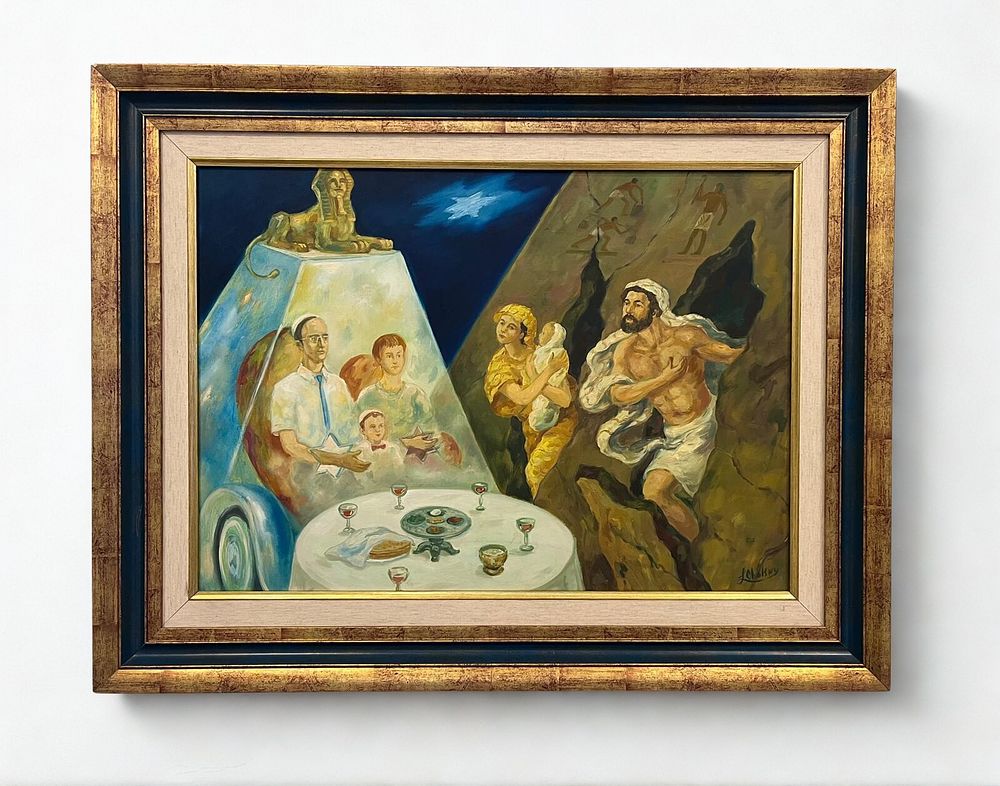
L. Obolsky - “The Night of Passover”, 2003. Oil on canvas, 70 × 50 cm. Signed and presented in its original gallery frame. A narrative and symbolically rich work by L. Obolsky, weaving together past and present, myth and reality, and the intimate sphere of family tradition with the broader story of collective memory. At the center of the composition unfolds a Passover Seder scene: a family gathered around a festive table, illuminated by a soft, almost theatrical light. Their presence conveys warmth, intimacy, and quiet reflection. Hovering above them rises an Egyptian sphinx, appearing as both a historical memory and a powerful symbol of the bondage from which the journey toward freedom began. The family figures are rendered with sensitivity and humanity, embodying the continuity of ritual and shared identity across generations. In contrast, the right side of the painting presents a dramatic episode drawn from the story of the Exodus from Egypt. Figures in motion, almost fleeing, emerge from a rugged and emotionally charged landscape. Their urgency stands in striking opposition to the stillness of the Seder table, creating a compelling visual dialogue between lived tradition and the historical events that gave rise to it. The work moves fluidly between storytelling and symbolism. Rather than illustrating a biblical narrative in a literal manner, Obolsky explores the way history is remembered, retold, and experienced anew through ritual. The Exodus is not depicted as a distant event confined to the past, but as a living memory renewed each year around the family table. The contrast between movement and stillness, public history and private devotion, lends the painting emotional depth and intellectual resonance. It invites viewers to reflect on themes of exile and belonging, oppression and liberation, remembrance and transmission. Both visually engaging and culturally meaningful, this is a work that speaks not only to Jewish history but also to the universal human desire to preserve identity, pass on stories, and find meaning through shared traditions.