Bidspirit auction | Sefer Yesod Zohar Harakia by
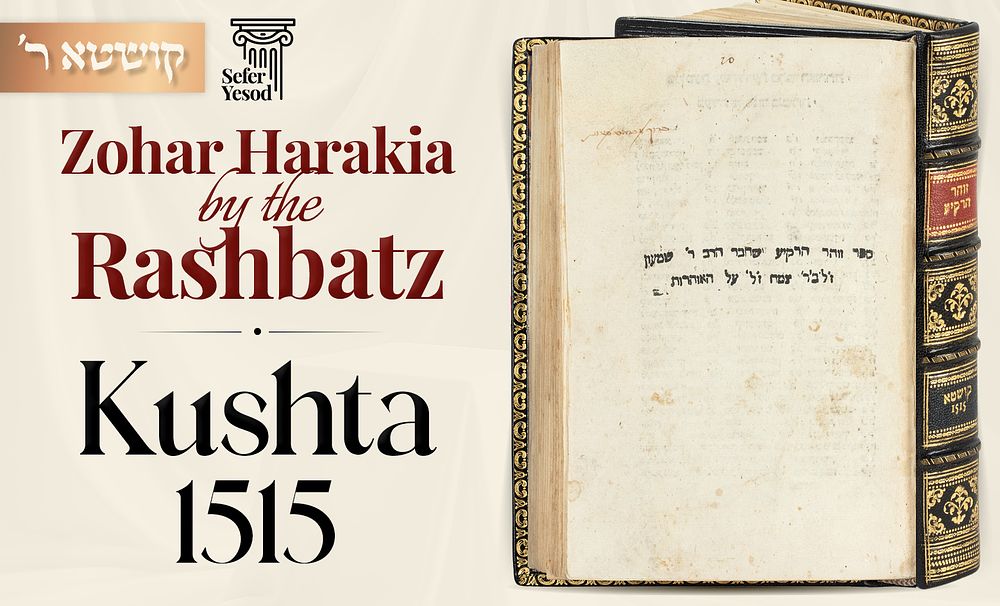
Sefer Yesod Zohar Harakia by the Rashbatz First Edition. Constantinople, 1515. * Explanations on minyan hamitzvos (counting of the 613 commandments) by Rabbi Shimon ben Tzemach Duran, author of the Tashbetz. An impressive copy of the first and exceedingly rare edition. Even the Chida, who was well-acquainted with rare sefarim, writes about it in Shem HaGedolim that ”it is not to be found at all.” Likewise, the Sho’el U'Meishiv, in his approbation to the Lemberg edition of 1858, writes that it is “extraordinarily rare.” This sefer was written as a commentary on the famous poem Azharos composed by Rabbi Shlomo Ibn Gabirol. However, beyond the commentary, its primary focus is the enumeration of the mitzvos, engaging extensively with the positions of the Rambam and the critiques of the Ramban. It is considered a foundational work on the subject of the 613 mitzvos. In the beginning of the sefer, there is a lengthy introduction where the Rashbatz discusses the fourteen principles laid out by the Rambam to determine which commandments are to be included in the tally of the 613 and which are not. The Azharos is a classical piyut (poem) listing the 613 commandments. In the past, it was customary to recite this piyut on the festival of Shavuos, the day commemorating the giving of the Torah. Rabbi Shlomo Ibn Gabirol (c. 1020-1057) was one of the most notable Sephardic Jewish leaders during the Golden Age of Spain. He was born at the beginning of the Rishonim period in Málaga, Spain, but spent the majority of his life in Saragossa and passed away in Valencia. Rabbi Shlomo was a world-acclaimed scholar and poet who authored numerous songs, piyutim, Selichot, and kinos, which were included in books of prayer and entreaties and are recited to this very day throughout the Jewish world. He authored Tikkun Middot HaNefesh and the famous Keter Malchus, and he is also attributed with Mivchar HaPeninim. Rabbi Shimon ben Tzemach Duran, the Rashbatz (1361–1444), is renowned for his sefer of teshuvos Tashbetz and was a descendant of the Ramban. He was a disciple of Rabbi Vidal Ephraim, who was a disciple of the Ran. One of Spain's greatest scholars and most prolific authors, he fled the 1391 persecutions and settled in Algiers, Africa. There, he served as a dayan in the Beis Din of the Rivash and subsequently succeeded him as the Rav of Algiers. Colophon: “And the sacred work was completed… in the capital city of Constantine… on the eleventh day of the month of Menachem in the year of ‘ה'רע”ה בשושנים’ (a reference to the year 1515).” Constantinople, 1515. First Edition. Page Count: [116] leaves. Size: 19.5 cm. Condition: Good. Light professional restorations to the corners of the first and last two leaves. Fine new leather binding. Bibliography: Stefansky, Sifrei Yesod, no. 218.