Bidspirit auction | A RUSSIAN PARCEL-GILT SILVER LIDDED
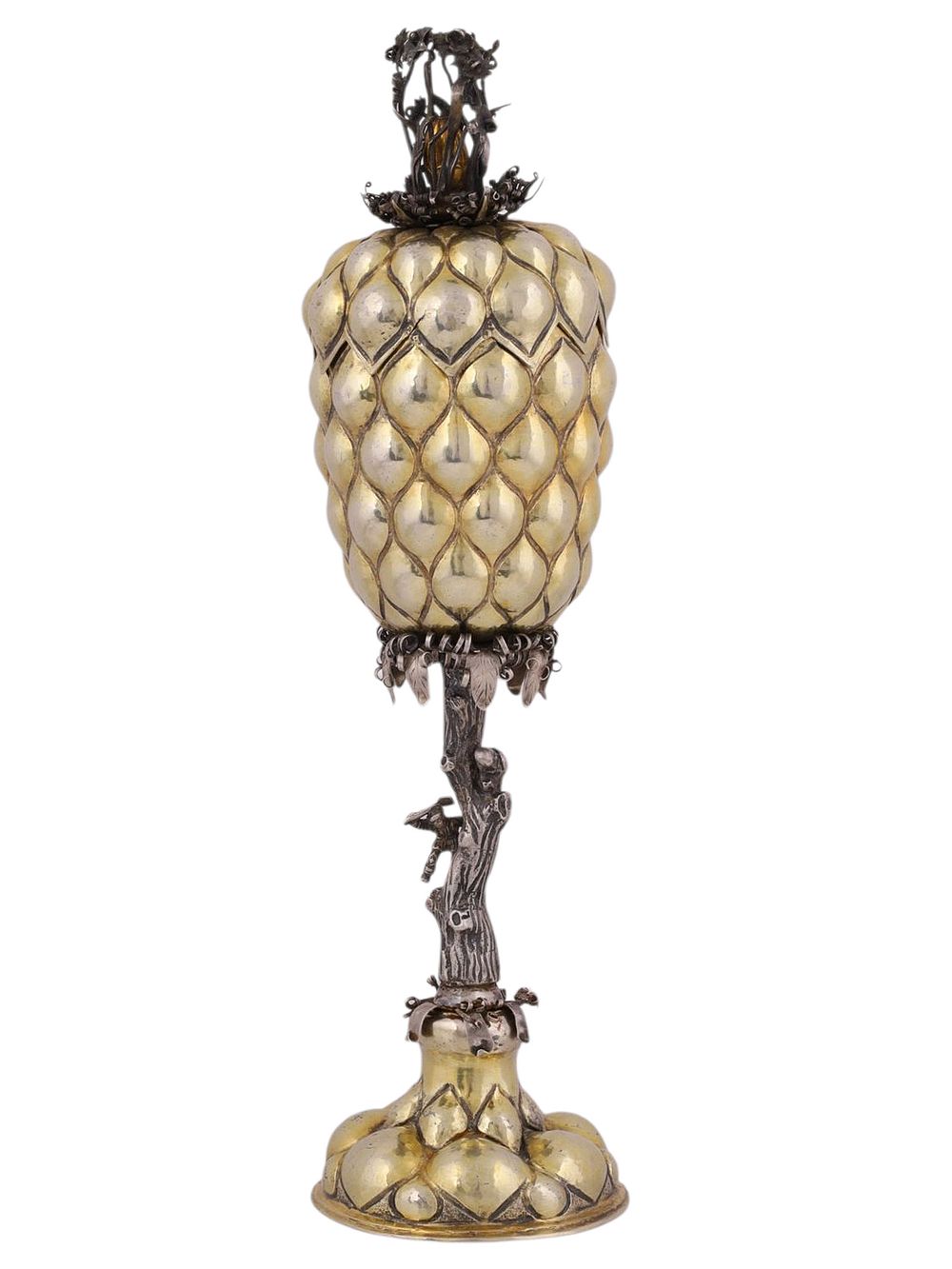
A RUSSIAN PARCEL-GILT SILVER LIDDED GOBLET IN THE FORM OF A PINEAPPLE, MOSCOW, 1795 - The goblet formed as a stylized pineapple, the lobed and parcel-gilt body richly chased and repoussé with overlapping scale motifs. The detachable cover surmounted by an elaborate foliate finial, finely cast as twisting branches and blossoms, enclosing a gilt bud. The stem is naturalistically modeled as a gnarled tree trunk entwined with foliage, with a climbing putto supporting the bowl. The circular foot chased with large lobed scales echoes the cup, gilt and partially dark-patinated. Hallmarks: In the 18th century, the pineapple was a potent symbol of hospitality, luxury, and exotic refinement throughout Europe. Because pineapples were rare and extremely costly to import or cultivate in the cold northern climates, they became an emblem of wealth and sophistication. The fruit appeared in architecture, porcelain, silver, and decorative arts as a motif of welcome and abundance, an aesthetic imported from Western Europe, especially England, Germany, and the Netherlands, where pineapples were displayed at banquets or incorporated into tableware designs to impress guests. By the mid-to-late 18th century, the Russian nobility, deeply influenced by Western tastes under Peter the Great and Catherine II (the Great), adopted this European symbol into their own decorative vocabulary. Russian silversmiths in Moscow and St. Petersburg created goblets, tankards, and covered cups in the form of pineapples or pinecones, merging Baroque exuberance with local craftsmanship. These pieces were often used in formal banquets, sometimes as presentation goblets or ceremonial drinking cups, symbolizing hospitality (gostepriimstvo) and worldly sophistication. Such goblets are therefore not whimsical but socially coded objects, expressing both European cosmopolitanism and the Russian tradition of communal toasts (brindzha, zdravitsa). The pineapple form was seen as especially appropriate for a cup of welcome, offered to honored guests as a gesture of generosity and cultivated taste. Weight: 19.5 oz., (554 g.) Please make all inquiries before bidding. All lots are sold ”as-is”, refer to our T&C. Helios Auctions offers in-house shipping. In case we can not accommodate a shipping request, a list of additional shippers will be provided. Dimensions: H: 13 in., (33 cm.) Condition: The goblet is in very good condition with expected signs of age and use. The lid fits perfectly. The Russian hallmarks are clearly visible. One small crack between hallmarks on the lid.