Bidspirit auction | [CARTER HOWARD]: (1874-1939)
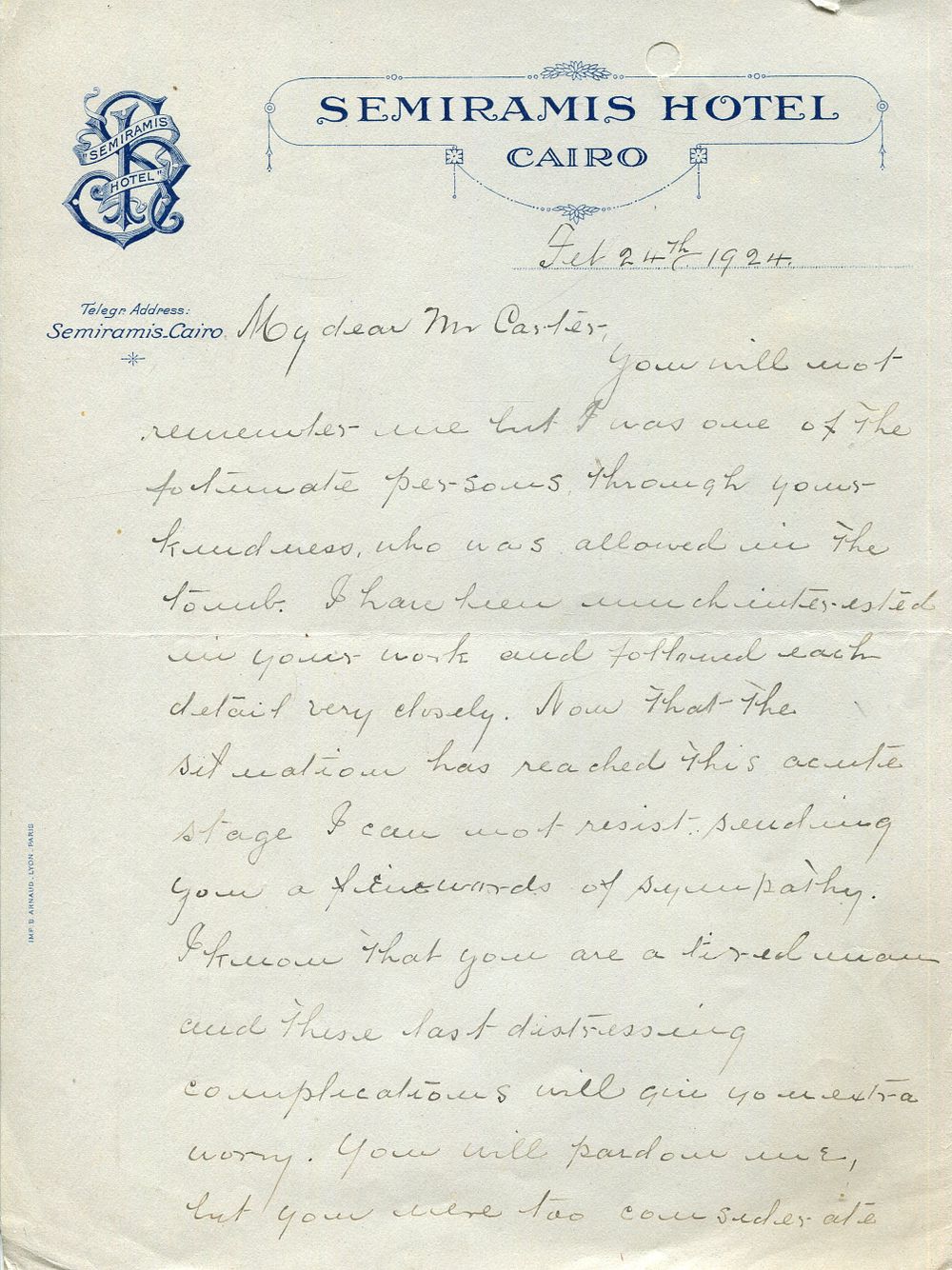
[CARTER HOWARD]: (1874-1939) - [CARTER HOWARD]: (1874-1939) English archaeologist and Egyptologist who discovered the Tomb of Tutankhamun in 1922. An interesting A.L.S. by Thomas H. Foulds, an American, two pages (written to the first and fourth sides of the bifolium), 8vo, Cairo, 24th February 1924, to Howard Carter ( ´My dear Mr. Carter´ ) on the attractive blue printed stationery of the Semiramis Hotel. Foulds commences his letter stating ´You will not remember me but I was one of the fortunate persons through your kindness, who was allowed in the tomb´, and continues ´I have been much interested in your work and followed each detail very closely. Now that the situation has reached this acute stage I can not resist sending you a few words of sympathy. I know that you are a tired man and these last distressing complications will give you extra worry. You will pardon me, but you were too considerate of your friends who asked for a private view, and now have gone to America, leaving you to fight your battles alone´ before concluding ´I shall follow this question pro and con very closely and if it will be a little comfort to you now please remember that there is one grateful American who will always defend your rights in this controversy´ . One single file hole to the upper edge of each page, otherwise VG On 29th November 1922, Tutankhamun´s tomb was officially opened in the presence of several invited dignitaries (possibly including Foulds?) and Egyptian officials. The tomb was considered the best preserved and most intact pharaonic tomb ever found in the Valley of the Kings and Carter's meticulous assessing and cataloguing of the thousands of objects in the tomb took nearly ten years, most being moved to the Egyptian museum in Cairo. There were several breaks in the work, including one lasting nearly a year in 1924–25, caused by a dispute over what Carter saw as excessive control of the excavation by the Egyptian Antiquities Service; presumably the ´distressing complications´ which Foulds refers to in his letter.