Bidspirit auction | Descripción general de las monedas
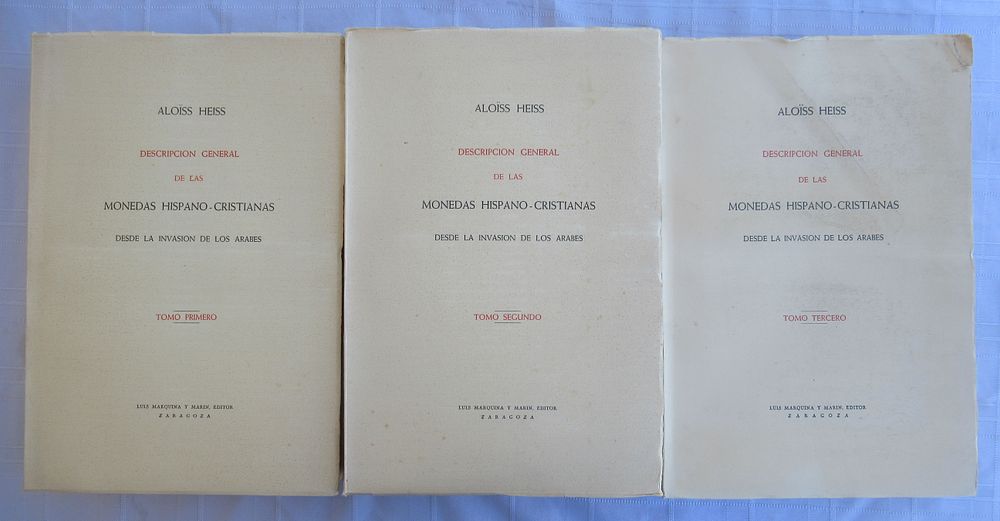
Descripción general de las monedas hispano‑cristianas desde la invasión de los árabes Spanish 3 Volumes Aloïss Heiss 1865/69 Chapter 1 Post-Arab Invasion Context and the First Christian CoinsInitial money and maravedises, general criteria Chapter 2 Castile and León Royal minting of money and maravedises Chapter 3 Aragon, Navarre, Sicily Specific regional coins and iconographic diferences These books are an erudite and pioneering reference for understanding the evolution of Christian currency in the medieval and modern period in the Iberian Peninsula. Each chapter combines historical context, royal genealogy, and technical description of the coins. The first chapter establishes the initial historical milestones, addressing the transition from Visigoth power to the Iberian Christian kingdom after the Muslim invasion (8th century). Heiss examines the first coins minted by emerging Christian kings (such as those of Asturias and León) and describes initial typologies: vellón pennies, medieval maravedís, and early hybrid variants. It includes chronological summaries of political evolution (kings of León, Castile, Navarra) and introduces the classification criteria that he used later for the coins. The second chapter focuses on the coinages of Castile and León, detailing monetary series from the reign of Ferdinand I to the period of Isabella I and the early Habsburgs. Technical descriptions of coins, maravedís, and half maravedís are provided, along with their metallic evidence and marks of assayer and mint. Heiss correlates these emissions with events such as royal consolidation, unification, and early contacts with Castilian monetary innovation. In the third chapter, the work expands its monetary focus to other Christian peninsular kingdoms, such as Aragon, Navarre, and Sicily. Each section presents regional monetary types — for example, the Catalan quarter from Peter II of Aragon, or the Navarre lenses — with notes on metallographic composition, iconography, and circulation. The text includes typological examples and cross-references between issuers and territories.