Bidspirit auction | Siddur for Simchat Torah, Brit
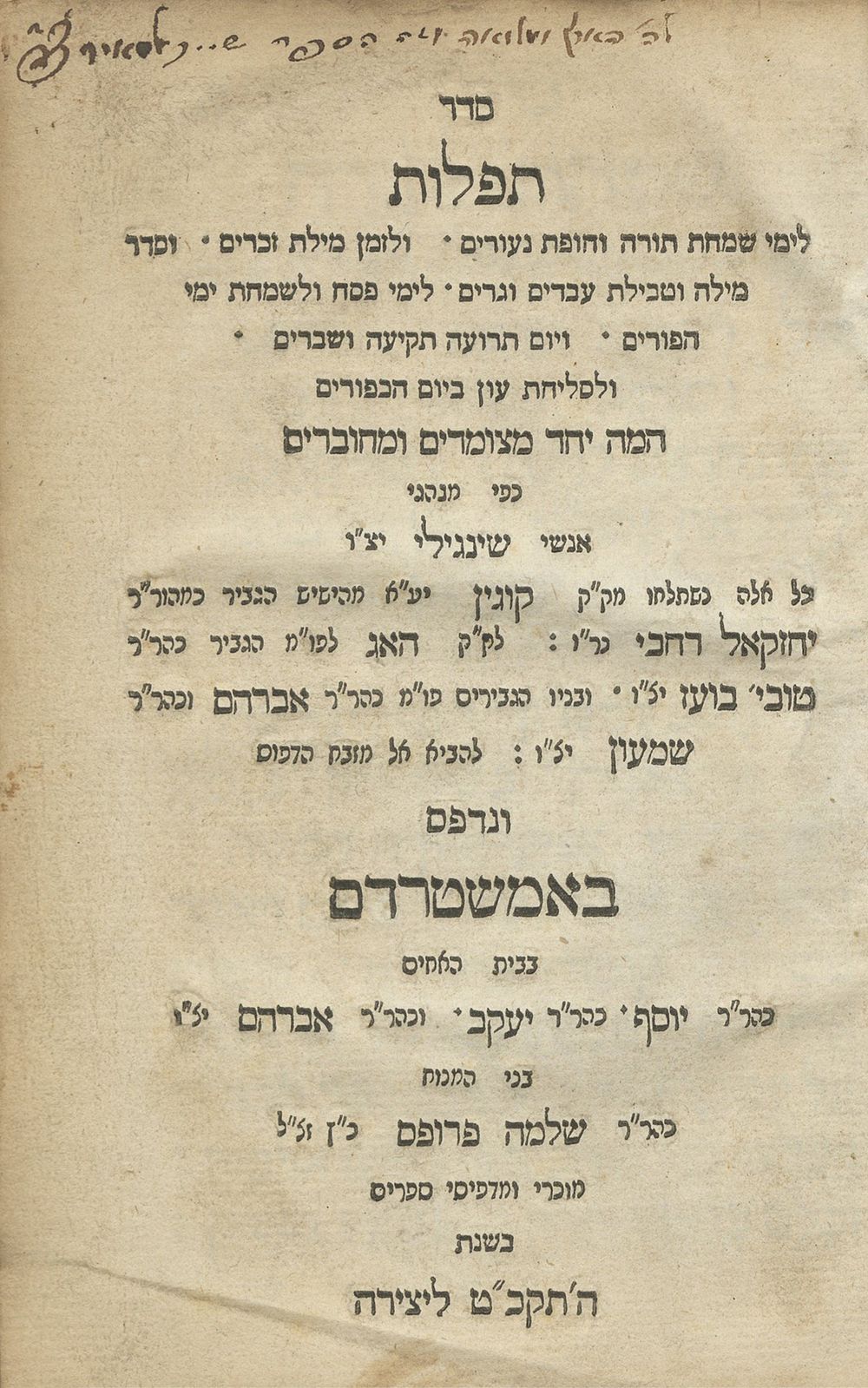
Siddur for Simchat Torah, Brit Milah, and Other Occasions – With Prayers for the Circumcision of Slaves and Converts – Amsterdam, 1769 – According to the Rites of the Jews of Shingly (Cochin) - Siddur for Simchat Torah, Brit Milah, and other occasions, “according to the customs of the Jews of Shingly.” Amsterdam: Yosef, Yaakov and Avraham sons of Shlomo Proops, 1769. Siddur according to the rite of the Cochin Jewish community of India. According to the tradition of the Jews of Cochin, the town of Cranganore – referred to by the Jews as “Shingili” – was the first site of Jewish settlement in the region (Cranganore is a port city located approx. 18 km north of Cochin). The title page lists the contents: “Prayers for the days of Simchat Torah and for wedding ceremonies, and for the time of circumcising males, and the order of circumcision and immersion of slaves and converts, for the days of Passover and the joy of Purim, and the day of Teruah, Tekiah and Shevarim, and for forgiveness of sin on Yom Kippur…”. The name of the initiator of the printing appears further on: ”These were all dispatched from the community of Cochin, from the elder R. Yechezkel Rachabi, to the community of the Hague… to be printed… in Amsterdam”. Included are prayers for Simchat Torah, the “Order of the Wedding Ceremony according to the Custom of the People of Shingili” (a lengthy order for the wedding and the entire seven days of celebration, with piyyutim), Havdalah, the order of Brit Milah, Purim prayers, piyyutim and prayers for the eve of Passover, a short selichot order, and liturgical poems and piyyutim for Rosh Hashanah and Yom Kippur. Ownership inscription on title page. The Cochin Jewish community in India was one of the most prominent Jewish communities in the region, with a significant part of its population composed of slaves, maidservants, and freedmen. Even in the 18th century, Jews still practiced the purchase of slaves, whom they circumcised and immersed as slaves and integrated into family and communal life. Many were later manumitted by their owners and became full Jews. The present siddur bears witness to this unique phenomenon with the printed order for the circumcision and immersion of slaves and converts (for reference, see Hebrew description). [1], 100 leaves. Approx. 16 cm. Good condition. Stains. New binding, with cloth ties. Provenance: Collection of Mozes Heiman Gans.