Bidspirit auction | Collection of Letters from the
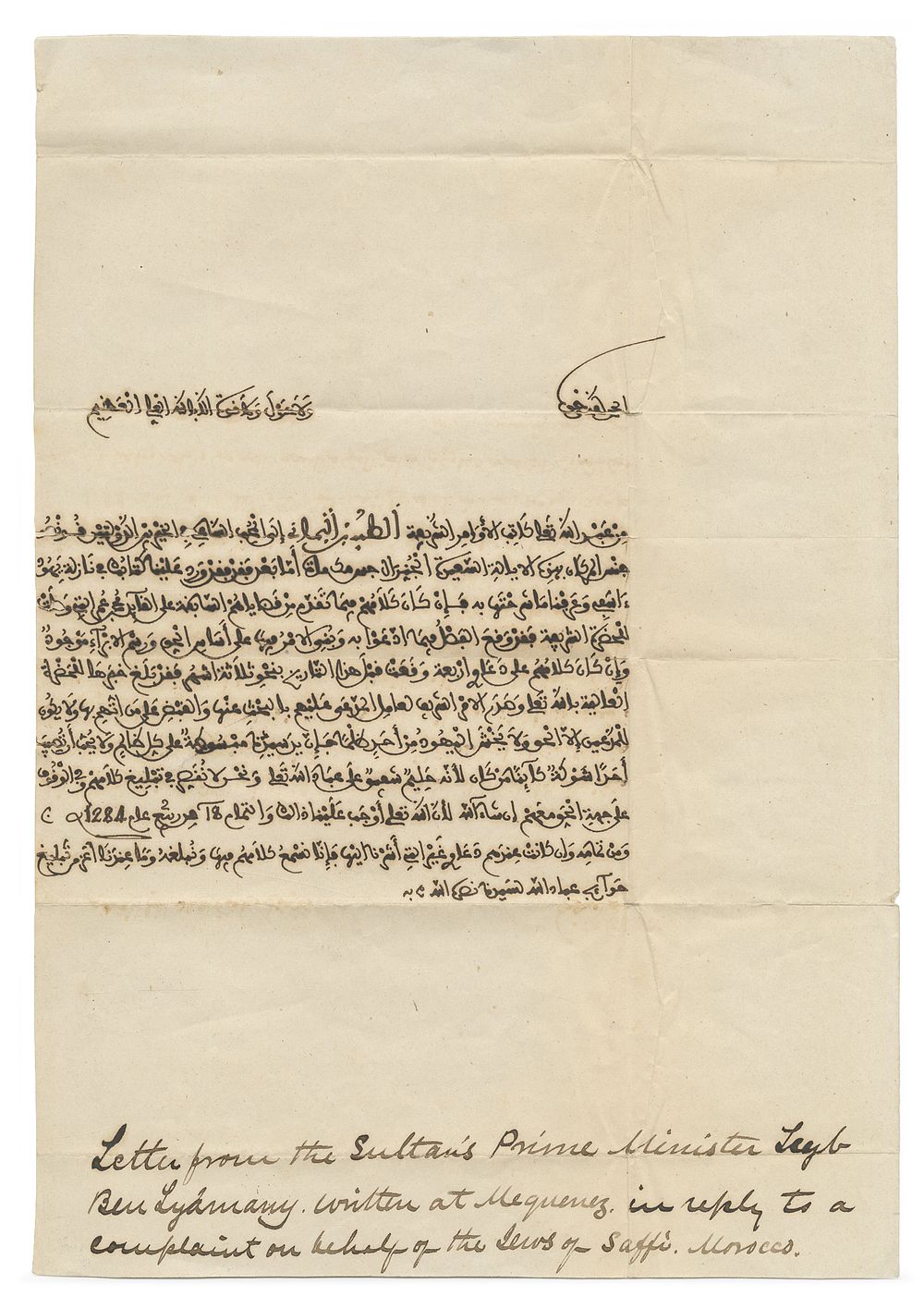
Collection of Letters from the Safi Affair – Morocco and London, 1863-1869 – Letters of Grand Vizier of Sultan Muhammad IV, Merchant and American Vice Consul in Mogador Abraham Corcus, and Jewish Community of Safi - Collection of eight handwritten letters and documents, most addressed to Jesse H. McMath, United States Consul General in Morocco. Safi, Fez, Meknes, Mogador (Essaouira), Casablanca, Rabat, London, 1863-1869. Arabic, Judeo-Arabic and English. The collection comprises: • Judeo-Arabic letter addressed to Jesse McMath, United States Consul General in Morocco, from Abraham Corcus. Mogador, August 1863. • Two Judeo-Arabic letters addressed to Jesse McMath, from Masud Lasri. Casablanca and Rabat, 1863-1864. • Judeo-Arabic letter from the Jewish community of Safi, addressed to the Consul Isaac Benzakar, describing an episode in which several Jews were killed by Muslims. English inscription on verso (perhaps handwritten by Consul McMath): ”Representation made to me by the Hebrew Committee at Saffi, of the treatment they receive from the Moorish authorities 1868”. • Arabic letter from Grand Vizier of Morocco Tayeb Ben Alyamani, written in Meknes, in response to complaint of the Jews of Safi, Morocco. English inscription at margin describing letter's contents: ”Letter from the Sultan's Prime Minister Tayb Ben Lyamany. written at Mequenez, in reply to a complaint on behalf of the Jews of Saffi”. • Arabic letter of Tayeb Ben Alyamani to Jesse McMath, written in Fez, 20th Hijja 1285 AH (5 April 1869). • Leaf with official English translation of the above letter. Translated by Moses Pariente, a banker and interpreter of the American consul (who also served as provisional president of the Tangier community). The letter discusses a complaint against a local ruler in Mazagan (El Jadida) who was conspiring against a person with ties to the consulate. • Letter of J. J. Ratto to Jesse McMath. London, 26 June 1868. The letter discusses a local who was arrested in the Sous region at the Sultan's orders. The letter mentions a creditor named Corcus (perhaps Abraham Corcus?). In 1863, a dramatic event, later known as the Safi affair, shook Moroccan Jewry. As a result of the sudden death of a Spanish tax official who lived in the coastal city of Safi, the Spanish authorities began to press the Moroccan government, claiming he had been poisoned. One of the factors behind this claim was Spain's attempt to strengthen its position in Morocco after the Hispano-Moroccan War (1859-1860). This accusation was pinned on several Jews who were claimed to have assisted in the poisoning, who were forced to admit to doing so after grueling torture, and some of them were executed. This excited an international storm and a wave of fear among the Jews of Morocco, leading to Moses Montefiore's famous visit to Morocco in the winter of 1863-1864. At the height of the visit, Montefiore met Sultan Muhammad IV, extracting a Dahir (royal decree), a historical document promising the peace and security of the Jews and forbidding punishing them without a fair trial. Jesse H. McMath, Consul General of the United States in Tangier (Morocco's diplomatic capital at the time), was a central address and support for the Jews in those tense years. Abraham Corcus of Mogador, a member of one of the wealthiest and most influential Jewish merchant families in Morocco, maintained close ties with the Sultan's court. In January 1862, he was appointed Vice Consul of the United States and West Indies in Mogador (Essaouira). He played a key role in Moses Montefiore's visit to Morocco, and used his consular authority to promote the community's welfare. Moses Pariente signed the official appeal of the Jewish community of Tangier on the persecution and execution of the Jews of Safi, in his function as both provisional president of the community as well as the American consul's interpreter. Moses Montefiore's journals document how a home was prepared for him upon his arrival in Tangier in early 1864 thanks to Moses Pariente, describing him as the community's president alongside Moses Nahon, the community's vice president. He was a wealthy banker as well as an interpreter, and he had ties with Europe's diplomats. The three letters from Abraham Corcus and Masud Lasri were written between 1863-1864, during the Safi affair, but we do not know whether they are directly related to the affair (they are written in Judeo-Arabic mixed with a local Spanish dialect, Haketia, and require further examination). The 1868 letter of appeal of the Jews of Safi indicates that five years after the Safi affair and Montefiore's visit, the local Jews continued to suffer from hostility and were in need of foreign diplomatic intervention. 8 handwritten documents. Varying size and condition. Overall good condition. Minor defects.