Bidspirit auction | (MOROCCO). Ahavath HaKadmonim. Siddur… Keminhag
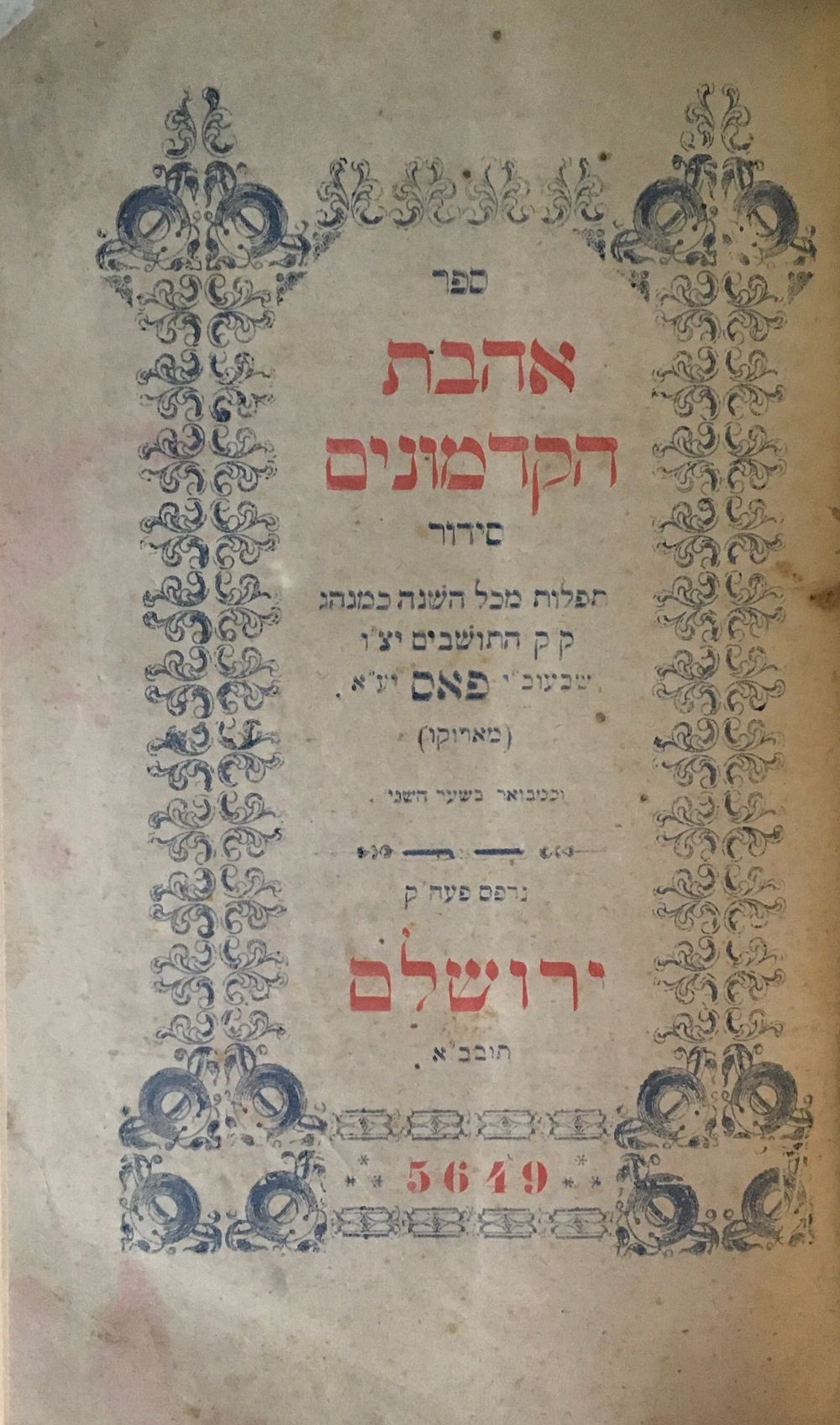
(MOROCCO). Ahavath HaKadmonim. Siddur… Keminhag K[ehila] K[edosha] HaToshavim…Fez. FIRST EDITION. Two title-pages, first with red lettering. ff. (9), 84. Browned. Modern fine calf-backed boards. 8vo. Halevi, Jerusalem 636. Jerusalem, S. Zuckerman, 1889. RARE. Halevy records just one single copy (located at Machon Ben Tzvi, Jerus.) Prayers and piyutim for weekdays, Sabbath and Holidays according to the old Moroccan rite practiced in Fez, prior to the Spanish Expulsion. According to the introduction, as well as the approbation by R. Raphael ibn Tzur of Fez, when the Spanish exiles arrived in Morocco they prayed in accordance with their Castilian rite. In time, most synagogues in Morocco followed suit and began to adopt the Spanish custom. The only synagogue that retained the original, ancient Moroccan rite, was the Toshavim Synagogue in Fez - however it was never brought to publication. The present volume was composed from the sole manuscript extant of the rite, composed by the Hazan of Fez’s Toshavim congregation. The introduction here contains interesting historical information pertaining to the Jews of Fez, their ancient cemetery and relations with the surrounding Arab population. The final leaves (ff. 79b-83b) contain a Pesak Din (dated 1715) concerning the ownership and administration of the Toshavim synagogue. Toshavim had their own minhagim (Judaic traditions) and they spoke Judeo-Arabic or Judeo-Berber dialects. Toshavim (”residents”) or bildiyīn (Moroccan Arabic: بلديين, lit. 'of the country, natives') is a generic reference to non-Sephardic Jews who inhabited lands in which the Jews expelled from Spain in 15th century settled (”Megorashim”, ”expellees”). The Jews in the area of North Africa known as Maghreb are also referred to as Maghrebim (Maghrebi Jews). In particular, the term ”Toshavim” was applied to the Jews of Morocco. Both groups are considered indigenous to the area despite their migration and diaspora origins. Despite the fact that Toshavim were apparently overwhelmed and absorbed by Sephardic immigrants, the differences in many areas of communal lives of Toshavim and Megorashim persisted for a long time: Separate negidim, separate synagogues, separate teachers, separate cemeteries, etc.