Bidspirit auction | כתר ארם צובא — מהדורת
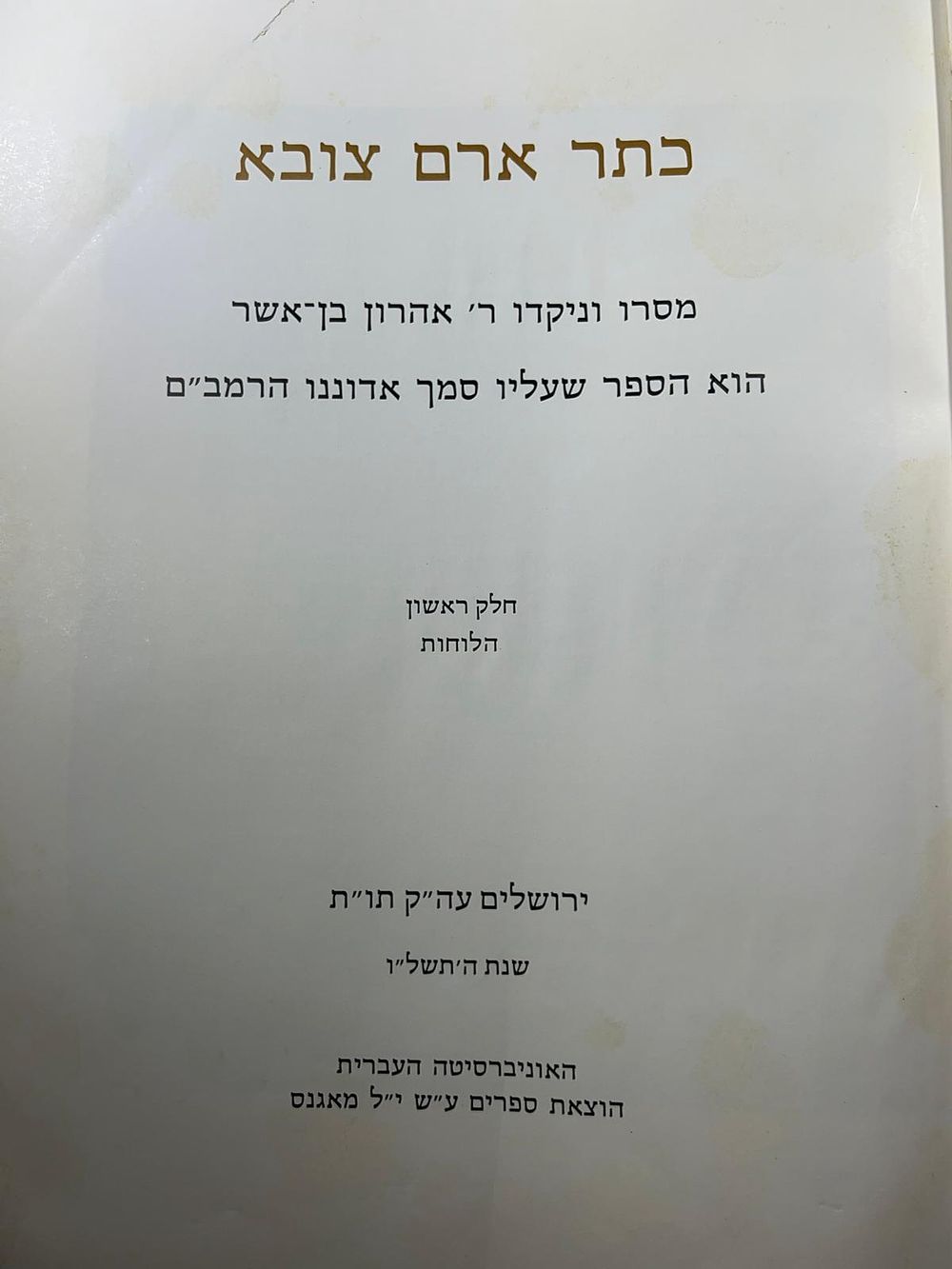
כתר ארם צובא — מהדורת פקסימיליה מפוארת. ירושלים: הוצאת ספרים ע”ש י”ל מאגנס, האוניברסיטה העברית, תשל”ו [1976]. חלק ראשון — לוחות. פוליו גדול (44 x 32.5 ס”מ). 588 עמודי פקסימיליה. כתר ארם צובא הוא כתב היד העברי המקראי הקדום והסמכותי ביותר הידוע לנו — כתב יד שלם של המקרא שנכתב בטבריה בסביבות שנת 920 לספירה. הטקסט נכתב על ידי הסופר שלמה בן בויעא, ונוקד ומוסר על ידי אהרון בן אשר, החבר האחרון והבולט של שושלת בן אשר, עליו סמך הרמב”ם בקביעת נוסח המקרא. בסוף המאה ה-14 הובא הכתר לאלפו שבסוריה, שם שמרו עליו יהודי העיר כשש מאות שנה. בפרעות של דצמבר 1947 ניזוק הכתר ונעלמו ממנו חלקים ניכרים, ובשנת 1958 הובא לירושלים. מהדורת הפקסימיליה הוצאה על ידי האוניברסיטה העברית בשנת 1976 בעריכת פרופ' משה גושן-גוטשטיין. 500 העותקים הראשונים ממוספרים אישית ונועדו כמתנות לאישים יהודים בכירים בישראל ובתפוצות. The Aleppo Codex / Keter Aram Tzova — Facsimile Edition Jerusalem: The Magnes Press, The Hebrew University, 1976. Part One: Plates. Large Folio (44 x 32.5 cm). 588 facsimile pages. The Aleppo Codex is the oldest and most authoritative known manuscript of the Hebrew Bible, written in Tiberias c. 920 CE. The text was written by the scribe Shlomo Ben-Buya'a and vocalized and provided with the Masorah by Aaron Ben-Asher, the last and most prominent member of the Ben-Asher dynasty — the manuscript upon which Maimonides relied in establishing the authoritative text of the Bible. The Codex was brought to Aleppo, Syria, at the end of the fourteenth century, where it was guarded by the Jewish community for nearly six hundred years. Damaged during the riots of December 1947, it was brought to Jerusalem in 1958. The facsimile edition was published by the Hebrew University in 1976, edited by Prof. Moshe Goshen-Gottstein. The first 500 copies were individually numbered and intended as gifts to prominent Jewish personalities in Israel and the Diaspora.