Bidspirit auction | Arthur Wellesley, 1st Duke of
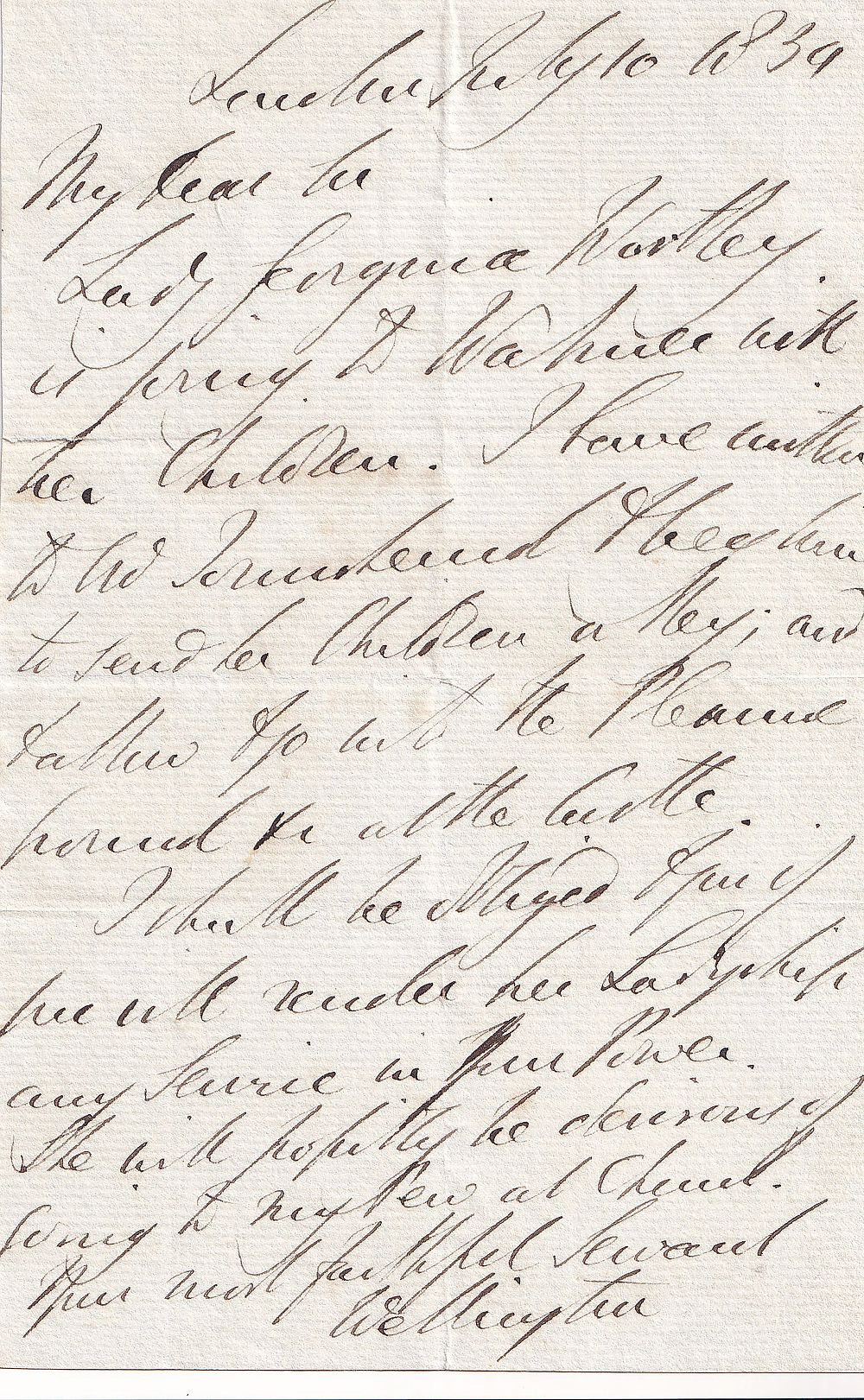
Arthur Wellesley, 1st Duke of Wellington – Victor over Napoleon at Waterloo – Autograph Letter Signed Concerning Lady Georgiana Wortley’s Visit to Walmer – London, 10 July 1834 - An autograph letter signed by Arthur Wellesley, 1st Duke of Wellington (1769–1852), one of the most celebrated military commanders and statesmen in British history and the commander whose allied forces defeated Napoleon at the Battle of Waterloo. The letter was written in London on 10 July 1834 and concerns arrangements surrounding a visit by Lady Georgiana Wortley to Walmer, accompanied by her children. Wellington begins: “My dear Sir, Lady Georgiana Wortley is going to Walmer with her children…” He explains that he has already written to a local party concerning the visit and the children, and asks the recipient to provide Lady Georgiana with whatever assistance may be within his power: “I shall be obliged if you will render her any assistance in your power.” Wellington also refers to Deal, near Walmer, in connection with her intended movements. The letter concludes warmly: “Ever most faithfully yours, Wellington” with Wellington's large, clear and characteristic original autograph. Lady Georgiana Wortley and the Wellington Connection Lady Georgiana Elizabeth Ryder, later Lady Georgiana Stuart-Wortley, was the daughter of Dudley Ryder, 1st Earl of Harrowby, and married John Stuart-Wortley, later 2nd Baron Wharncliffe, in 1825. The Wortley family's association with Wellington was not merely social. Georgiana's husband served under the Duke as Secretary to the Board of Control in 1830, and subsequently pursued a prominent Tory political career. The letter therefore documents Wellington's personal involvement in the affairs of an aristocratic and politically connected family within his wider social and governmental circle. Walmer and Wellington The reference to Walmer adds particular biographical interest. Wellington became closely associated with Walmer Castle in Kent, his official residence as Lord Warden of the Cinque Ports, and ultimately died at Walmer Castle in 1852. The letter dates from 1834, an interesting period in Wellington's political career. He had already served as Prime Minister from 1828 to 1830 and would briefly return to the premiership later in 1834 before Sir Robert Peel took office. A particularly attractive Wellington autograph letter combining identifiable aristocratic content, associations with Walmer and Deal, and an unusually large and clear “Wellington” signature.