Bidspirit auction | Thun-Hohenstein Family – 1839 Letter
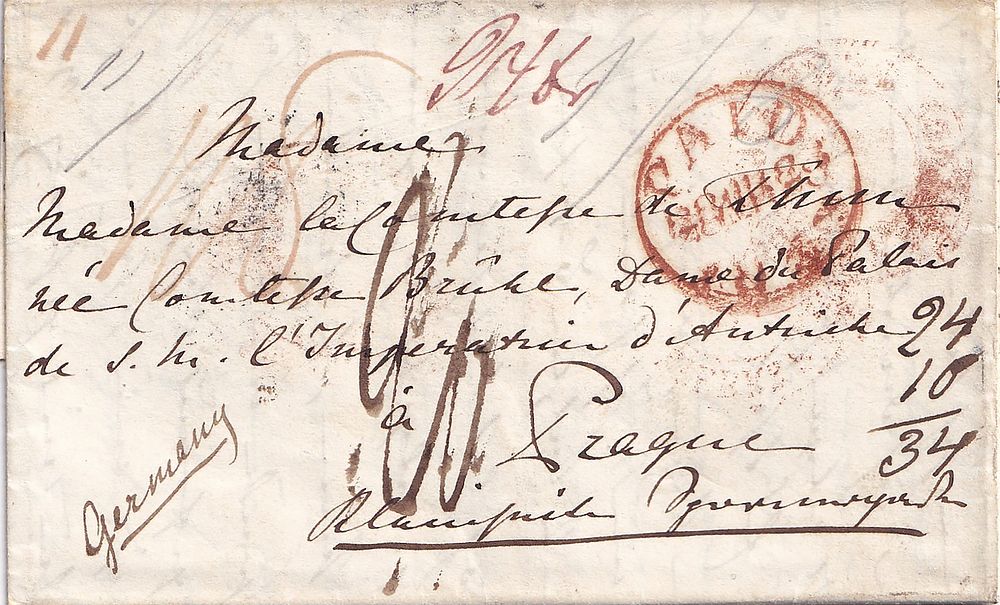
Thun-Hohenstein Family – 1839 Letter from London to Countess Therese Thun-Hohenstein, née Brühl, in Prague – Written by Her Son, Diplomat Count Friedrich von Thun-Hohenstein – London Conferences Period - An extensive 1839 family letter, handwritten in German and sent from London to Prague to Countess Theresia Maria von Thun-Hohenstein, née Countess Brühl (1784–1844), wife of Count Franz Anton I and mother of Franz Anton II, Friedrich and Leopold Leo von Thun-Hohenstein. The outer address, written in French, identifies the recipient as Countess Thun, née Countess Brühl, and describes her as Dame du Palais de S.M. l’Impératrice d’Autriche, addressed at Prague. Theresia Maria was born into the distinguished Saxon Brühl family in 1784 and married Count Franz Anton von Thun-Hohenstein in 1808. Their marriage produced three sons and two daughters. The Author – Count Friedrich von Thun-Hohenstein: The place and date of dispatch, family context and documented movements of the Thun-Hohenstein family confirm the writer was Count Friedrich von Thun und Hohenstein (1810–1881), Therese's second son. After studying law in Prague and travelling extensively through Western Europe, Friedrich entered the Austrian diplomatic service in 1835. In 1837 he became an attaché to the Imperial representative at The Hague, and in 1838 he travelled to England, where he attended Queen Victoria's coronation. He subsequently served at the London Conferences on the Belgian Question as secretary to Count Senfft-Pilsach, the Austrian plenipotentiary and ambassador at The Hague. Friedrich remained in this phase of his diplomatic career until 1840, when he was transferred to Turin as Legation Secretary. A private letter sent from London to his mother in Prague in 1839 therefore corresponds particularly closely with Friedrich's documented whereabouts and activities. Diplomatic Context – The Belgian Question: The year 1839 was a crucial one in European diplomacy concerning the status and independence of Belgium. At precisely this period Friedrich von Thun-Hohenstein was serving with the Austrian representation at the London Conferences dealing with the Belgian Question. The present letter therefore originates from the same London diplomatic environment in which the young Friedrich was beginning his distinguished career. No unequivocal reference to the Belgian negotiations has presently been identified within the manuscript itself; the London Conferences are therefore cited as the historical context of the probable writer's activities, rather than as the subject of the letter. Contents: The manuscript is an extensive private and family communication, densely handwritten in German, with additional writing continuing into available margins and portions of the folded sheet. Its contents include personal and family news, acquaintances, social matters, meetings and everyday affairs, providing an intimate glimpse into the private correspondence of a European aristocratic family whose members played significant roles in nineteenth-century cultural, political and diplomatic life. The manuscript represents a private letter from an especially formative period in Friedrich's diplomatic career. He subsequently held important Austrian diplomatic appointments in Sweden, Bavaria, Frankfurt, Prussia and Russia. The Thun-Hohenstein Family: Therese's three sons became notable figures: Franz Anton II (1809–1870) became an important Bohemian art patron and cultural figure; Friedrich (1810–1881) pursued a distinguished international diplomatic career; and Leopold Leo (1811–1888) became a prominent Austrian statesman, Minister of Education and Culture, and a major reformer of the Habsburg university system. Postal History: The manuscript survives as its original pre-stamp entire letter, dating from before the introduction of British adhesive postage stamps. The outer postal panel retains British and Continental postal markings, manuscript rate markings and routing indications, documenting its journey from London across Europe to Prague. Remnants of the original red wax seal remain on the reverse. An attractive and historically significant document combining the Thun-Hohenstein aristocratic family, Countess Therese Brühl, a strong attribution to diplomat Count Friedrich von Thun-Hohenstein, the London diplomatic milieu of the Belgian Question, and early nineteenth-century international pre-stamp postal history.