Bidspirit auction | Crystal Palace, Sydenham – Sculpture
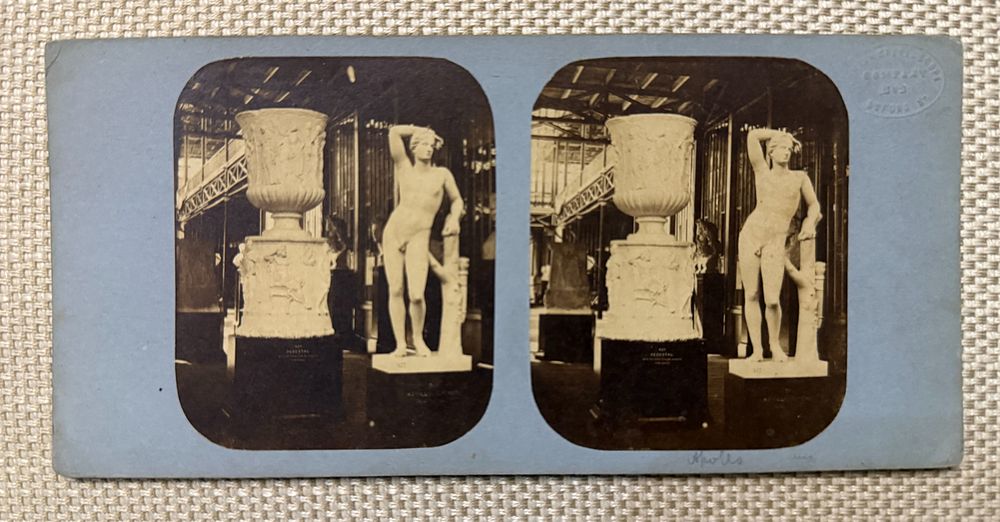
Crystal Palace, Sydenham – Sculpture Gallery – Very Early Stereoview, c.1854–1862 – London Stereoscopic Company - An early original stereoview / stereograph depicting a sculptural display within the Crystal Palace at Sydenham, London, dating from the early years following the Palace's reopening in 1854. The photograph shows a classical-style male nude statue beside a monumental relief-decorated vase, displayed within the great iron-and-glass interior of the Crystal Palace. Elements of the exhibition galleries and architectural structure are visible beyond. Of particular documentary interest, the mount bears two period blind-embossed stamps of the London Stereoscopic Company, London – one on the front and another on the reverse – supporting the identification of the card as an early stereoscopic production of the period. The reverse also bears an old manuscript identification: “Crystal Palace.” The Crystal Palace and Early Stereoscopic Photography Following the Great Exhibition of 1851, the Crystal Palace was transferred from Hyde Park to Sydenham in South London, where it reopened in 1854 as an enormous centre devoted to art, architecture, industry, science and history. Sculpture and casts of works of art formed an important part of the Palace's educational programme, allowing the Victorian public to encounter artistic traditions and monuments from different historical periods and cultures. The London Stereoscopic Company, founded during the 1850s, became one of the pioneering and most influential commercial publishers of stereoscopic photography in Britain. Its early Crystal Palace views formed part of the extraordinary Victorian expansion of stereoscopic photography. On the basis of the mount, subject and period blindstamps, the present stereograph may cautiously be dated to approximately 1854–1862. No photographer's name appears on the card, and the image is therefore not attributed to an individual photographer without further documentary evidence. The paired photographs were taken from slightly differing viewpoints and intended for viewing through a stereoscope, creating the optical impression of a three-dimensional exhibition interior. An attractive and early photographic document combining the Crystal Palace, the London Stereoscopic Company, Victorian sculpture, exhibition history and the formative period of commercial stereoscopic photography, recording the interior of one of the great lost monuments of Victorian Britain.