Bidspirit auction | Kodesh Hakodashim! The Personal Machzor
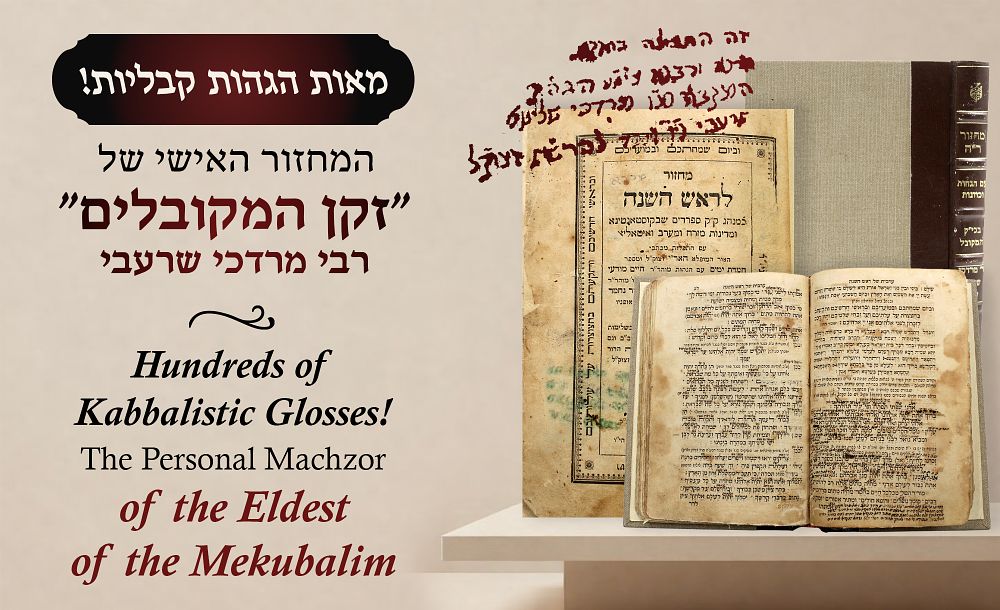
Kodesh Hakodashim! The Personal Machzor of the Eldest of the Mekubalim Rabbi Mordechai Sharabi, the Rosh Yeshiva of the Nehar Shalom Yeshiva of Mekubalim with Hundreds (!) of Kabbalistic Glosses - The personal Machzor Tefillah of the Mekubal Rabbi Mordechai Sharabi, the Rosh Yeshiva of the Nehar Shalom Yeshiva of Mekubalim from which he prayed for many years on Rosh Hashanah and with it, he continued an abundance of Yeshuot and blessings. Appearing onb verso of the title page is a touching, handwrittem ownership notation: ”זה התפילה בחזקת מרנא ורבנא ציס”ע הגה”ק המקובל מוה”ה מרדכי שליט”א שרעבי, נין ונכד להרב שלום שרעבי זצוק”ל” [This prayer book is owned by ... the Mekubal Rabbi Mordechai Shlita Sharabi, a descendant of Rabbi Shalom Sharabi...]. The uniqueness of the Machzor emerges when studying its leaves: Hundreds of deep Kabbalistic glosses, some of them most lengthy and detailed (approx. 350 lines and more than 1000 words!), including the Kavanot of the Ari and the Rashash for the Rosh Hashanah prayers. The glosses were written by two writers, in clear Yemenie script and they indicate they were written by two Mekubalim of stature with deep knowledge of Kabbalah. One of the writers, apparently, is the owner of the Machzor himself - Rabbi Mordechai Sharabi - who even added at the beginning of the Machzor an important Kabbalistic foreword about the two days of Rosh Hashanah. This foreword brilliantly explains the Kabbalistic difference between the two days: the first day is one of ”Dina Kashya” (harsh sentence) whereas the second is of ”Dina Rafya” (lenient sentence). Manuscripts by Rabbi Sharabi are extremely rare. Nevertheless, when compared to known examples of his handwriting, there is a firm basis to conclude that this manuscript is was handwritten by him. The second writer is earlier and apparently, was one of the sages of the Beit El Yeshiva of Mekubalim in Jerusalem of the 19th century - what gives the Machzor an additional layer of Kedusha and pedigree. Actually, the glosses transform the Machzor from a regular prayer book into ”Siddur Kavanot HaRashash” - Rabbeini Shalom Sharabi - the grandfather of the owner of the Machzor, a central figure in the history of Kabbalah after the Ari. Rabbi Mordechai Sharabi's yeshiva, Nehar Shalom, commemorates his grandfather Rabbi Shalom Sharabi - the Rashash. One cannot fathom the immense Segulah for the acceptance of prayers offered through this Machzor - the personal Machzor used by the greatest Mekubal of his generation and leader of the Mechavnim community to pour out his silent, heartfelt prayers for many years, using it to draw down years of goodness and blessing upon his community and all Beit Yisrael. It is really hard to overestimate the significance of hundreds of Sheimot Kedoshim handwritten by two leading Mekubalim in the 19th century, as indicated by the style and content of the glosses. Specifications: Machzor for Rosh Hashanah, Sephardim vesrion, with prayers based on the Ari's and the Chida's writings. Printed in Livorno, 1857. 114 leaves. Approx. 19 cm. Good condiiton. Marks of usage and Rabbi Mordecgai Sharabi's tears. Several professionally restored tears to title page and additional leaves. New half-leather bindsing. *** The Mekubal Rabbi Mordechai Sharabi (1908-1983) was born in Yemen, a direct descendant of the Rashash. Was considered the leading Mekubal of Jerusalem and one of the greatest Kabbalah sages in general. Was a renowned wonder-worker and thousands came to him to ask for a blessing.