Bidspirit auction | Antique Carved Polychrome Panel ”Joy
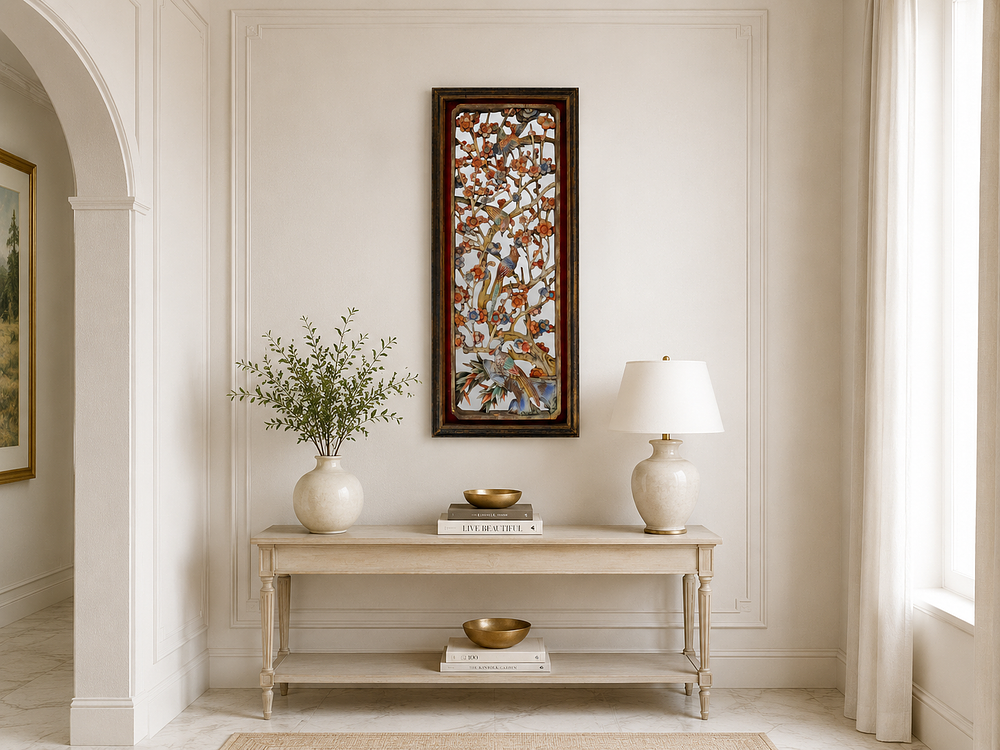
Antique Carved Polychrome Panel ”Joy on the Branches — Winter” from the Quadriptych ”The Four Seasons”. Southern China, Guangdong / Fujian Province; Southern Chinese school of carving (probably Chaozhou or Dongyang technique). Late Qing Dynasty, c. 1880–1910. Solid sandalwood, gesso, mineral pigments, gold leaf. Dimensions: 96.5 × 40.5 × 5.5 cm. Condition: very good; original paint layer and gilding with minimal wear; the reverse retains the original texture of the sandalwood block with traces of hand-tooling typical of the late 19th century; no signs of restoration or joins — the panel is carved from a single solid block. The wall panel is a multi-figure carved composition representing the winter ”leaf” of the quadriptych ”The Four Seasons”. The central subject is the classical composition ”Xǐ shàng méi shāo” (喜上眉梢), literally ”joy at the tips of the brows”, which in the visual canon of Chinese art is expressed through the image of magpies on branches of blossoming plum (méihuā). The magpie (Xǐquè) serves as a herald of good fortune and family happiness: its image is traditionally associated with joyful tidings, auspicious marriages and favourable events in the household. The blossoming plum (Méihuā) is one of the principal symbols of winter in Chinese culture: the first flowers opening on bare branches in the cold embody resilience, purity and the arrival of a new spring after hardship. Panels of this kind were commissioned as auspicious gifts for weddings or house-warmings, symbolising longevity and the prosperity of the family line. The object is executed using a complex, multi-stage technique characteristic of high-status commissions of the late Qing period. Solid sandalwood — a costly, aromatic and dense wood — has ensured the survival of the finest carving for over a century. Deep openwork carving (kōng-diāo) creates a multi-layered three-dimensional composition: branches, birds and flowers are virtually detached from the background and held by the thinnest bridges of wood, producing a vivid interplay of light and shadow through the depth of the panel. A thick layer of chalk ground (gesso) conceals the pores of the wood and provides a refined, ”porcelain-like” base for the painted decoration. At close range, the natural craquelure of the gesso is clearly visible — a fine network of cracks caused by the shrinkage of the organic binder over more than a hundred years, serving as a reliable marker of authenticity dating to the end of the Qing Dynasty. The painting is executed in mineral pigments with a characteristic palette: cinnabar (red-pink accents), azurite (deep blue tones) and ochre-beige background shades; smooth colour transitions lend additional volume to the flowers and plumage. Residual gold leaf on selected details — feathers, stamens, tips of branches — underscores the richness of texture and the original ceremonial status of the object. In terms of the quality of the timber, the complexity of the multi-tiered carving and the preservation of the original surface, the panel ranks among high-status commissions of the Southern Chinese school of carving and, as part of the quadriptych ”The Four Seasons”, constitutes the winter ”leaf” of a unified artistic cycle.