Bidspirit auction | September 1862 Trio of American
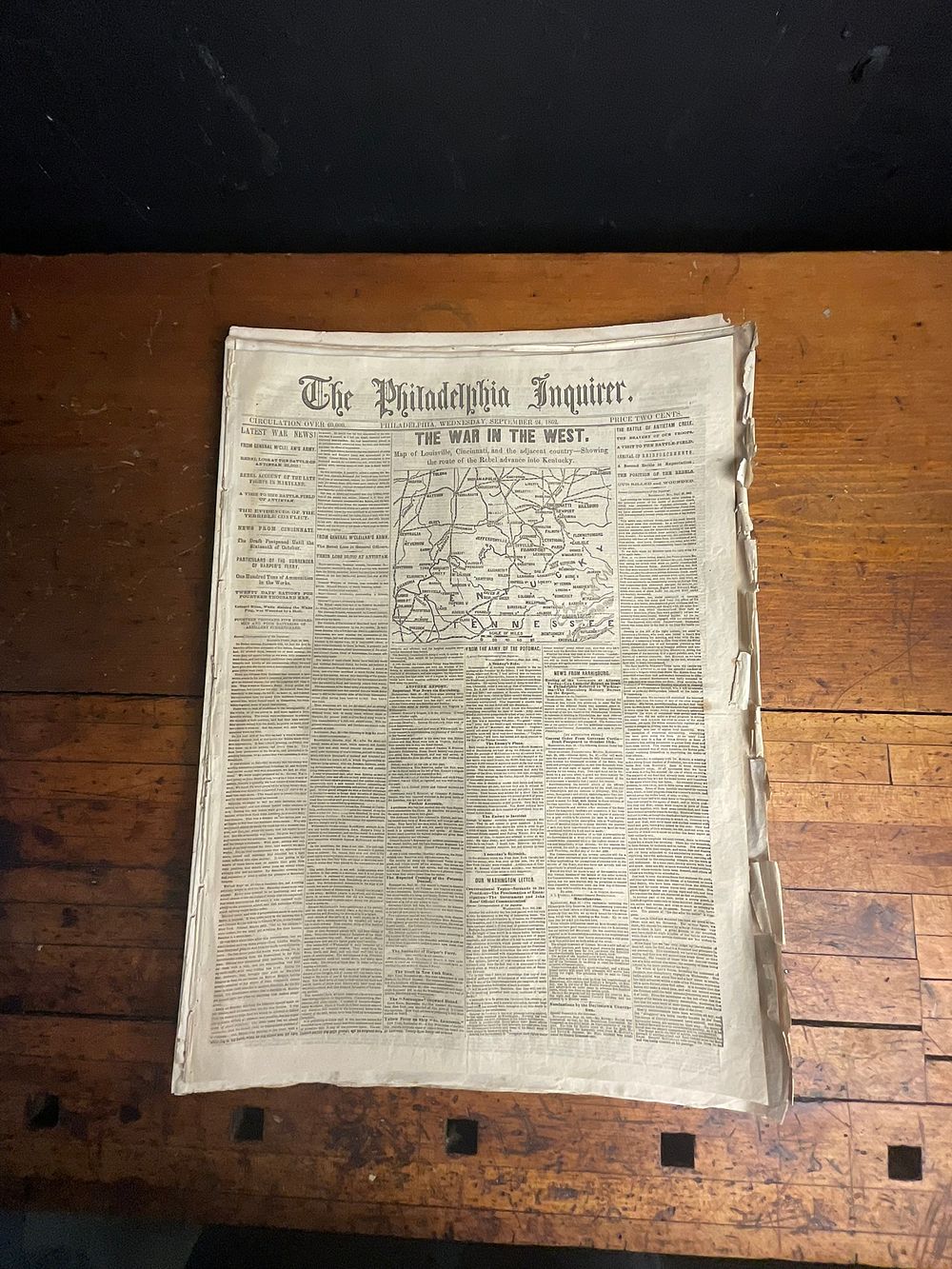
September 1862 Trio of American Civil War Newspapers including The Philadelphia Inquirer The New York Times and The New York Herald - This lot consists of a trio of original American Civil War broadsheet newspapers providing contemporary accounts of the Maryland Campaign and the Battle of Antietam. The collection includes The Philadelphia Inquirer dated Wednesday, September 24, 1862; The New-York Times dated Wednesday, September 24, 1862 (Vol. XI, No. 3433); and The New York Herald dated Saturday, September 27, 1862 (Whole No. 9510). The Philadelphia Inquirer issue features a prominent front-page woodcut map titled Map of Louisville, Cincinnati, and the adjacent country Showing the route of the Rebel advance into Kentucky. Accompanying headlines detail the surrender of Harper's Ferry and report heavy rebel losses at Antietam. The New-York Times issue leads with reports from General McClellan's headquarters, citing thirty thousand men killed and wounded since the Confederate entry into Maryland. It includes detailed breakdowns of general officer casualties and the relative positions of the two armies. The New York Herald issue provides additional accounts of Antietam from Southern sources, including General Robert E. Lee's opinion on the conflict. Notably, it contains early reporting on the reception of President Lincoln's Preliminary Emancipation Proclamation, specifically noting its reception in Missouri. Each paper contains a wealth of period advertisements, military notices, and special correspondence from the front lines. The mastheads indicate a price of two cents per issue. Height: Approximately 22 inches Width: Approximately 15.75 inches. The papers are in fair to good condition, consistent with their age and 19th-century newsprint material. All sheets exhibit significant age-toning and yellowing. The margins are ragged with frequent chipping, small tears, and minor paper loss, most notably along the right-hand edges. Clear horizontal and vertical fold lines are present from historical storage. Scattered minor foxing and small stains are visible across the pages, though the text remains largely legible.