Bidspirit auction | Pierced Pedestal Vase. Kasli Cast
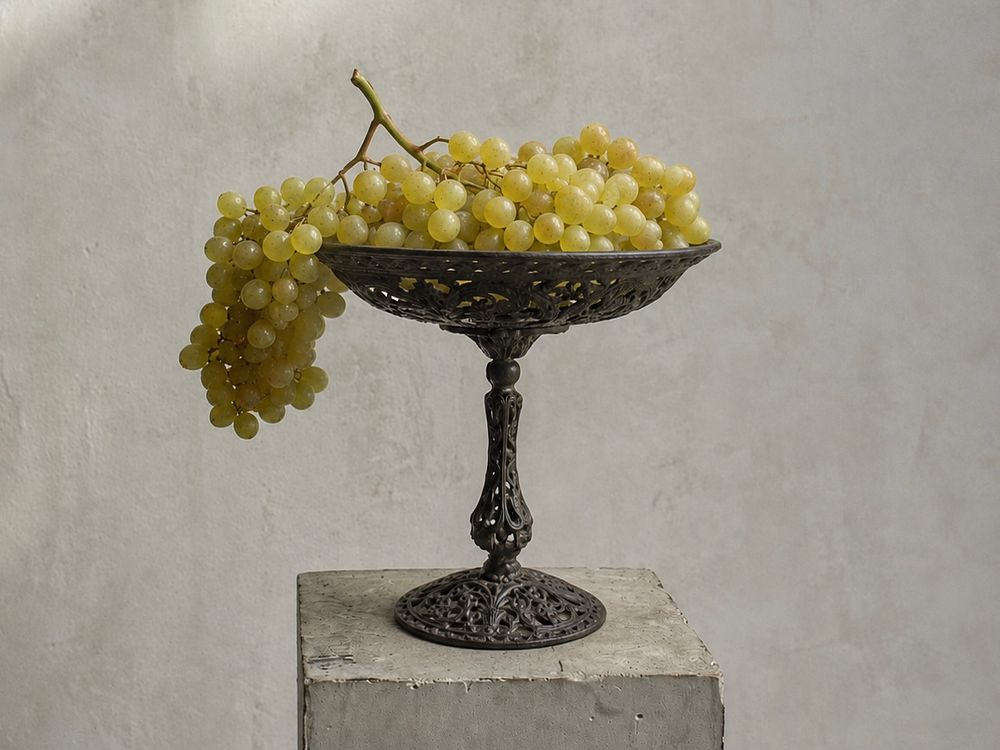
Pierced Pedestal Vase. Kasli Cast Iron Foundry, USSR. - Cast iron. Designer: Karl Friedrich Schinkel (1781–1841). Height: 19.5 cm. Diameter: 21 cm. This elegant decorative vase stands on a circular openwork base and a tall four-sided pedestal that broadens toward the bottom. The bowl is executed in the technically demanding technique of pierced cast iron and ornamented with a repeating pattern of stylized urns intertwined with acanthus shoots. At the centre of the bowl is a four-petalled rosette, while the rim is encircled by a woven ornamental band. The relief decoration is fully articulated on both sides and demonstrates the exceptional skill of the pattern-makers and foundry craftsmen. The model derives from designs produced in the early 1820s for the Royal Iron Foundry in Berlin, one of Europe’s most influential centres of artistic iron casting. Its author, the renowned Prussian architect and designer Karl Friedrich Schinkel, played a decisive role in shaping nineteenth-century decorative arts and industrial design. Schinkel’s designs for cast iron objects became celebrated throughout Europe for their refinement, clarity of form, and harmonious integration of classical and Gothic motifs. The Kasli Foundry adopted a number of celebrated European models during the nineteenth century, adapting them to its own artistic and technological traditions. Through the remarkable precision of Kasli casting, these works acquired a distinctive place within Russian decorative art while preserving the elegance of their original designs. This vase exemplifies the highest achievements of artistic cast iron production, combining architectural structure, ornamental sophistication, and extraordinary technical mastery. Its intricate openwork construction and balanced proportions make it one of the classic forms associated with the enduring legacy of Kasli iron casting. The interior visualization is for illustrative purposes only and was created using artificial intelligence technologies. The photograph of the object represents the original item.