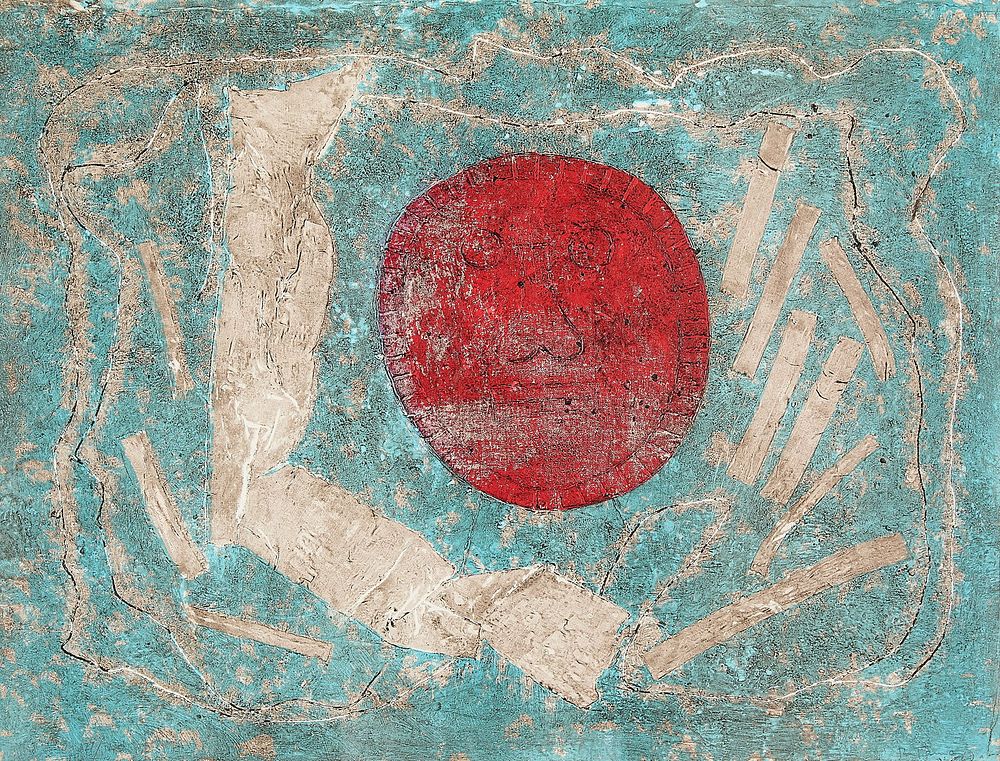
Bidspirit auction | Rufino Tamayo ”Sol” Mixografia Print
Rufino Tamayo ”Sol” Mixografia Print 1998 - Rufino Tamayo (Mexican, 1899-1991). Mixografia print on handmade titled ”Sol, ” 1998. Pencil signed along the lower right; numbered 121/140 along the lower left. With a certificate of authenticity from C.G. Rein Galleries. Provenance: C.G. Rein Galleries, Minnesota, 1998; Private Minnesota Collection. Lot Essay: Born in 1899 in Oaxaca, Mexico, Rufino Tamayo's first formal art classes occurred at Escuela Nacional de Artes Plasticas at San Carlos. As a student there he was influenced by Cubism, Impressionism, and Fauvism. He eventually left to study independently while working for Jose Vasconcelos at the Department of Ethnographic Drawings. While Tamayo was a scion of 20th-century Mexican art, he often eschewed his contemporaries such as Diego Rivera, Jose Clemente Orozco, Oswaldo Guayasamin, and David Alfaro Siqueiros. He avoided overtly political artworks in favor of what he envisioned as traditional Mexican values. For this reason, he was often met with adversity to his art. In the mid-1920s he decided to move with his wife to New York City and eventually to Paris in 1949 where he felt he could more freely express his artistic ideas. They wouldn't return to Mexico until 1959 where he would spend the remainder of his life. In the 1970s he would collaborate with engineer Luis Remba at the Taller de Grafica Mexicana to develop a new method of printmaking called Mixografia. This new method allowed for the production of three-dimensional prints with elements of relief, texture, and fine surface details. Thirty-two prints were issued between 1974-1977 on industrial paper. In 1978, the first print was issued on handmade paper. Thirty-five more would follow. Sight; height: 22 1/2 in x width: 29 3/4 in. Framed; height: 31 1/4 in x width: 38 1/4 in x depth: 1 1/2 in. Condition: There are no large tears, creases, or losses. There are a few small losses along the deckled edges, which may be original to the artistic process. The work is floated in frame on a non-acidic mat. Framed under plexiglass. Light wear to the frame. Not inspected out of frame.