Bidspirit auction | Meissen Nodding Pagoda Figure ca.
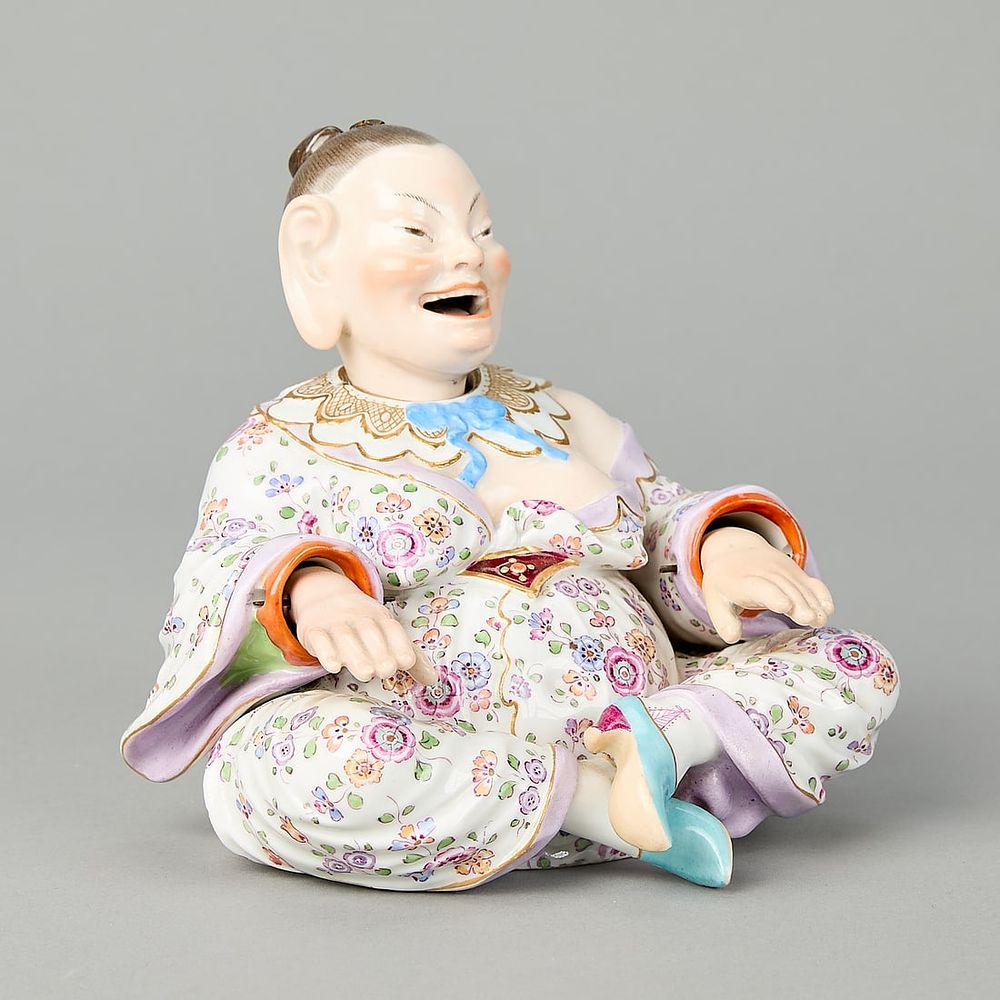
Meissen Nodding Pagoda Figure ca. 1850 - Meissen, Germany. Porcelain figurine of a nodding pagoda. Modelled with legs crossed, mouth opened in a wide smile with articulated wagging tongue, and similarly articulated head and hands, ca. 1850. Blue crossed swords mark. Provenance: Philip Suval, Inc., New York, NY, September 14, 1976; The Distinguished Collection of Leo & Doris Hodroff. These figures, known as ‘pagoda’, ‘pagodes’ or ‘magots’, were first collected by amateur collectors in Europe in the 17th and 18th centuries. The European models are called ‘pagoda’ (or ‘pagode’) figures because they were based on sculptures found in pagoda temples in South and East Asia, which represented the deities worshipped there. In the 17th and 18th centuries, these figures were created by Asia for export to Europe, where they quickly became fashionable. Their exaggerated features paired with moving heads, hands, and tongues were found to be captivating by contemporary collectors. Height: 5 1/4 in x width: 6 in x depth: 5 in. Condition: The articulated elements move well. Some tarnishing to the metal components. Light wear to the gilt. The figure's left hand has either been entirely restored or is a later addition.