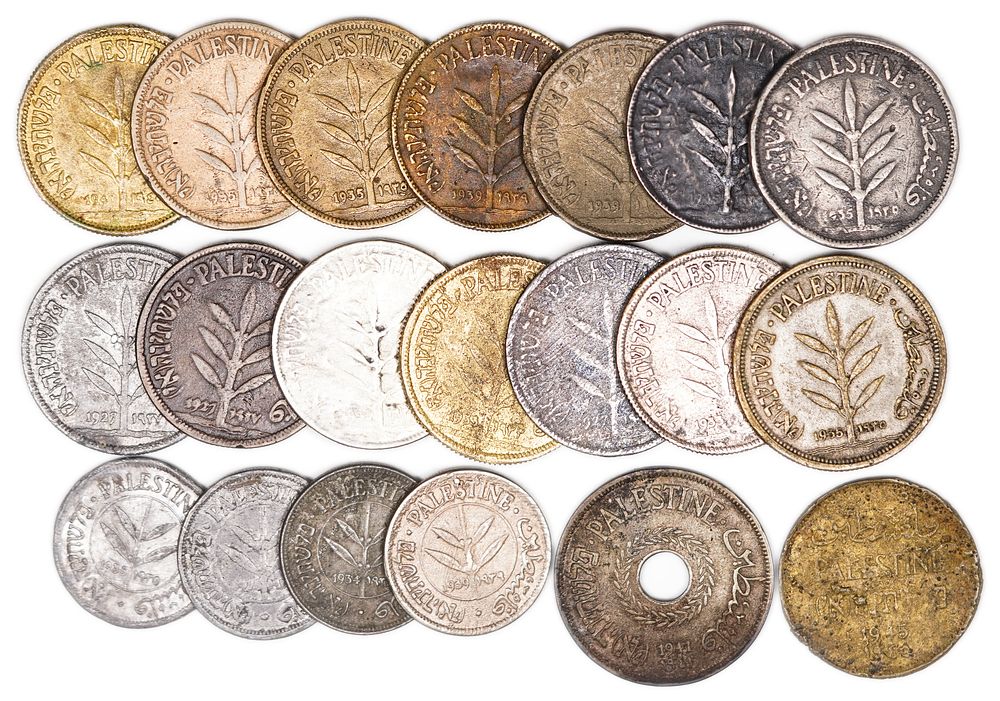
Bidspirit auction | Palestine – Lot of 20
Palestine – Lot of 20 Counterfeit Coins of the British Mandate Period – A Significant Historical and Numismatic Phenomenon - During the British Mandate in Palestine (1927–1948), counterfeit coins began to circulate alongside official issues produced under British supervision. These counterfeits emerged during the 1930s and 1940s for a variety of technical and social reasons, and have since become a distinct area of numismatic interest. Characteristics of the Counterfeits Counterfeit pieces were often manufactured from inferior metals such as aluminum, zinc, or light bronze alloys, rather than the original coinage metals. There are also known counterfeits of higher denominations—notably 50 and 100 mil coins—some of which were produced in silver-like metals or alternative alloys differing from the official composition. The striking techniques were frequently improvised or crude, resulting in discrepancies in weight, thickness, and detail sharpness compared with genuine issues. Intent and Uses The manufacture and distribution of these counterfeits had multiple motives: To alleviate the shortage of small change in everyday transactions, where counterfeit pieces were used out of necessity. For financial gain by producers and criminal networks introducing fakes into circulation. Operational uses by underground organizations: some Jewish underground groups reportedly used counterfeit coins to procure arms and equipment as part of their struggle during periods of communal violence. Strategic sabotage by external actors: in certain instances German efforts sought to undermine the British mandate by promoting or facilitating counterfeit circulation in order to damage the economy and destabilize British authority. Numismatic and Historical Significance Although unofficial, Mandate-era counterfeit coins are today valued as material witnesses of economic and social conditions under British rule. They illuminate everyday coping mechanisms, the intersection of monetary practices and political conflict, and the ways in which both local and external actors sought to influence the monetary system. Collectors and historians regard these pieces as important artifacts for understanding the era.