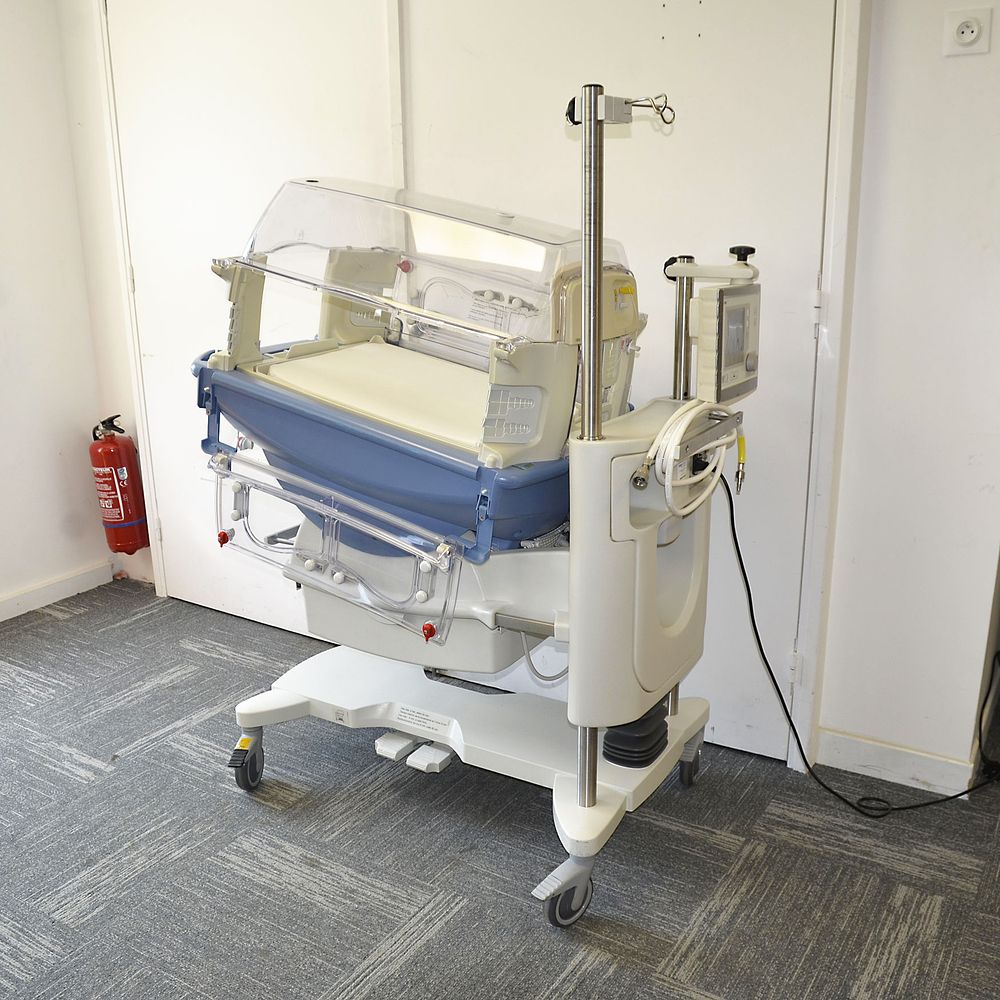
Bidspirit auction | DRAGER CALEO INCUBATOR WITH MATTRESS
DRAGER CALEO INCUBATOR WITH MATTRESS - IT MAINTAINS A PRECISE AND CONSTANT TEMPERATURE AND HUMIDITY Infants with extremely low birth weight are particularly vulnerable to hypothermia. When these infants experience heat loss, the physiological responses create a demand that exceeds the normal physiological balance. This is because the infant needs to expend energy and metabolize oxygen to produce heat. This thermal imbalance can cause heat loss and trigger a chain reaction with long-term effects such as hypothermia. Hypothermia can cause a drop in blood pressure, a reduction in plasma volume, and a decrease in cardiac output. 2 If left untreated, it can cause permanent tissue and brain damage, and even death. For a fragile newborn, a difference of just one degree can make all the difference. The Caleo 's thermoregulatory capabilities have been clinically documented to meet the specific needs of premature infants. While ideally premature infants should be kept in a protected environment free from disturbances, in reality, clinicians must have access to the baby to provide necessary care. This can significantly affect the baby. For example, in premature infants weighing less than 1500 g, both peripheral and core temperatures drop during care for 15 to 45 minutes, and it can then take up to two hours for the baby to return to its initial temperature. The ultimate goal of closed care is to create such a stable environment that very low-birth-weight babies can maintain a constant body temperature. This state is called the thermally neutral zone. Because these infants are unable to tolerate temperature fluctuations, the Caleo was designed using advanced technologies to stabilize the internal environment during procedures. The following graphs illustrate these capabilities. GOOD ACCESSIBILITY FOR THE BABY WITHOUT COMPROMISING THE ENVIRONMENT During a nurse's shift, numerous care procedures may need to be performed, such as inserting an umbilical catheter, intubating, taking a chest X-ray, administering IV fluids, repositioning, and suctioning, which requires repeatedly opening the incubator to access the baby. Exclusive JumboPorts™, 40% larger than standard portholes, allow easy access to the infant during these procedures. The Caleo directly compensates for the temperature drop caused by opening the door by creating a new type of double air curtain that maintains stable temperature and humidity, even during routine procedures. This double air curtain allows the Caleo to maintain thermal stability better than any other system tested. BE READY FOR THE NEXT PATIENT Since admission of very low birth weight infants is generally not announced in advance, a warm incubator must be available at all times for an unexpected delivery.5 This is why it is essential to have an incubator capable of heating quickly. In an in vitro comparison of heating devices, the Caleo proved to heat up faster and retain heat and humidity better, even when the access windows were open. PROVIDING THE IDEAL HUMIDITY Humidity inside the incubator is essential to prevent transepidermal water loss (TEWL) in premature infants. The table below illustrates the exponential relationship between gestational age and transepidermal water loss on the first day after birth. In extremely premature infants, TEWL gradually decreases, and the difference in TEWL between the most premature and term infants diminishes with age. Even four weeks after birth, TEWL is still twice as high in the former. INSTANTANEOUS DETECTION OF TEMPERATURE VARIATIONS A thermograph of a premature infant reveals significant temperature differences across various body parts. The infant's core temperature is not uniform throughout all tissues and organs, and the brain is generally the warmest. Taking a temperature at a single point indicates how well a baby can maintain that temperature but provides no information about the energy expended for thermoregulation. Only the Caleo offers true ThermoMonitoring by measuring, documenting, and displaying both core and peripheral temperatures. This allows you to pinpoint the exact moment a baby is at risk of hypothermia and intervene promptly. HEAT BALANCE, EASY TO LEARN Dräger has created Heat Balance, a simple and interactive way for caregivers to learn about the different types of heat loss that can affect the baby and how to use the Caleo settings to create the most thermally neutral environment possible. This training tool simulates the thermal equilibrium of infants in an incubator and demonstrates the impact of different types of heat loss and gain. Based on known physical algorithms for heat loss and documented clinical experience, it shows how the Caleo maintains thermal stability. This program also highlights the importance of all parameters in regulating the temperature of premature infants. Since Heat Balance is a smartphone application, it can be used anywhere and anytime for training.