Bidspirit auction | MANNER OF DIEGO VALENTÍN DÍAZ
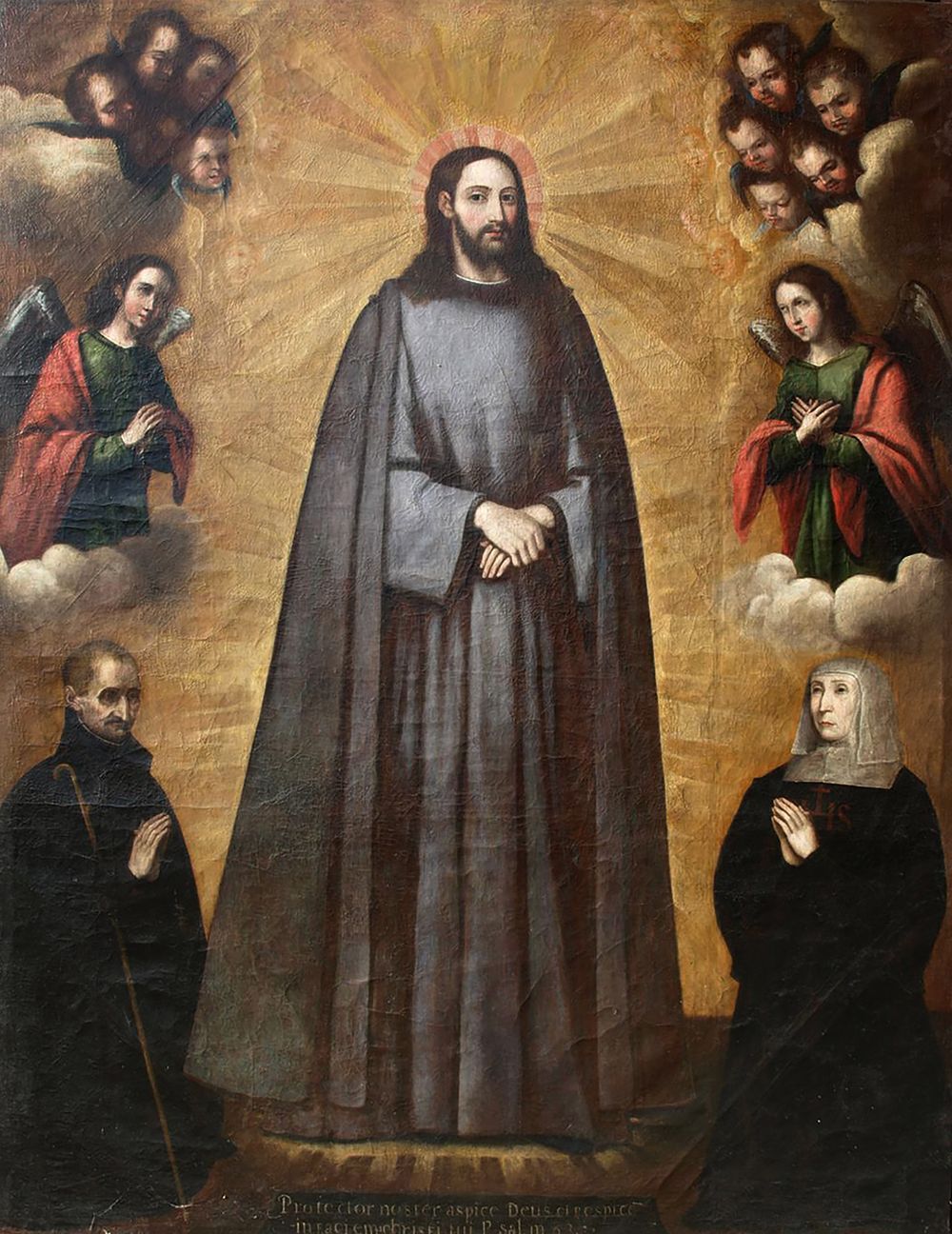
MANNER OF DIEGO VALENTÍN DÍAZ (Valladolid, 1586-1660) - Christ dressed as a Jesuit next to the Venerable Jesuit Luis de la Puente and Sister Marina de Escobar - Oil on canvas. Dimensions: 240 x 190 cm. 17th Century Spanish School - Oil on canvas - This large canvas depicts Christ dressed as a Jesuit priest, standing in the center of the composition, surrounded by angels and accompanied on either side by Luis de la Puente and Marina de Escobar, in an attitude of prayer. Christ appears wearing the gray habit typical of the Society of Jesus, unadorned, in a serene, frontal posture. The golden light emanating from his figure envelops him completely, giving him a firm and sacred presence. There is no drama: the image is intended to invite contemplation and devotion, highlighting his role as high priest and mediator. At the top, several groups of angels and cherubs float among clouds, some singing, others looking on in silence. On either side, two full-length archangels, wearing green and red robes, complete the scene, adoring Christ with their hands crossed. The treatment of the faces, the folds of the garments, and the balance of the composition reveal the hand of an expert painter, certainly linked to the style of Diego Valentín Díaz. In the lower area, the kneeling Jesuit Luis de la Puente (on the left) with his staff, and the nun Marina de Escobar (on the right), dressed in a black habit and white headdress, appear. Both were key figures in 17th-century Valladolid spirituality, and their presence in the painting directly refers to Marina's mystical visions, which described Christ as he is represented here: as a 33-year-old man, crowned by angels and dressed as a priest. At Christ's feet, a cartouche includes a verse from Psalm 63: ”PROTECTOR NOSTER ASPICE DEUS ET RESPICE IN FACIEM CHRISTI” (”O God, our protector, look upon the face of thine Anointed One”), underscoring Christ's intercessory role as a central figure of faith. This iconographic model was widely used in Castile and in the Jesuit mission territories in America. It was repeated with variations by Diego Valentín Díaz and his workshop, and this version—due to its quality, scale, and execution—can be safely dated to around 1650, during the painter's peak period.