Bidspirit auction | Exceptional Valdivia Dog mortar, Pre-Columbian,
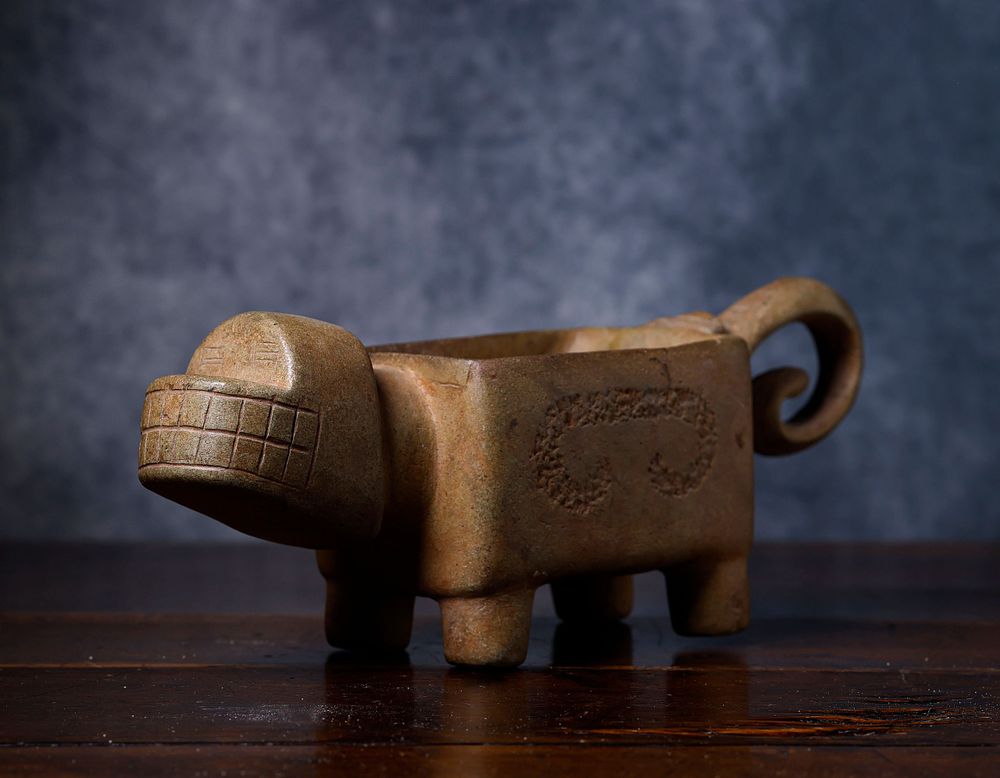
Exceptional Valdivia Dog mortar, Pre-Columbian, in alabaster - Valdivia (3500 BC–1500 BC). This zoomorphic mortar from the Valdivia culture, dated between 3500 and 1500 BC, is an extraordinary example of early pre-Columbian ceramics from the coastal region of Ecuador. Its shape represents a stylized animal, possibly a canine or feline, with a quadrangular build, short legs, and a head with geometric details that evoke an almost abstract expression. The incised decoration on its sides and its coiled tail reinforce its symbolic character. Valdivia mortars were used to grind substances, probably for food or ritual purposes. Given its elaborate design, this object may have had ceremonial uses, related to offerings, shamanic rituals, or the preparation of psychotropic substances used in religious practices. The Valdivia culture is one of the oldest in the Americas, notable for its ceramics, considered among the earliest on the continent. Characterized by female figures and zoomorphic utensils, Valdivia ceramics demonstrate an advanced knowledge of clay modeling and firing, with influences that later spread to other Andean and Mesoamerican cultures. Animal-shaped vessels are common in several pre-Hispanic cultures, such as the Chorrera, Jama-Coaque, and Tolita-Tumaco, who developed later versions of this ceramic tradition. In Mesoamerica, the iconography of zoomorphic mortars also appears in the Olmec and Mayan cultures, reflecting a shared symbolism surrounding animals as spiritual guardians or guides in the ritual world.