Bidspirit auction | Francesco Laurana (Vrana, 1430 –
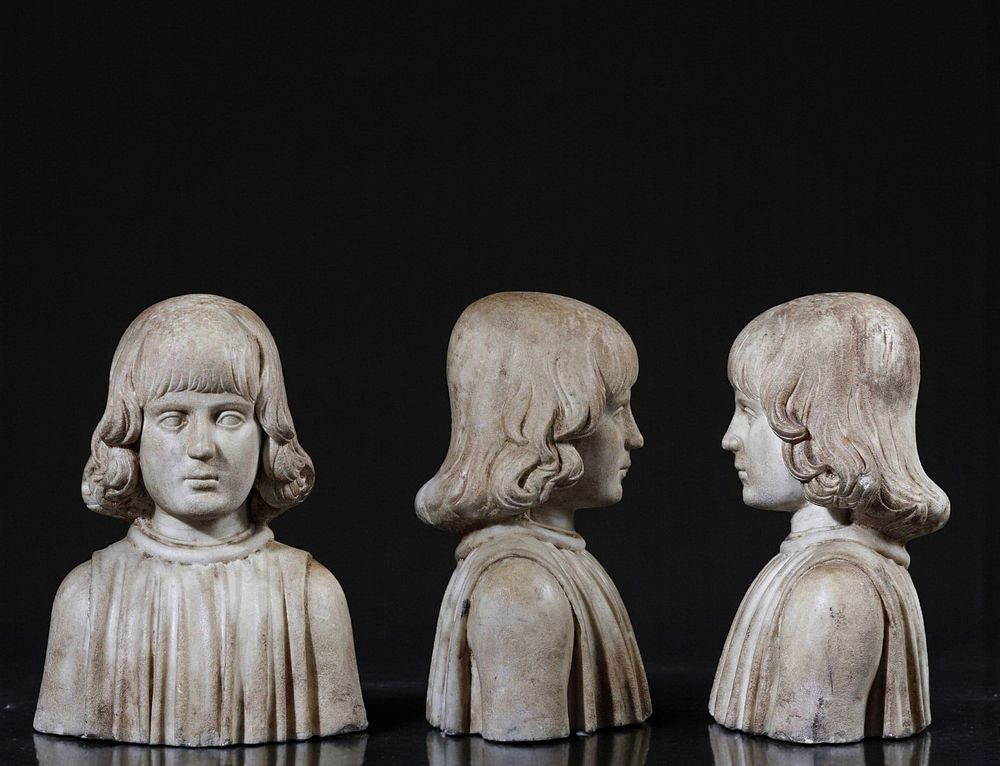
Francesco Laurana (Vrana, 1430 – Avignon, 1502) - Portrait of a young Aragonese man - Carved marble. Dimensions: 30 x 20 x 43 cm. A report by Professor Antonio Bellandi is attached. The work is accompanied by a certificate of free circulation. This marble bust, attributed to Francesco Laurana, represents a young Aragonese courtier and is an outstanding example of Renaissance sculpture from the second half of the 15th century. The work is distinguished by the purity of its lines, the harmony of its volumes, and the serene idealization of its features, characteristics that define the artistic maturity of the Dalmatian sculptor. Laurana, born in Vrana (present-day Croatia), developed a cosmopolitan career that took him to work in Naples, Sicily, Provence, and finally in Avignon, where he died around 1502. Linked to the Aragonese court, he was one of the great disseminators of the Renaissance sculptural language in southern Italy, combining Florentine idealism with Franco-Flemish influences. This portrait—with an oval face, serene expression, and introspective gaze—reveals a refined and balanced execution. The carefully smoothed marble surface and the wavy hair framing the face give the figure an almost ethereal delicacy. The sculptor achieves a balance between restrained realism and formal abstraction, a technique also seen in other works attributed to the master, such as the Bust of a Boy in the Calvet Museum in Avignon or the Saint Quirico in the Paul Getty Museum in Malibu. Professor Antonio Bellandi, in his report, highlights the stylistic relationship of this piece with the creations produced by Laurana during her second Neapolitan period—the most fruitful of her career—emphasizing the affinity in the treatment of volumes, the geometric purity of the face, and the attention to detail in the clothing and hairstyle, characteristic of Aragonese court fashion. Lot in international warehouse (within the EU). Intra-EU shipping: no import duties apply within the EU. Export permit from the country of origin may be required.