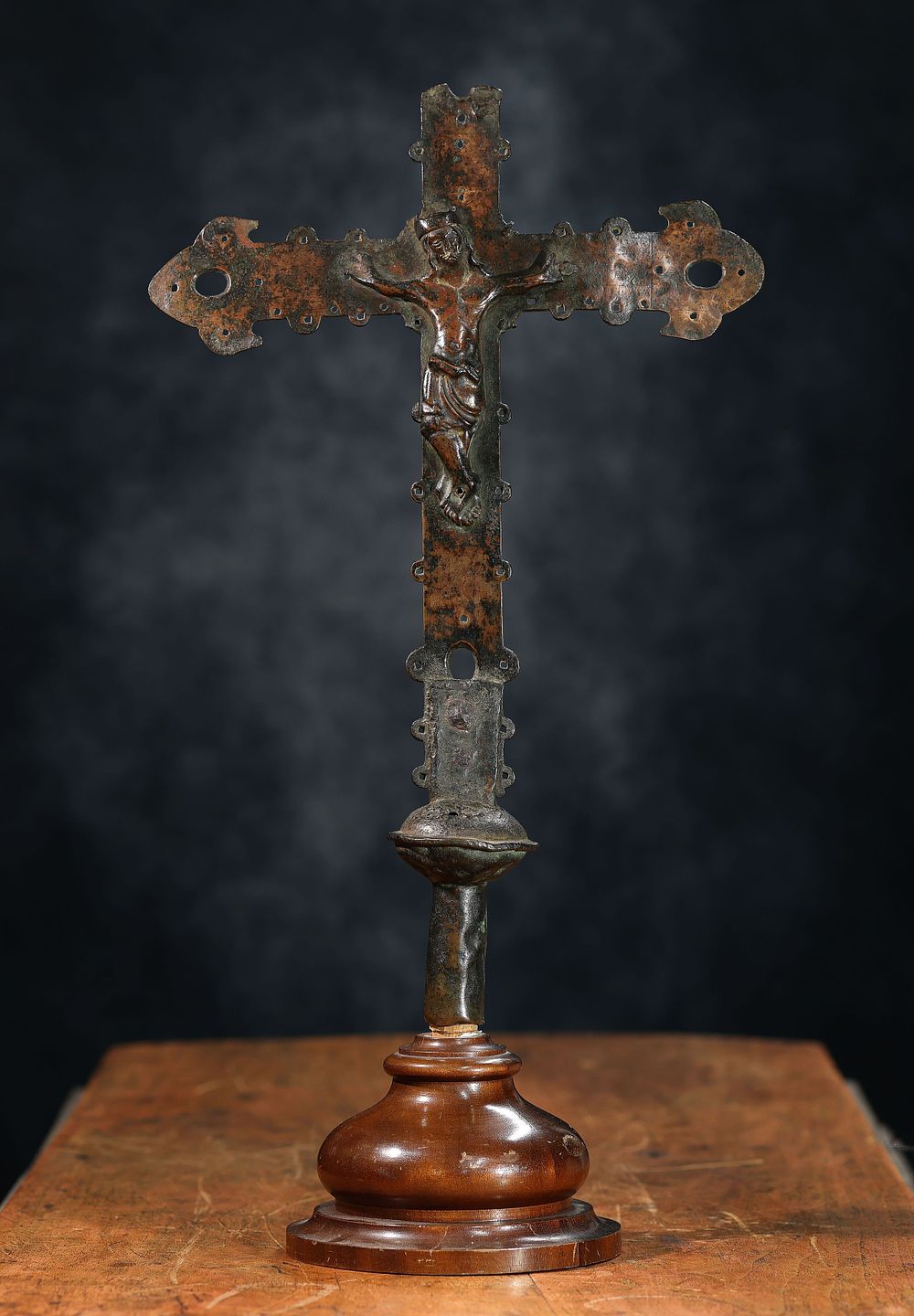
Bidspirit auction | Exceptional Silos Medieval Processional Cross
Exceptional Silos Medieval Processional Cross from the 12th century in repoussé copper, with base - In repoussé copper. 48 x 31 x 8 cm. This 12th-century Silos cross is a Romanesque metalwork piece of great symbolic and devotional power, made of copper worked using the repoussé technique—a method of hammering the metal from the reverse to create reliefs on the surface. Its dimensions, 48 × 31 × 8 cm, give it a vertical and solemn presence, probably intended for monastic or processional worship. The figure of Christ crucified stands out in the center, modeled in relief and attached to the main axis of the cross. The anatomy is stylized and hieratic, typical of the Romanesque style: the body appears frontal, rigid, and spiritualized rather than naturalistic. The loincloth falls in schematic folds, and the face retains a serene expression, more triumphant than sorrowful, in keeping with medieval iconography prior to the Gothic drama. The lower staff rises on a later turned wooden base, which appears to have been added for modern display. Originally, the piece was probably mounted on a processional stand or integrated into a larger liturgical ensemble. Formally, this work is related to the production of the medieval workshop of the Monastery of Santo Domingo de Silos, one of the most important centers of Romanesque enameling and metalwork in Spain. The so-called ”Silos group” developed an aesthetic during the 12th and 13th centuries influenced by both the French workshops of Limoges and Hispano-Muslim traditions. The piece conveys a blend of monastic austerity and artisanal refinement: the repoussé copper, the rigid symmetry, and the spiritualization of the figure of Christ are characteristic features of Castilian Romanesque art linked to the Silos area. Provenance: important private Catalan collection.