Bidspirit auction | Moshe Leib Lilienblum. Dereh laavor
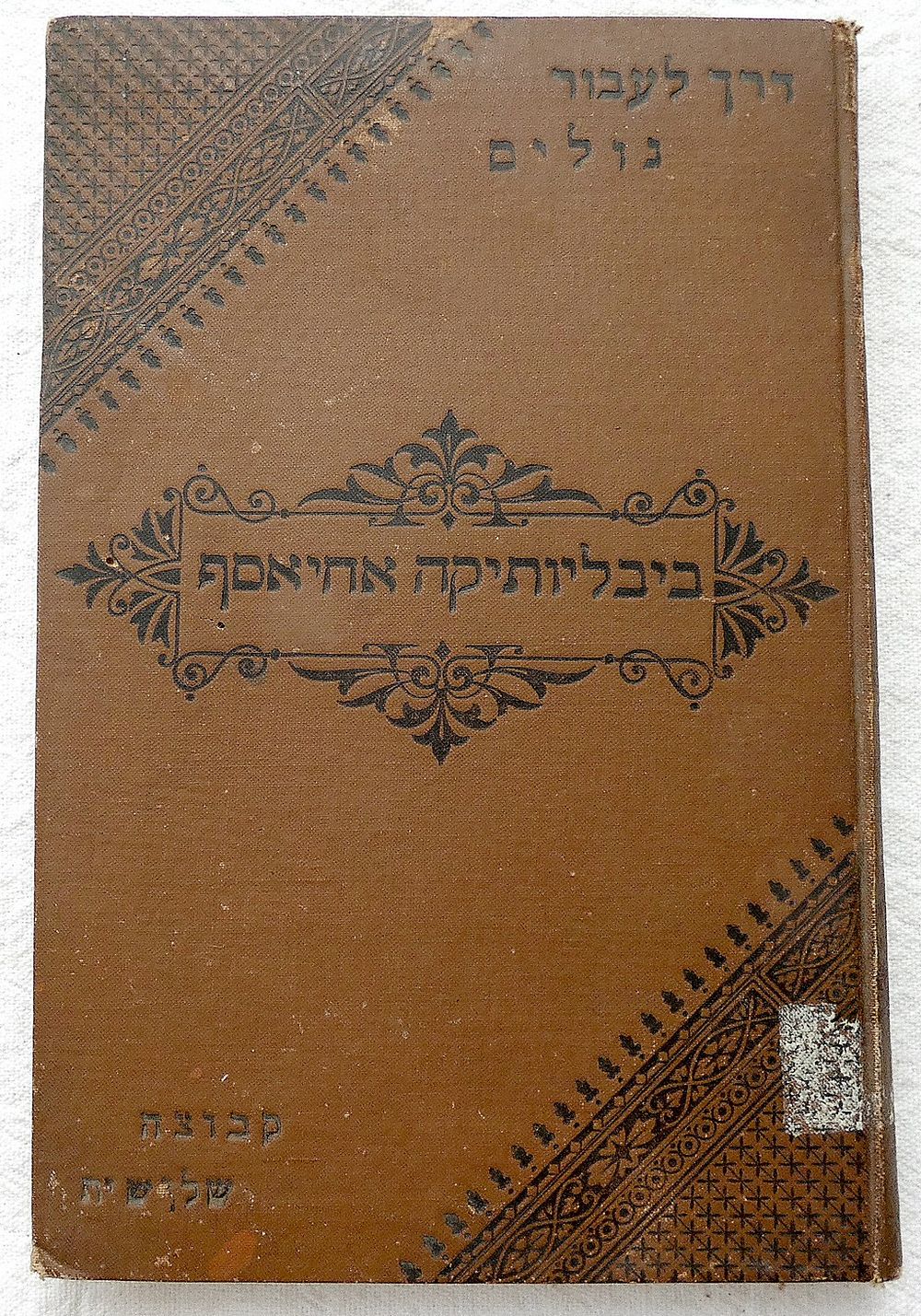
Moshe Leib Lilienblum. Dereh laavor golim (A way to pass through exiles) and Dereh Chuva (path of repentance) 1st ed., 1899, Achiasaf, Warsaw, in Hebrew, Art Nouveau design - Moshe Leib Lilienblum. Dereh laavor golim (A way to pass through exiles) and Dereh Chuva (path of repentance) 1st ed., 1899, Achiasaf, Warsaw, in Hebrew, Art Nouveau design Two books in one binding: 1. Dereh laavor golim (A way to pass through exiles), 1st ed., 1899, 162 pp., publ. by Achiasaf, Warsaw, with statistical tables 2. Dereh Chuva, Helek gimel, (3rd part) (path of repentance), 1st ed., 1899, 49 pp., publ. by Achiasaf, Warsaw, Hard cover with Art Nouveau design, 20.5 x 13.5 cm. Condition: ex-library stamps; wear to cover; covers detached; binding is loose; many foxing stains to pages Weight: 260 gr. Derek la-'Abor Golim, ” a history of the Hovevei Zion movement up to the time of the ratification by the Russian government of the committee for the colonization of Palestine (Warsaw, 1899) Moshe Leib Lilienblum (Yiddish: משה לייב לילינבלום; October 22, 1843, in Keidany, Kovno Governorate – February 12, 1910, in Odesa) was a Jewish scholar and author. He also used the pseudonym Zelophehad Bar-Hushim (Hebrew: צלפחד בר־חושים).[1] Lilienbloom was one of the leaders of the early Zionist movement Hovevei Zion. Achiasaf is a Jewish publishing house that was founded in Warsaw in 1893. The unprecedented success on the Jewish book market that befell the 24 ”five-penny books” in Hebrew (Sifrei agoro), published with the aim of disseminating national ideas among the masses by the ”Bnei Moshe” union (see) in 1891-2 under the firm ”Ben-Avigdor Publishing”, prompted the initiators of the business, headed by Ahad Ha'am, to work out the following program of publications in the national spirit, establishing the Achiasaf publishing house (meaning ”partnership”) for its implementation: 1) Ozar Isroel, a publication of Jewish classics, beginning with the Arab-Spanish period; 2) Isroel boamim, a history of the Jews in the Diaspora; 3) Hoodom we'hoolom - books on the general culture of mankind; 4) Eked sipurim, fine literature; 5) Libnei haneurim, children's books in a strictly national spirit. In 1896, the publishing house was significantly expanded on a joint-stock basis (200 rubles per share) and renamed a limited partnership (firm partners Ahad Ha'am, L. Kaplan, V. Gluskin, B. Stavsky and M. Kogan). Up to the present time (1909), A., which has very insignificant funds, has published about 2 thousand printed sheets in Hebrew, about 300 sheets in slang and 40 sheets in Russian and Polish. The largest publications are: 12 volumes of the yearbook ”Ahiasaf” (see), the magazine ”Haschiloach” (for 4 years), the magazine ”Hador” (for a year), the complete works of Ahad Ha'am, ”Haozer” by S. Finn, ”Letters” by L. Gordon, ”Daath Elohim” by S. Bernfeld, a collection of poems by medieval classics: Yehuda Halevi (sold 4-5 thousand copies); Avr. ibn-Ezra and Alharizi; translations of the works of Lippert, Spencer, Giedemann, Steinschneider, Reckendorf and many others. An attempt by the publishing house to implement Ahad Ha'am's project (see) to publish the ”Encyclopedia of Judaism” was not crowned with success: only a trial issue was printed. Pursuing exclusively ideological goals - the development of Jewish literature and the strengthening of the national self-awareness, the publishing house played a major cultural role.