Bidspirit auction | The Jews in Russia and
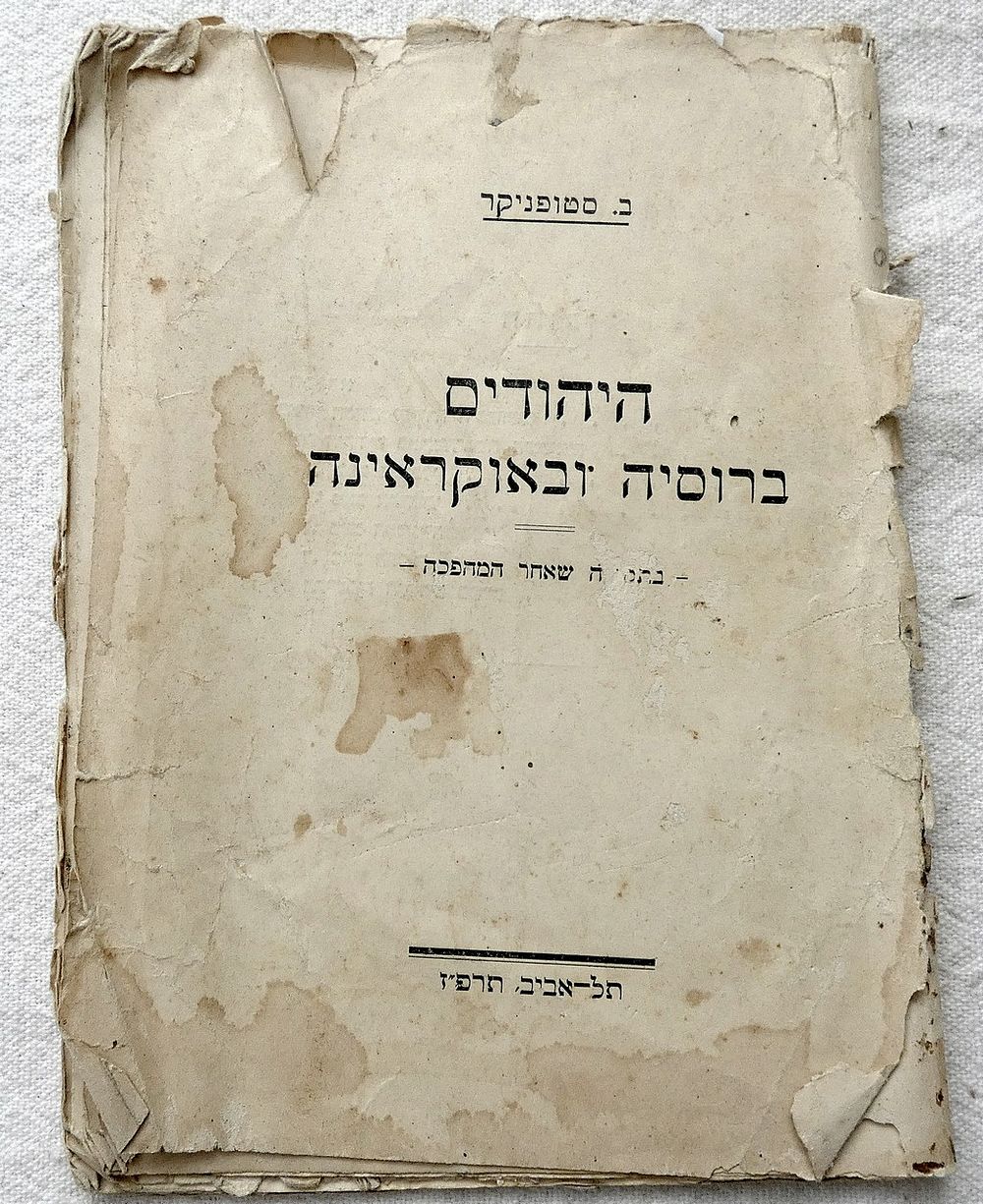
The Jews in Russia and the Ukraine by B. Stupniker (Pogroms, Kibbutzim in Crimea), 1st and only ed., 1927, in Hebrew - The Jews in Russia and the Ukraine by B. Stupniker (Pogroms, Kibbutzim in Crimea), 1st and only ed., 1927, in Hebrew With a description of pogroms and kibbutzim in Crimea Tel Aviv, 1927, 36 pp. Soft cover, 18 x 13 cm. Condition: front cover with stains, tears to edges; rear cover is missing; not cut neatly to edges; couple of stains to first pages; binding is loose; stains from rusted staples near spine. Small, soft cover book of 36 pages. Some age stains on cover; otherwise in very good condition. Jewish autonomy in Crimea was a project in the Soviet Union to create an autonomous region for Jews in the Crimean peninsula carried out during the 1920s and 1930s. Following WWII and the creation of the Jewish Autonomous Oblast in the Far East, the project was abandoned, despite the existence of more than 80 kolkhozes and an attempt to renew the project in 1944 by the Jewish Anti-Fascist Committee Baruch Stopniker Born in the town of Luber (Russian Volhynia), in 1881, to his father, Rabbi Benjamin, a Torah scholar and scholar. He received a Torah and modern Hebrew education and received general education in Russian and other European languages, specializing in the Hebrew language. From an early age, he devoted himself to Zionist activity in all areas of work, such as: distributing the shekel, distributing shares of the Jewish Settlement Fund, and collecting funds for the Keren Kayemet. After marrying, he entered the world of commerce and lived in Warsaw and later in Zhitomir, and everywhere he continued his Zionist activities. During the elections to the Second State Duma (the Russian House of Representatives), when Ze'ev Jabotinsky was presented as a candidate on behalf of the Zionists in the Volhynia region and by law every candidate had to own land registered in his name in the estate registry, Stopniker transferred his house in Zhytomyr to Jabotinsky's name, and from then on he became an admirer of Jabotinsky for the rest of his life.