Bidspirit auction | Grischa Barfuss, Jewish German Author,
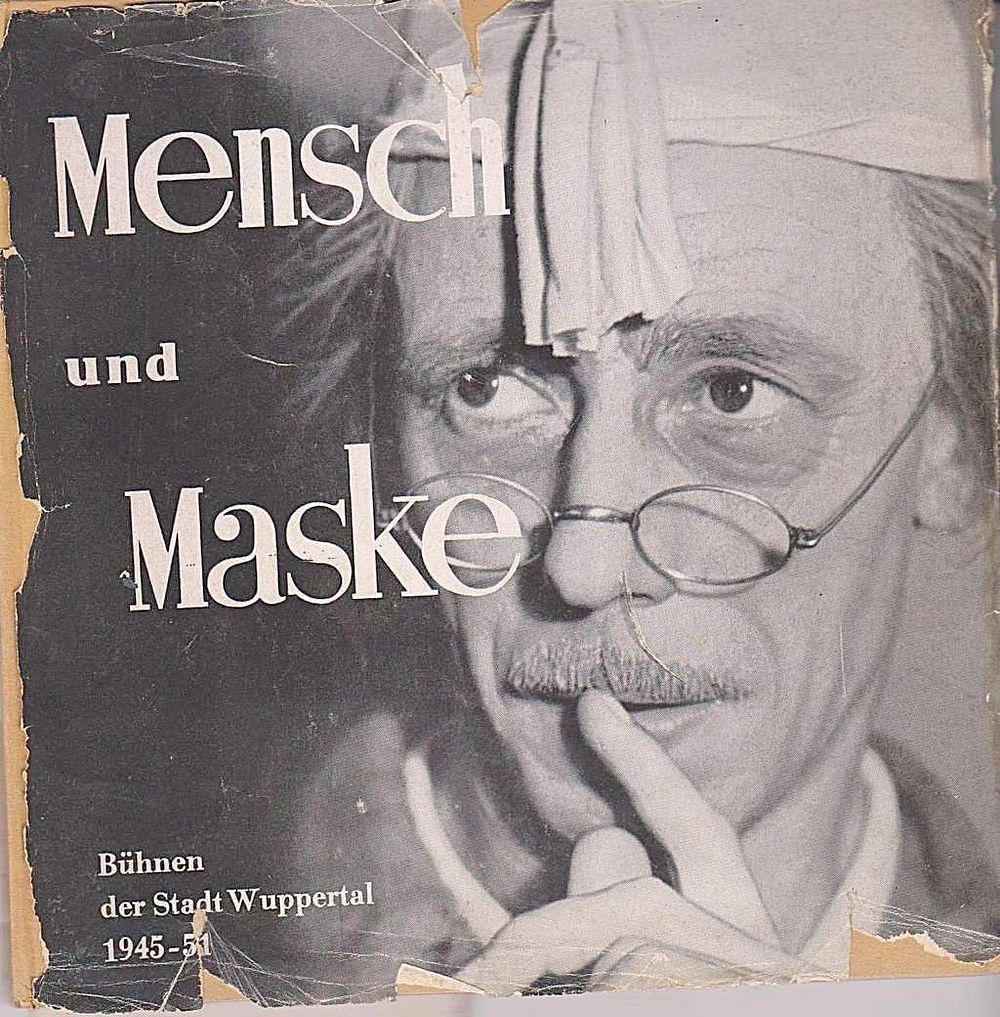
Grischa Barfuss, Jewish German Author, Holocaust Survivor, His Autograph in book ”Mensch und Maske” 1952 - Grischa Barfuss, Jewish German Author, Holocaust Survivor, His Autograph in book ”Mensch und Maske” 1952 ”Mensch und Maske” – Buehnen der Stadt Wuppertal. Wuppertal-Barmen Aussaat-Verlag ohne Datum, no date, ca. 1952., 3 pp. preface, 69 pages with photos, 3+5 pp. contents. With a list of works performed from 1945 to 1951, including opera, operetta and drama, with illustrations, by, among others, Ehrhardt Grosser, Heinrich Ingenlath, Fritz Lang, Fritz Bruenske, Otto Brehn, Ursula Kerp, Günter Heising, Elfi Albrecht, Hans Caninenberg and more Hard cover, DJ, 20.5 x 20.5 cm. Condition: DJ in bad condition, torn to 3 parts, tears to edges, wear; some wear, pale damping stain to lower edge. Some foxing to title page and several pages to edges; two pages creased. Weight: 325 gr. Grischa Barfuss (real name Hermann Barfuß, 1 March 1917 in Vilna, Lithuania; - 28 November 1995 in Duesseldorf) was a German writer and theatre director. Franz Barfuss, a musician and Catholic from Minden, met Helena Racan, a Jewish woman, in Vilna during the First World War. Their son, Hermann/Grischa, was born in 1917. The couple married in Elberfeld in 1921 and had another son, Wolfgang, that same year. In 1930, Barfuss found employment as concertmaster in Wuppertal-Elberfeld. In 1937, the Reich Chamber of Culture expelled him because of his Jewish wife, effectively banning him from his profession. Due to delays, however, he was able to continue working until October 1940. His son Grischa had to leave university in 1938, and his son Wolfgang was not allowed to begin his studies. Helena Barfuss, whose deportation was imminent, asked Berta Proepper, née Höller, whom she knew only slightly, in September 1944 if she would take her in. After consulting with her brother Theo, they both agreed to take Helena Barfuss in. Her non-Aryan husband brought food. When a fellow resident saw Helena Barfuss, she was informed of the situation. As the circle of those in the know expanded, Berta Proepper pressed for a different hiding place. From December 1944, this was found at the home of railway worker Bernhard Brück (born 1897) in Hilden. Grischa Barfuss had already fled to the Oberbergisches Land region in September 1944. There, he hid in a forest cabin in Krähenbach near Dhuenn, which belonged to Charlotte Debes, née Weck, and which she made available to him after he revealed his plight to her. She also provided him with heating fuel and food. In December 1944, he returned to Wuppertal and lived in hiding with Cläre and Leni Bläser. In February 1945, he fled from the Gestapo to his parents' home in Hilden. Initially, Helene, Franz, and Grischa Barfuss pretended to have been bombed out of their home; later, they told them about their persecution. They also found shelter with Bernhard Brueck's brothers, Hermann in Hilden and Joseph in Langenfeld, and for a few days at a time with Berta Proepper again.