Bidspirit auction | Reuven Rubin
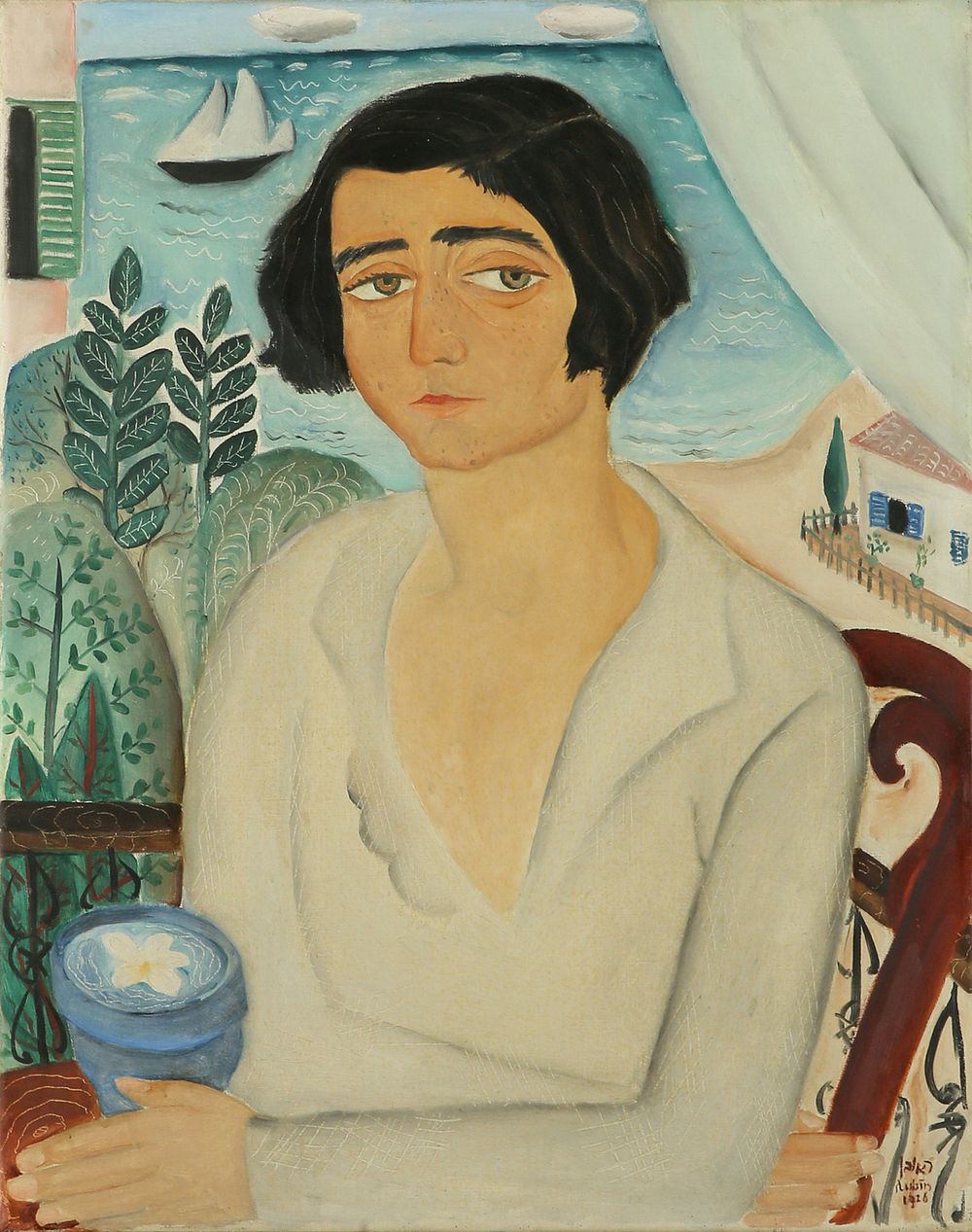
Reuven Rubin - 1893 – 1974. Portrait of Nechama Gur, 1926, Oil on canvas, 65x50 cm. Signed and dated. Literature and Exhibition: Dreamland – Reuven Rubin and his Encounter with the Land of Israel from the 1920s and 1930s, Tel-Aviv Museum of Art, November 2006, p. 118. (Illustrated). The authenticity of the painting has been confirmed by Ms. Carmela Rubin, Reuven Rubin Museum, Tel-Aviv. Nechama Gur (1903–2000), daughter of the linguist Yehuda Gur and Rachel Neyman, was a central cultural figure in the Tel Aviv of the 1920s and 1930s. She studied painting in Paris, was fluent in several languages, and translated Russian and French literature into Hebrew. She was known for her beauty, intelligence, and quiet charisma. Rubin painted her in 1926, when she was 23 years old. She sits in a corner of a bright room, sunlight streaming in from a window behind her. She wears a light pink short-sleeved dress with a modest collar. Her brown hair is pinned back. A bouquet of flowers rests on the table beside her, echoing the flowers in Rubin’s other still-life works from the same period. Gur’s gaze is steady, her expression calm and introspective. She looks directly at the viewer with clear, intelligent eyes. Rubin paints her with remarkable tenderness and restraint — there is no romantic idealization here, but rather a deep and quiet attentiveness. The background is neutral; the tones are muted, dominated by earth and rose. Her presence radiates inward strength and personal dignity. This portrait has long been considered one of Rubin’s most beautiful and moving. It captures not only the personality of the sitter but also the atmosphere of Tel Aviv’s intellectual elite of the time — a small, pioneering society in which women like Nehama Gur played a central role. Erdman’s engagement with Rubin’s legacy is not incidental. As the granddaughter of a founding figure, she embodies a cultural moment: the heir to the generation of revivalists, yet forging her own voice as a woman of letters and art, a bridge between Eastern European Jewish tradition and the Hebrew culture then emerging in the Land of Israel. The portrait preserves a moment of youthful stillness, of contemplative identity. In retrospect, it also conveys something of the era’s delicate idealism — an age of creation, modesty, and belief in the power of art.