Bidspirit auction | Avi Sabah
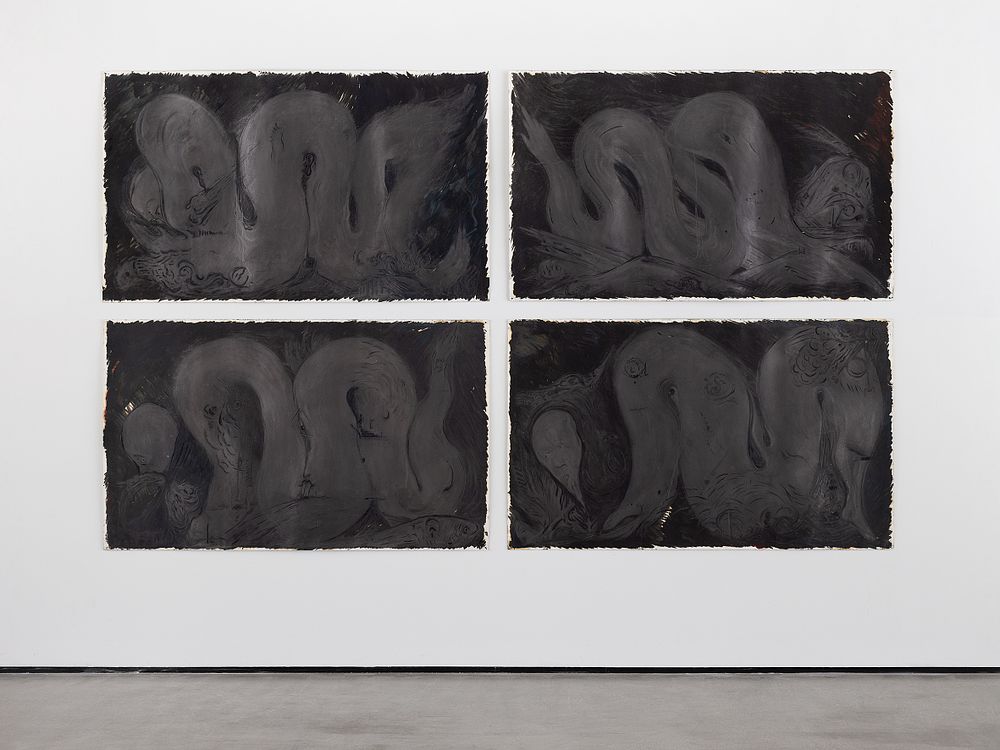
Avi Sabah - b. 1977. Earthly Distance, 2019 Oil and graphite on paper, 360x200 cm. Avi Sabah, born 1977, Ma’alot-Tarshiha; lives and works in Coimbra, Portugal, and Tel Aviv. Avi Sabah is an artist whose practice focuses on painting and drawing. He graduated from the Department of Fine Arts at Bezalel Academy of Arts and Design Jerusalem (2004), where he has been teaching since 2006. Sabah is a co-founder of Barbur Gallery in Jerusalem, a socially engaged contemporary art gallery. Sabah has presented solo exhibitions in Israel and abroad, including at the Jerusalem Artists’ House (2005, 2008); the Haifa Museum of Art (2010); Regina Rex Project Space, New York (2016); the Asunción Biennial, Paraguay (2017); the Curitiba Biennial, Brazil (2017); the Herzliya Museum of Contemporary Art (2020); the Tel Aviv Museum of Art (2024); the Tel Aviv Artists’ Studios (2025); and the Artists’ Residence Herzliya (2026). He has also participated in numerous group exhibitions at Galerie Hafenrand, Hamburg (2009); Tate Modern, London (2010); the Petach Tikva Museum of Art (2012); the Biennale for Drawing in Israel, Jerusalem (2016); MoBy – the Museums of Bat Yam (2019); Museo Gurvich, Montevideo (2023); Aninat Galería, Santiago, Chile (2023); the Haifa Museum of Art (2023); and the Israel Museum, Jerusalem (2024), among others. His work is held in the collections of the Tel Aviv Museum of Art; the Israel Museum, Jerusalem; the Haifa Museum of Art; and the Petach Tikva Museum of Art, as well as private collections in Israel and abroad. He has received the Osnat Mozes Painting Prize for a Young Artist (2008); the Young Artist Award from the Ministry of Culture and Sport (2011); a grant from the Yehoshua Rabinovich Foundation for the Arts (2014); a Mifal Hapayis grant for a catalogue (2014); the Minister of Culture Award (2018); and the Rappaport Prize for a Young Promising Israeli Artist (2022). Sabah’s work explores the interplay between material, memory, and states of consciousness. Over the years, he has developed experimental methods that include the use of unconventional materials, such as tar and cooking oil, as well as burning or burying works as part of the creative process. He works in series that evolve over time, each defined by shared material and visual characteristics. Images of landscapes, rocks, fire, smoke, and ruins recur in his paintings, alongside scenes linked to personal memories, dreams, and myths. In the series The Great Smoker (2020–24), images of smoke and burning are associated with rage, destruction, and annihilation, and with the tension between breathing and suffocation. The figure of the smoker refers both to Sabah’s father, who was a heavy smoker, and to a divine, hidden father figure with destructive power. The everyday act of smoking thus takes on broader significance, touching on the relationship between the body and the world, between inhaling and exhaling, and between creation and obliteration.