Bidspirit auction | Karin Kneffel: G III
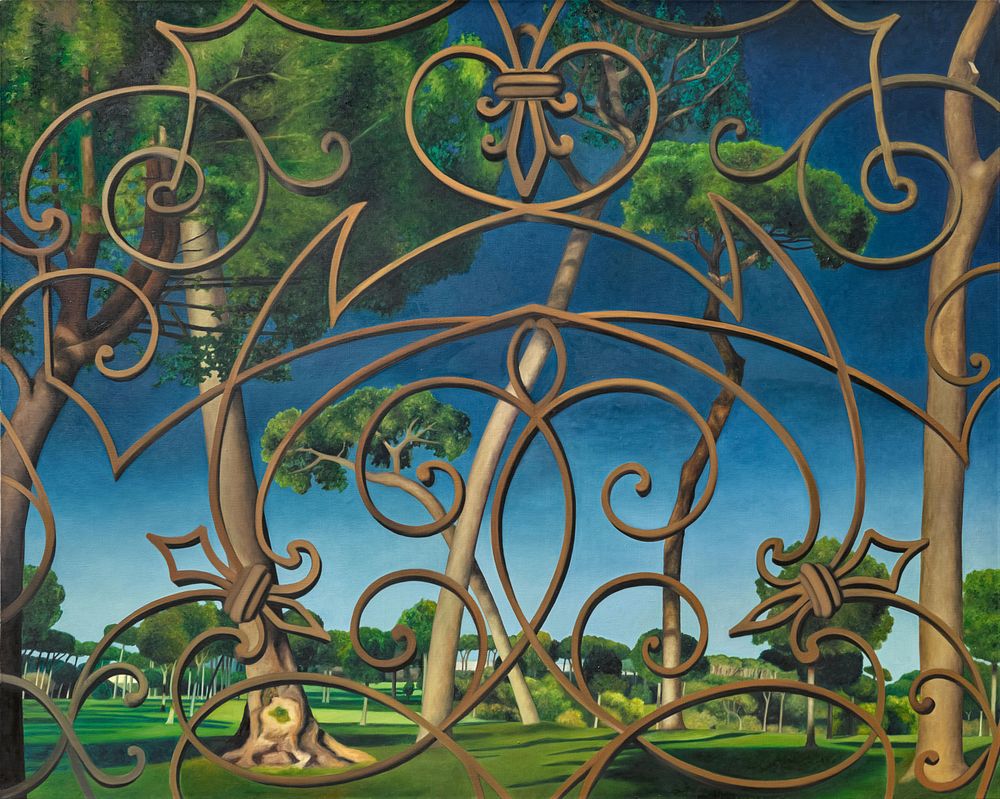
Karin Kneffel: G III - KNEFFEL, KARIN 1957 Marl Title: G III. Date: 1997. Technique: Oil on canvas. Measurement: 200 x 250cm. Notation: Signed, dated and titled verso upper left: Karin Kneffel 1997 (G III). Frame/Pedestal: Framed. The work is listed on the official internet site of the artist under the year of creation. (www.kneffel.de) Provenance: - Schönewald Fine Arts GmbH, Düsseldorf (label) - Barbara Mathes Gallery, New York (label) - Galerie Schönewald und Beuse, Xanten - Corporate collection Germany Exhibitions: - Bonner Kunstverein, 1998 - Kunsthalle Emden, 2001 Literature: - Exhib. cat. Catrin Backhaus, Karin Kneffel in: Es grünt so grün, Bonner Kunstverein, 1998, p. 43, ill. - Exhib. cat. with a catalogue of selected works, Karin Kneffel, Kunsthalle Emden, 2001, cat. no. 14, ill. - Exhib. cat. Karin Kneffel 1990-2010, Kunsthalle Tübingen, 2010, p. 133 - Exhib. cat. Carmen F. Rivera (ed.), Karin Kneffel, La ventana y el espejo, museo de arte contemporaneo A Coruna, 2014, p. 19 - The relationship between viewer and image becomes the central theme of the picture - Kneffel's image-analytical approach is translated here into concise motifs - Kneffel is one of the most important contemporary artists Indulgent painting as media criticism At the end of the 1990s, Karin Kneffel became internationally successful with paintings whose hyper-realistic effect she achieved through a meticulous painting style with extremely fine brushes. In the 1980s, Kneffel produced portraits of animals, such as chickens and cows, in contrast to the expressive gestures of the Neue Wilde. With the subversive emptying of meaning and undermining of the traditional, representative genre of painting by introducing such questionable subjects, the master student of Gerhard Richter pursues a decidedly image-analytical painting that takes into account and deconstructs both genre-specific guidelines and production and reception aesthetic criteria. In Kneffel's works, the enamel of the colour application, the sensual surface stimulus initially seduces the viewer. An irresistible closeness to the realistically reproduced motif is created, often larger-than-life plump fruit, sometimes shimmering coloured flowers and still lifes, whose perfect appearance is captured so vividly and strikingly that the reference to the consumer-oriented visual language of advertising and the associated effects of Pop Art becomes obvious. Through her choice of subjects and stylistic devices, Kneffel simulates specific characteristics linked to historical epochs or genres. She draws on the various painterly possibilities to create changing (pictorial) realities. By referring directly to the intention of creating illusions, Kneffel demonstrates the essential quality of painting as such: The inherent artificiality of the medium, the pretence and falsification of intention, becomes the central theme of the picture. The present painting ‘Landscape’ is a particularly impressive illustration of Karin Kneffel's media-critical approach. Behind an ornate cast-iron grid, an extensive plot of land with slight hills and groups of trees stretches out like a park, possibly surrounding a stately home. However, the tall, unruly, crooked pine trees contrast with the curved vegetal ornamental shapes of the lattice. The sun is low on the horizon and the blue tones of the sky change from a light, airy light blue at the bottom to a saturated ink blue at the top of the picture. The viewers: outside or inside? However, one pictorial element with an unrivalled presence comes to the fore. The volutes of the lattice, which taper into heraldic fleurs-de-lis, fill the picture and virtually block the unobstructed view of the idyll. By introducing this disruption, Kneffel bypasses the conventional form of depiction of the landscape evoked in the title. Her works cast doubt on the credibility of the image; above all, the topos of the image as a window is undermined. The (impaired) gaze and the viewing process itself take centre stage in this painting. Karin Kneffel's paintings prove to be pictures of fragile images. In them, the artist reveals the manipulative power of the artist: Through him, viewers are given access to the pictorial event, but through him they also remain on the outside, they are presented in their role as voyeurs, sometimes as intruders - but above all thrown back on their reality. With this rejection, Kneffel nevertheless seems to turn the classic repoussoir motif, which is intended to show the viewer the way into the pictorial event, into its opposite. But she also seems to refute art-historical considerations, such as those set out by Wolfgang Kemp in his influential book ‘Der Betrachter ist im Bild’. With subtlety and humour, Kneffel thus transfers the function of the grid to the fundamental relationship between viewer and picture.