Bidspirit auction | GERMAN WW2 NSDAP PARTY CONVENTION
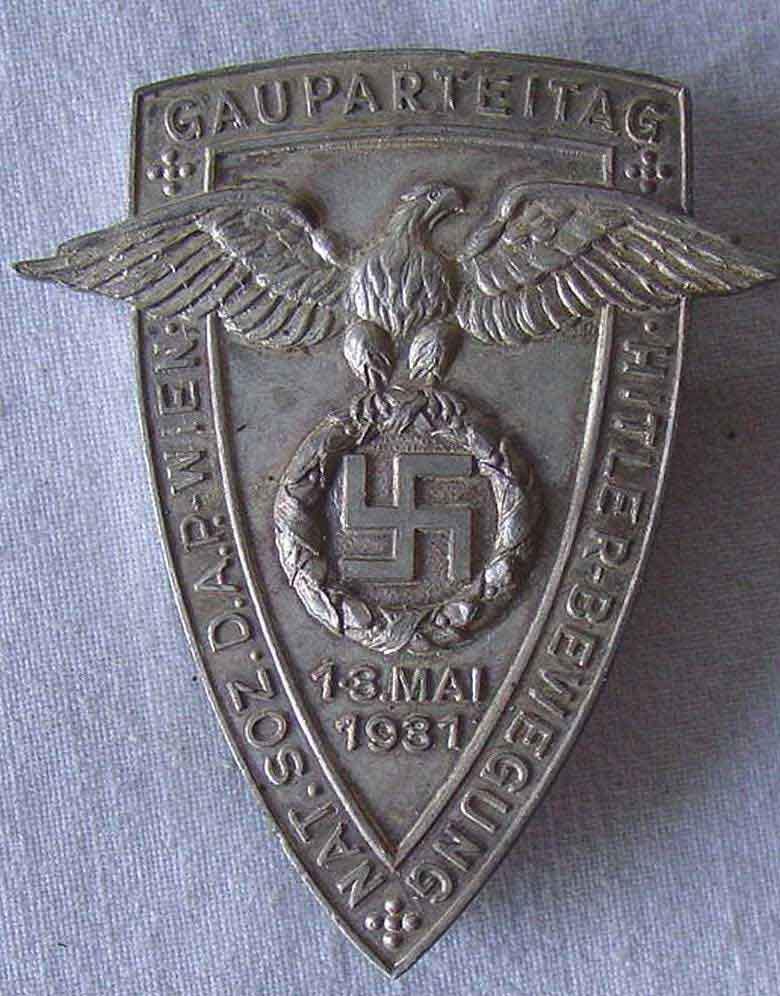
GERMAN WW2 NSDAP PARTY CONVENTION BADGE, 1931 - GERMAN WW2 NSDAP PARTY CONVENTION BADGE, 1931 1931 year is a two years before Hitler seized power. At that point Austria was not yet annexed to Germany and the number of Austrian NSDAP members was limited. REFERENCE : Jorg Nimmergut, 'Deutchland catalog, 1800-1945', 2006, page 500, catalogue price is 1500 EURO ($1900 - 14 years ago !!!). Selling on consignment. Please note: last image is for sample only. ESTIMATE PRICE : $2000 - $2500. OFFER : If an item is NOT SOLD, you can still give us a reasonable offer - please save the link of this page. PAYMENT : Credit Card payment, Wire transfer, Check or Money Order payment are also available. International bidder can use PayPal for payment. PAY in PARTS : You can pay for any item during 2-3 months. Just make a deposit 10% and the item will wait for you. SHIPPING : Let us Handle Your Shipping. We are one of the few places that offer full service shipping. For your convenience we will ship your item - shipping costs will be included in the invoice. Combined shipping is available - next item will be ONE DOLLAR for shipping. NEW : Returning customer will have FREE SHIPPING in USA and 50% DISCOUNT on international shipping. WIKIPEDIA : The National Socialist German Workers' Party (German: About this sound Nationalsozialistische Deutsche Arbeiterpartei , abbreviated NSDAP), commonly referred to in English as the Nazi Party was a far-right political party in Germany that was active between 1920 and 1945 and supported the ideology of Nazism. Its precursor, the German Workers' Party (Deutsche Arbeiterpartei; DAP), existed from 1919 to 1920. The Nazi Party emerged from the German nationalist, racist and populist Freikorps paramilitary culture, which fought against the communist uprisings in post-World War I Germany. The party was created as a means to draw workers away from communism and into volkisch nationalism. Initially, Nazi political strategy focused on anti-big business, anti-bourgeois and anti-capitalist rhetoric, although such aspects were later downplayed in order to gain the support of industrial entities and in the 1930s the party's focus shifted to anti-Semitic and anti-Marxist themes.