Bidspirit auction | A Kabbalistic Discovery! Ha'ilan Ha'kadosh
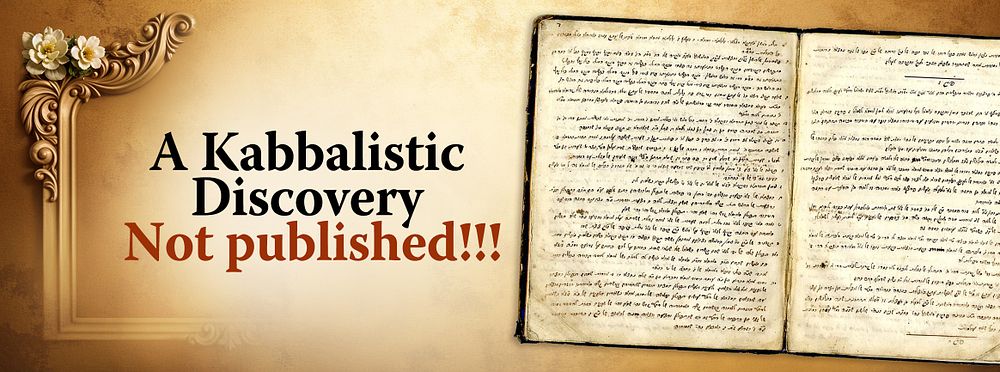
A Kabbalistic Discovery! Ha'ilan Ha'kadosh by the Ramchal with an Unknown Commentary – Mid-19th Century - A significant Kabbalistic manuscript in Ashkenazi handwriting—Ha'ilan Ha'kadosh by Rabbi Moshe Chaim Luzzatto (Ramchal) with an unknown commentary—mid-19th century. This manuscript, consisting of [27] pages, contains Kabbalistic insights, some of which appear to be previously unknown. Written in Europe or the Land of Israel in the early 19th century (mid-1800s), it includes ”Principles of Ha'ilan Ha'kadosh” (pages 7a–11a), authored by the Ramchal and divided into ten chapters. This section was first published in his work Choker U'Mekubal (Shklov, 1785). The main text features “External Keys” and “Internal Keys” centered on Ha'ilan Ha'kadosh. To the best of our research, this commentary has not been published. The work closely follows the Ramchal's methods, elaborating on his Klach Pitchei Chochma (138 Openings of Wisdom). The writing is notably well-organized, and while the author was an Ashkenazi Kabbalist, his structured style differs from typical Ashkenazi Kabbalistic writings of the era. The author's identity is unclear, but it is evident he was a highly accomplished Ashkenazi Kabbalist well-versed in esoteric wisdom. The External Keys are divided into two parts: Part A: 43 sections. Part B: 12 sections. The Internal Keys are also divided into two parts: Part A: 14 sections, followed by ”Ten Principles.” Part B: 41 sections. The Keys appear both before and after Ha'ilan: pages 3a–6b; 11a–14b. At the beginning of the manuscript, there are three pages with explanations of Jacob's blessings to his sons, incorporating Gematriot and an interpretation of the statement: ”David came and established them on eleven.” These insights also appear to be unpublished. [14] leaves, a total of [27] written pages. Size: 20.5 cm. Condition: Good. The corners of the first two leaves are missing (minor impact on a few words). Stains and signs of use, mainly on the corners. Bound in an old cardboard cover, slightly damaged and worn.