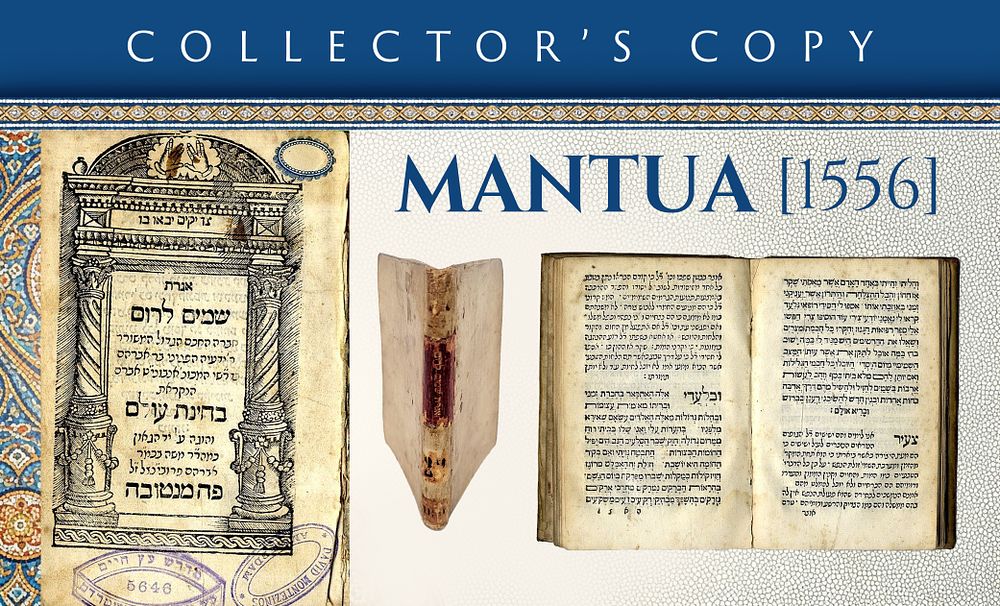
Bidspirit auction | Iggeret Shamayim la-Rom (Beḥinat Olam)
Iggeret Shamayim la-Rom (Beḥinat Olam) – Copy of the bibliographer and librarian of the “Ets Haim” Seminary in Amsterdam, David Montezinos. Mantua, [1556] - Iggeret Shamayim la-Rom, also known as Beḥinat Olam – a philosophical ethical treatise by Rabbi Yedaya ha-Penini ben Avraham ha-Bedersi, one of the sages of southern France in the early 14th century. A highly poetic and moral discourse on the vanity of this world and on the paths leading man toward spiritual perfection and eternal happiness. At the end of the work (fols. 42–44) appears for the first time the long poem beginning “Shir… ḥavero… R. Yedaya ha-Penini…”, in which every word begins with the letter Lamed, and no other letter of the alphabet appears. The poem, known as “Bakashat ha-Lamedin” and also titled “Batei ha-Nefesh” or “Beit El”, was not written by Rabbi Yedaya but rather by his father, Rabbi Avraham ha-Bedersi (see: J. Ben-Jacob, Otzar ha-Sefarim, p. 71, no. 280; Otzar ha-Shira ve-ha-Piyyut, vol. 3, p. 37, no. 800). On the title page are ownership stamps of David Montezinos, the noted bibliographer, collector and librarian of the “Ets Haim” Seminary in Amsterdam. On fol. 5, verso, there are ten handwritten marginal notes. David Montezinos (1828–1916) – scholar and bibliographer of Amsterdam, son of Rabbi Raphael Montezinos, rabbi of the Portuguese community (1852–1866). In 1866 he was appointed librarian of the “Ets Haim” Seminary and significantly expanded its holdings. In 1889 he donated his large and important private collection to the library, which then became known as the “Ets Haim-Montezinos Library.” During World War II the collection was looted by the Nazis and transported to Germany; after the war most of it was recovered and returned to Amsterdam, though several rare books and manuscripts were never found. Rabbi Yedaya ha-Penini ha-Bedersi (ca. 1270–1340) – poet, physician, and philosopher from Béziers in Provence. A devoted follower of Maimonides, he vigorously defended philosophical study during the famous controversy on the subject; his response appears in Responsa of the Rashba, no. 518 (“Asher shalach ha-ḥakham Anvonit Avram”). Mantua, [1556]. [44] leaves. 14.5 cm. Very good condition. Light age-staining. Original parchment binding.