Bidspirit auction | Manuscript of Previously Unknown Torah
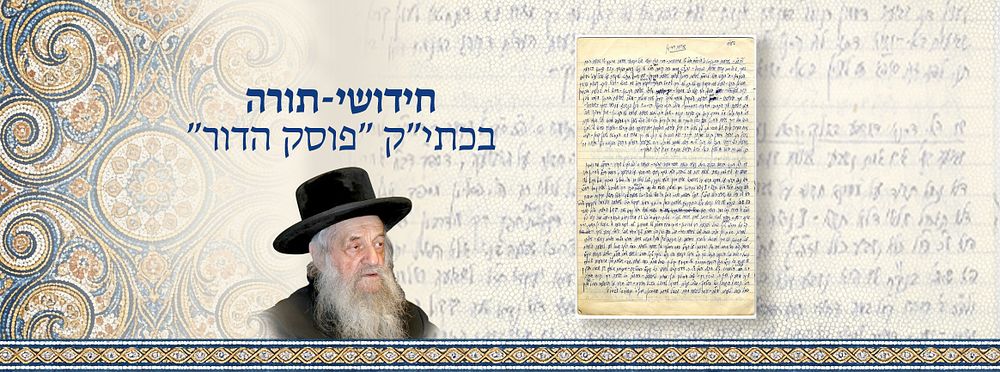
Manuscript of Previously Unknown Torah Novellae in the Handwriting of the “Posek HaDor, ” Maran, Author of Shevet HaLevi - A Rare and Moving Discovery – A Manuscript of Unpublished Torah Novellae in the Handwriting of the “Posek HaDor, ” Rabbi Shmuel Halevi Wosner ztz”l, Author of Shevet Halevi An exceptionally important and unique notebook containing previously unknown Torah novellae in the original handwriting of Rabbi Shmuel Halevi Wosner ztz”l, one of the greatest halachic authorities and Chassidic Roshei Yeshivah of the last generation, author of the monumental She’elot u-Teshuvot Shevet Halevi. This remarkable manuscript, written in pen on lined paper, consists of four large pages (A4 size), densely filled yet written with remarkable clarity—over 600 words per page, approximately 2,500 words in total, all in his distinct and recognizable holy script. The text contains deep analytical insights on Tractate Shevuot (31–46), about twelve comprehensive and self-contained discussions, each comprising hundreds of words. These novellae appear to be largely unpublished, recorded in the Rav’s own sacred handwriting, and represent a rare window into his original Torah thought. After the publication of dozens of volumes from Rabbi Wosner’s writings—thousands of responsa, lectures, and insights across all areas of Torah—it is extremely rare to encounter a complete, original manuscript of this scope in his own hand. Its discovery is thus a significant event for Torah scholars and collectors alike, a true revelation of the Torah of the Posek HaDor. Studying these pages evokes profound emotion, for every teaching from Shevet Halevi is regarded by Torah scholars as Torah from Sinai itself. Fortunate is the one who will merit to acquire this sacred treasure and bring it to publication, thereby increasing Torah in Israel. Surely the great Shevet Halevi—who even in his lifetime was known to bring salvation through the power of Torah—will bless the one who reveals his Torah to the world, and “his lips will move in the grave.” Rabbi Shmuel Halevi Wosner (1913–2015) was born in Vienna and was a close disciple of Rabbi Meir Shapiro, founder of Yeshivat Chachmei Lublin. In 1939 he immigrated to Eretz Israel, quickly gaining renown as one of its outstanding Torah scholars. In 1947, at the initiative of the Chazon Ish, he was appointed Rabbi and Av Beit Din of Zichron Meir in Bnei Brak, a position he held until his passing. He also served as Rosh Yeshivat Chachmei Lublin in Bnei Brak. Rabbi Wosner was recognized as one of the greatest halachic authorities of the generation, accepted by all circles, earning the title “Posek HaDor.” Thousands of Chassidim gathered under his guidance, and he was revered as both a miracle worker and a sage of profound Torah power. His writings include the She’elot u-Teshuvot Shevet Halevi series and numerous other works. Details: Notebook comprising [10] large leaves, 32 cm. The first four pages are written throughout, approximately 600 words per page—a total of about 2,500 words, entirely in the original, distinctive handwriting of Rabbi Wosner. Condition: Very good. According to a thorough electronic search in the Otzar HaChochma database, the Torah novellae contained here do not appear in any of Rabbi Wosner’s printed works. His published commentaries on the Talmud include only Tractates Pesachim and Shabbat—not Shevuot, as presented here—although it remains possible that some sections were printed elsewhere, beyond our access. Beyond its immeasurable Torah and collector’s value, the manuscript also carries spiritual and segulah significance, as it is well known that the handwritten words of great Torah sages serve as amulets for blessing and protection. This belief is attested throughout generations—for example, the manuscripts of the Chatam Sofer, and the famous story of Rabbi Akiva Eiger’s handwritten note, said to include the phrase: “By the merit of the insight I wrote on Tosafot in Sukkah regarding the Clouds of Glory—may he have a healing, ”—a time-honored tradition among the faithful.