Bidspirit auction | “And the objector speaks without
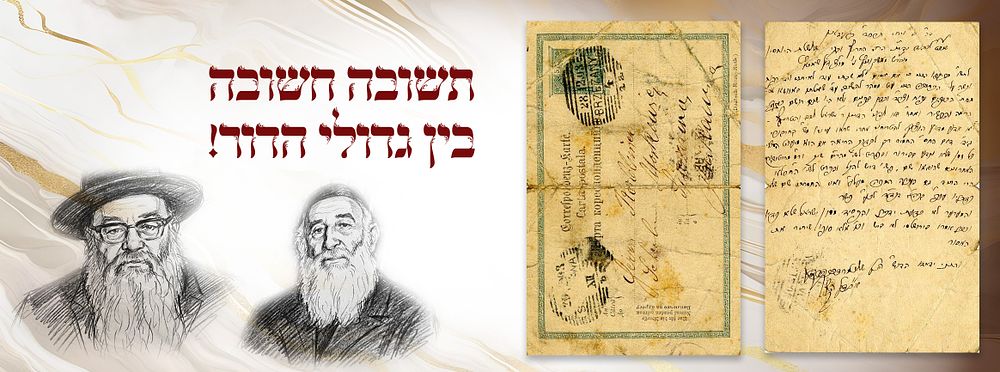
“And the objector speaks without understanding” — an important responsum by one of the greatest halakhic authorities of Galicia, the Maharsham of Brezan, addressed to the miracle-working holy Admor Rabbi Shalom of Shatz - Rare and important halakhic responsum, entirely in the author’s own hand and bearing the signature of one of the foremost decisors of Galicia, Rabbi Shalom Mordechai Schwadron, author of Responsa Maharsham. The responsum is addressed to the renowned Admor Rabbi Shalom of Shatz, whose grave in London is a well-known site of salvation. Brezan, 3rd of Parashat Vayeḥi, 1904. This is a fundamental and significant responsum that was not printed in Responsa Maharsham (it was only recently published in Torah periodicals from this very manuscript). The responsum addresses a common issue of the period—fattened geese with slight injury beneath the wing. The Maharsham examines the matter thoroughly, addressing both halakhah and prevailing custom: “I do not understand why it was necessary to trouble me, after his own eyes saw what I wrote in my works… for even the Ḥatam Sofer was stringent only to examine the lung… and especially according to the views of the Maharam Schick and Rabbeinu Meir of Rothenburg… it is certainly permissible to be lenient, particularly according to the view of the Ḥesed le-Avraham…” A well-known Hasidic tradition relates that the Belzer Rebbe instructed the Maharsham to be the ‘force of leniency’ of his generation and always to seek grounds for lenient rulings. Indeed, in the responsum before us, the Maharsham rules leniently with full force: “And in any case, in such circumstances as here, according to all opinions it is kosher!” The responsum also contains sharp remarks about the rabbi who declared the birds forbidden (named explicitly in the letter): “And the objector speaks without understanding, and caused unjust financial loss to Jews; and it has already been said in the Jerusalem Talmud: one who does not expound properly… in the end will permit what is forbidden.” Postcard, 14 cm. Entire text (approx. 150 words) in the Maharsham’s own hand and with his signature. Condition: good, with fold marks. Biography Rabbi Shalom Mordechai ha-Kohen Schwadron (1835–1911), known as the Maharsham of Brezan, was among the greatest halakhic authorities of his generation and the leading decisor of Galicia. He was universally accepted across the Jewish world; even the Ḥafetz Ḥayyim would consult him on matters of halakhah. He received rabbinic ordination at a very young age from Rabbi Joseph Saul Nathanson of Lemberg. He served as rabbi in Potok-Zloti (1867–1871), then in Yazlovets (where he wrote Mishpat Shalom with his teacher’s approbation), and seven years later was appointed Av Beit Din of Buchach. In 1881 he assumed the rabbinate of Brezan, succeeding Rabbi Isaac Schmelkes, one of the greats of the generation. In his youth he was a Hasid of the Belzer Rebbe; Hasidic tradition relates that the Rebbe instructed him to be a ko’aḥ de-hetera—to rule leniently—except in matters of marriage law and Sabbath observance. He also frequented Rabbi Meir of Premishlan, later becoming a follower of the Rebbe of Chortkov, and in his later years traveled to the Rebbe of Husiatyn. His works include ten volumes of Responsa Maharsham and additional writings. He maintained responsa correspondence with leading rabbis and rebbes of his time. The addressee, Rabbi Shalom Moskowitz of Shatz (1878–1958), descended from the Maggid of Zloczow, was a great scholar in revealed law, halakhah, and Kabbalah, and authored halakhic works. In his youth he was ordained by the Maharsham, who praised him highly. In 1929 he moved to London, became known as the Shatzer Rebbe, and gained renown as a worker of salvations. In his will he promised to intercede in Heaven for all who would visit his grave, accept upon themselves to strengthen their observance of the commandments, and light candles. His grave became a focal point for pilgrims, with many reports of open miracles. (See: Encyclopedia of Hasidism, vol. III, pp. 661–662.)