Bidspirit auction | “May Blessing Never Depart from
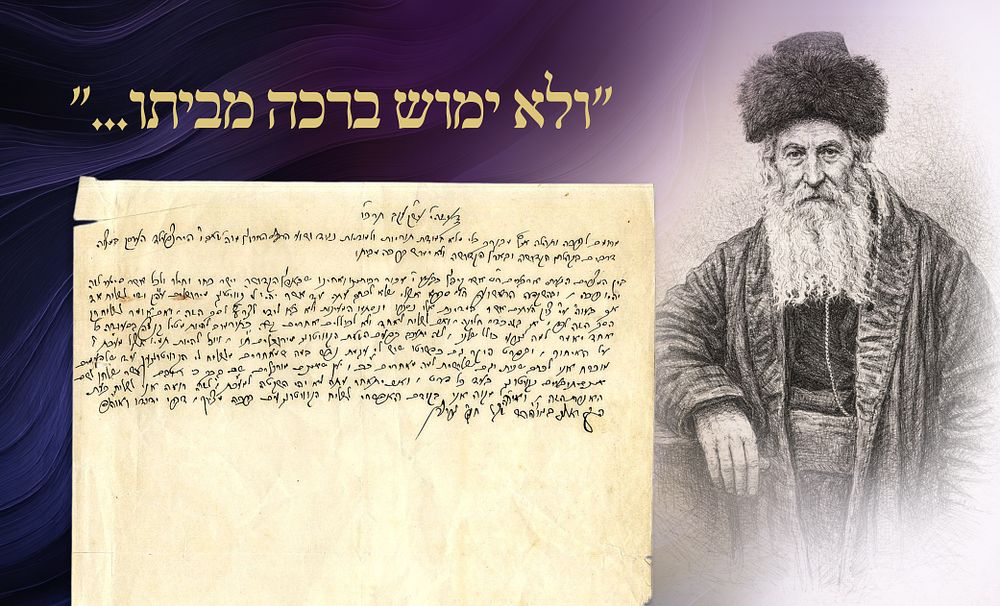
“May Blessing Never Depart from His Household” — Autograph Letter of the Wonder-Working Tzaddik, Rabbi Eliyahu Gutmacher, Known as “The Tzaddik of Graetz” - Important Autograph Letter (c. 200 words) by the Wonder-Working Tzaddik, Rabbi Eliyahu Gutmacher of Graetz Graetz (Grätz), ערב שבת קודש Parashat Eikev, 1866 A significant letter (approx. 200 words), entirely in the holy hand and bearing the signature of the famed miracle-worker, Rabbi Eliyahu Gutmacher — one of the foremost disciples of Rabbi Akiva Eiger — whose name was renowned throughout Germany, Poland, and Lithuania as “the Tzaddik of Graetz.” His amulets and blessings were said to effect wonders as in earlier generations, and his manuscripts were regarded as possessing segulah value. From the letter it emerges that the Tzaddik of Graetz, like many rabbinic leaders of the era, served as a collector of funds for the communities of the Holy Land on behalf of local congregations. He describes his many burdens in arranging the dispatch of kvittungen (receipts) to each donor through his agency. The letter is addressed to Rabbi Ze’ev Y. Hirtzfeld, who sent forty Reichsthaler from members of his community for the poor of Eretz Israel. Unlike other communities, where a collective receipt was issued, this congregation demanded an individual receipt for each donor — causing delay in the return of confirmations from the Holy Land. Historical Context At the outset, the Graetzer alludes to “the distress of the times, when in these lands the wellsprings have been closed and sealed” — an apparent reference to the harsh conditions following the January Uprising (1863), brutally suppressed by the Russian Empire and followed by repression, decrees, and exile. In this letter he elaborates on the mechanisms of fundraising for the various kollel institutions in the Holy Land, the difficulties encountered, and his anguish over delays in forwarding receipts to donors abroad. Unlike many contemporary rabbinic leaders who collected funds for the kollelim of their own native regions, it appears from this letter that the Tzaddik of Graetz distributed funds impartially among all the kollelim: “This sum alone is insufficient for division — and if it were sent to one and not to the other kollelim, it would be difficult not to arouse jealousy at the table; each would say, ‘Why should our kollel be diminished?’” Already at the beginning of the letter, the Tzaddik of Graetz — whose blessings were reputed never to return empty — bestows generous blessings: “Exalted in blessing and praise… a leader and nobleman… may blessing never depart from his household.” The Author Rabbi Eliyahu Gutmacher (1796–1874), Av Beit Din of Graetz, was among the great tzaddikim of his generation and one of the earliest disciples of Rabbi Akiva Eiger in Posen. A singular and wondrous personality of the past two centuries, he became known throughout the Torah world as “the Tzaddik of Graetz.” Tens of thousands sought his blessings and salvation, to the extent that he was compelled to publish notices in contemporary newspapers requesting that the crowds desist. Even the Gerrer Rebbe, author of Sefat Emet, sought his blessing. He was renowned for his profound devotion to the settlement of the Land of Israel and labored greatly for the support of its inhabitants. Contemporary descriptions include: “The holy and pure gaon, famed throughout the world for his awe of Heaven and sanctity, a divine kabbalist” (author of Sho’el u-Meshiv), and “A true gaon, the light of Israel and its holy one, its chariot and horsemen” (Michtav Sofer). Physical Description: [1] sheet of paper, 29 × 22 cm. Entirely autograph and signed by the Tzaddik of Graetz. Condition: Good. Fold marks. Minor marginal tears.