Bidspirit auction | A Historically Significant Letter from
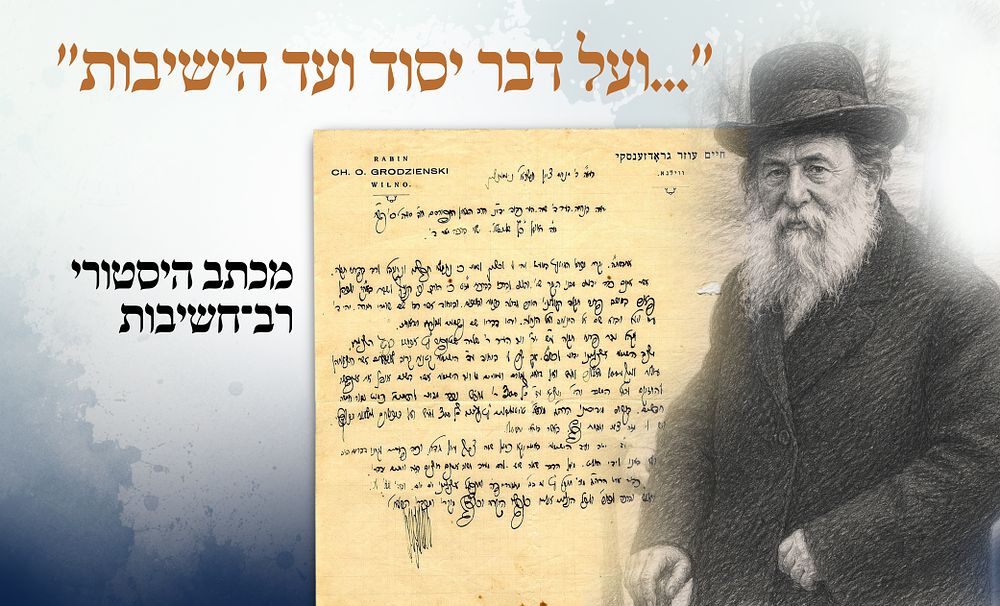
A Historically Significant Letter from Maran Rabbi Chaim Ozer Grodzenski to the Chief Rabbi of Petach Tikvah. Vilna, 1934 - An exceptionally important letter of the highest historical significance, entirely handwritten and signed by Maran Rabbi Chaim Ozer Grodzenski, the undisputed leader of Lithuanian Jewry and foremost halachic authority of the pre-Holocaust generation, whom the revered Chafetz Chaim famously referred to as “Nasi Yisrael” (“Prince of Israel”). Vilna, 4 Menachem Av 5694 [1934]. The letter was addressed to Rabbi Reuven Katz, Chief Rabbi of Petach Tikvah, on the occasion of his appointment as rabbi of the colony. At the very outset, Rabbi Chaim Ozer warmly congratulates the newly appointed rabbi and expresses his special regard for Petach Tikvah, The leader of world Jewry, writing from Vilna while maintaining influence throughout Eretz Israel, describes it as: “The largest colony, both in quantity and in quality!” Rabbi Chaim Ozer also mentions Rabbi Shlomo Stampfer, chairman of the colony’s governing committee and one of the central figures in the development of Petach Tikvah and its institutions. Another major historical subject discussed at length in the letter is the severe plight of the yeshivos in Europe during the years of the Great Depression. Rabbi Chaim Ozer describes the desperate condition of the smaller yeshivos throughout Poland and Lithuania and writes with evident pain: “What troubles me particularly is the situation of the smaller yeshivos, nearly forty in number, whose expenses continue to mount, while there is no agreed-upon body responsible for their support. Under the present crisis, it is simply impossible to sustain them.” These words were written at the height of the global economic depression that began in the United States and rapidly spread throughout Europe. Here we have a rare and authentic testimony from the leading Torah authority of the generation regarding the economic catastrophe that struck the yeshivah world and the genuine fear that dozens of institutions might collapse. The letter also contains another remarkable historical revelation—Rabbi Chaim Ozer’s reservations concerning the establishment of a Vaad HaYeshivos in America: “Regarding the establishment of a Vaad HaYeshivos in America, the matter certainly requires much deliberation. We have discussed it on numerous occasions, yet have not reached a final decision.” Toward the conclusion of the letter, Rabbi Chaim Ozer adds a personal note concerning Rabbi Katz’s family: “Your honored brother resides here. He prays with us every day, and thank G-d he is well.” He concludes with his blessing of friendship and respect: “Peace and blessings to his honored Torah and to all those associated with him... as to his precious soul and as to the soul of one who knows and honors him, Chaim Ozer Grodzenski.” Description [1] page, approximately 28 × 21 cm. Official stationery. Entirely handwritten and signed by Maran Rabbi Chaim Ozer Grodzenski. Condition: Good. Age stains, filing holes, fold marks, and minor marginal tears in the blank margins. Biography Rabbi Chaim Ozer Grodzenski (1863–1940), Rabbi of Vilna and author of the classic responsa work Achiezer, was the supreme spiritual leader of Eastern European Jewry in his generation. His influence extended far beyond the realm of halachic decision-making. He stood at the forefront of rescue efforts, educational initiatives, and support for the yeshivah world, serving as the primary address for rabbis, roshei yeshivah, and Jewish communities throughout the world. His stature was so singular that contemporaries viewed him as the de facto leader of the Jewish people. Rabbi Reuven Katz (1880–1963), author of Degel Reuven, was among the most prominent rabbis of the Land of Israel. For decades he served as Chief Rabbi of Petach Tikvah, a position considered at the time one of the most prestigious and influential rabbinic posts in the country. It is a rare document offering a direct glimpse into the leadership of Maran Rabbi Chaim Ozer during his final years, when his influence extended across the entire Jewish world.