Bidspirit auction | Manuscript. A Collection of Profound
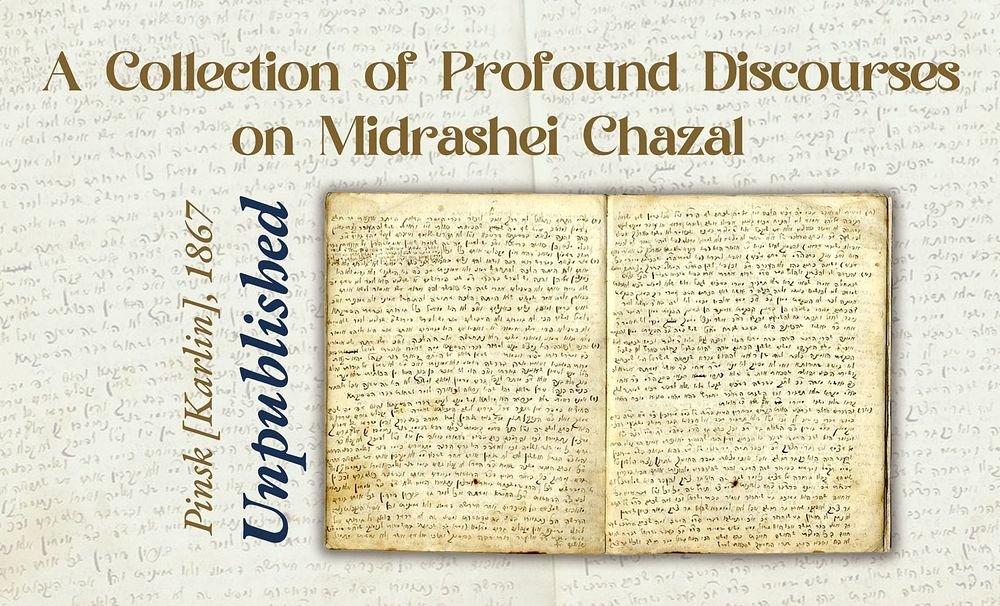
Manuscript. A Collection of Profound Discourses on Midrashei Chazal and Talmudic Topics (Babylonian and Jerusalem Talmud) — Pinsk [Karlin], 1867. Unpublished - On the title page, the author inscribed the principal title “Bavel” (“Babylon”), adding in parentheses an explanation based on the statement of Chazal in Tractate Sanhedrin (24a): “What is Bavel? Rabbi Yochanan said: Mixed with Scripture, mixed with Mishnah, mixed with Talmud.” The manuscript contains approximately fifteen lengthy and substantial treatises, almost all devoted to profound analyses of Midrashei Chazal and complex Talmudic passages, carefully organized and divided into internal chapters. Contents of the Manuscript: Treatise I: A profound exposition of the verse: “But as truly as I live, all the earth shall be filled with the glory of Hashem” (Numbers 14:21). Treatise II: An extensive exposition of the verse: “And Avner was very angry at the words of Ish-Bosheth and said: Am I a dog’s head that belongs to Judah?” (II Samuel 3:8). Treatise III: An analysis of the verse: “And he distributed among all the people, among the entire multitude of Israel, from man to woman, to each person a loaf of bread, a portion of meat, and a cake” (II Samuel 6:19). Treatise IV: A comprehensive exposition of Psalm 132, divided into ten chapters. Treatise V: A scholarly analysis of the opening Mishnah of the second chapter of Tractate Chagigah: “One may not expound the laws of forbidden relations before three, nor the Account of Creation before two, nor the Divine Chariot before one, unless he is wise and understands of his own knowledge…” Divided into five chapters. Treatise VI: An exposition of the Baraita cited in Masechet Soferim concerning the verse: “For I am sick with love.” Treatise VII: An extensive treatment of the difficult Talmudic passage in Gittin 45a: “That slave who fled from outside the Land to the Land of Israel.” Divided into ten chapters. Treatise VIII: A direct continuation of the previous section, devoted entirely to the intricate halachic issue of accepting converts from Ammon and Moab. Divided into six chapters. Treatise IX: A classic Talmudic study resolving the famous Tosafot in Yoma 9a (s.v. Ve-lo) concerning the number of High Priests who served during the First Temple period. Divided into four chapters. Treatise X: An exposition of the passage in Sanhedrin 58b: “Rav Chisda said: A Canaanite slave is permitted to his mother and permitted to his daughter.” Divided into six chapters. Treatise XI: A study of the Jerusalem Talmud (Shevi’it, chapter 6): “Rabbi Yehoshua ben Levi said: ‘And Yiftach fled from his brothers and dwelt in the land of Tov’—this is Susita. Why was it called Tov? Because it was exempt from tithes.” Treatise XII: A profound exposition of Bereishit Rabbah (Parashah 42): “All these joined together in the Valley of Siddim. It was called by three names: Valley of Siddim, Valley of Shaveh, and Valley of Sukkot.” Treatise XIII: An exposition of Bereishit Rabbah (Parashah 53): “And the child grew and was weaned. Rabbi Hoshaya Rabbah said: He was weaned from the evil inclination.” Treatise XIV: An exposition of Bereishit Rabbah (Parashah 44) concerning: “A stranger in a land not theirs.” Treatise XV: An analysis of the Mishnah in Avot, chapter 4: “Minimize business activity and occupy yourself with Torah… If you neglect the Torah, many causes for neglect will confront you; but if you labor in Torah, there is abundant reward to be given to you.” h.