Bidspirit auction | Autograph Manuscript of a Complete
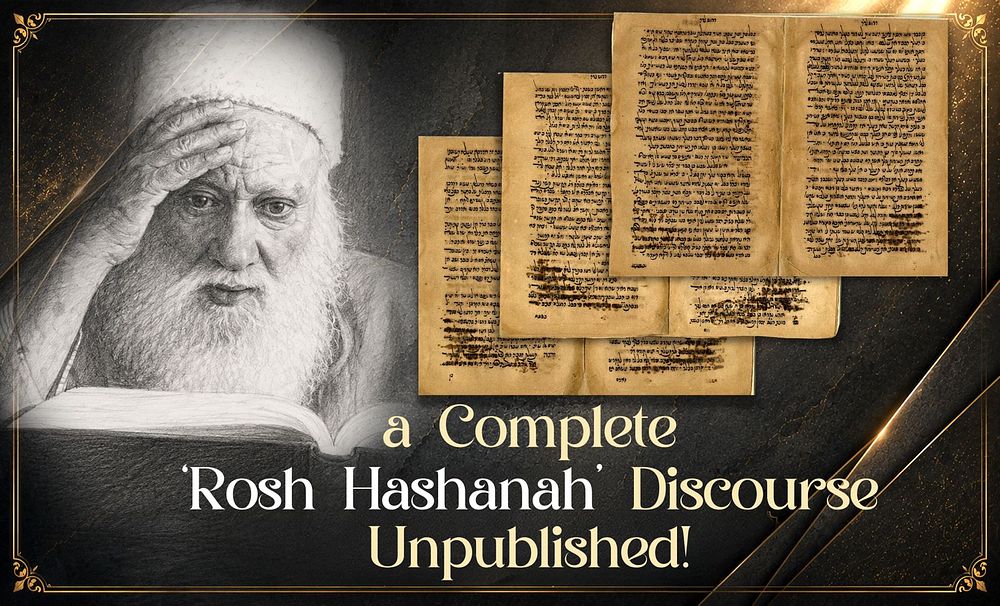
Autograph Manuscript of a Complete Rosh Hashanah Discourse by the Renowned Kabbalist Rabbi Yehudah Fattaya. Unpublished! - Autograph Manuscript for Rosh Hashanah by the Renowned Kabbalist Rabbi Yehudah Fattaya – An Unpublished Discourse Combining Halachah, Kabbalah, and Aggadah. A complete and profound Rosh Hashanah discourse, authored by the illustrious kabbalist Rabbi Yehudah Fattaya. The manuscript is structured around a series of penetrating questions on passages from the Torah and Chazal, each resolved through an original synthesis of Nigleh, Kabbalah, Halachah, and Aggadah. The discourse opens with the Talmudic teaching: ”Why is a ram's horn used? The Holy One, blessed be He, said: Blow before Me with a ram's horn so that I may remember the Binding of Isaac... and I will regard it as though you yourselves had been bound before Me.” Rabbi Fattaya asks why Chazal found it necessary to add the words ”as though you yourselves had been bound.” If the purpose of the shofar is simply to evoke the merit of the Akeidah, why is that alone insufficient? Drawing upon the Gemara in Berachos (10a), which contrasts reliance upon one's own merits with reliance upon the merits of others, Rabbi Fattaya develops a profound spiritual principle: only when a person first demonstrates genuine self-sacrifice through repentance and devotion can he merit that Hashem remember the merit of the Akeidas Yitzchak on his behalf. Thus, the shofar transforms its blower into one who is regarded ”as though he himself had been offered” before invoking the merit of the Patriarchs. The author then addresses another fundamental question: Where does the Torah explicitly reveal that Rosh Hashanah is the Day of Judgment? Since the Torah mentions only ”Yom Teruah” and ”Zikhron Teruah, ” he turns to verses in Tehillim, offering an extensive interpretation of the verse: ”Your eyes saw my unformed substance, and in Your book they were all written.” He explains that this verse alludes to Adam HaRishon, who was created as a golem on Rosh Hashanah and judged on that very day, establishing the festival as the annual Day of Judgment. The discourse continues with another striking observation. Whereas the Torah introduces the festival offerings of the other Yamim Tovim with the expression ”u'vayom” (”on the day”), the Musaf of Rosh Hashanah omits this phrase. Rabbi Fattaya explains that animal offerings are valid only by day, whereas the essential offering of Rosh Hashanah is the offering of the human soul through repentance, prayer, and heartfelt devotion—an offering that reaches its greatest intensity during the night, as reflected in the verse: ”Arise, cry out in the night... pour out your heart like water.” On this basis, he explains the custom of engaging in teshuvah, confession, and spiritual preparation already on the first night of Rosh Hashanah, thereby sweetening the Divine judgment before the day itself. He connects this teaching with the writings of the Arizal in Sha'ar HaKavanos, who taught that one who does not weep on Rosh Hashanah reveals that his soul is not spiritually awakened, for the soul instinctively senses the awe of the Heavenly judgment. Rabbi Fattaya concludes the discourse with a series of illuminating parables demonstrating the profound power of free choice, sincere repentance, and the human capacity to transform strict judgment into complete Divine mercy in a single moment of genuine return. 10 pages. 17.5 cm. Condition: Good. Minor ink stains. Modern paper binding.