Bidspirit auction | “See the Difference Between My
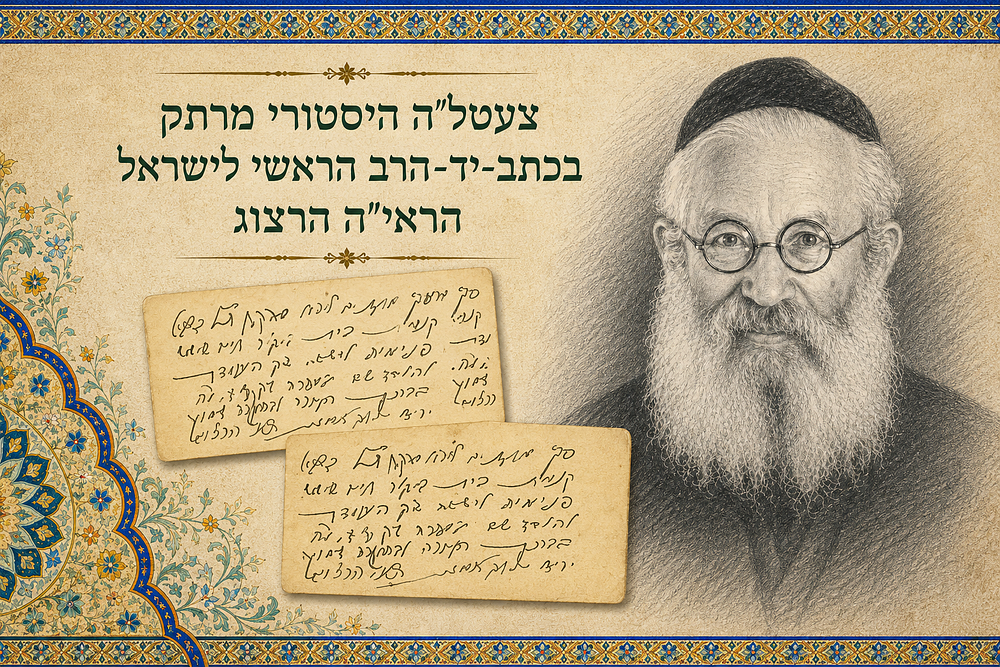
“See the Difference Between My Son and My Father-in-Law” — A Fascinating Historical Note in the Handwriting of Chief Rabbi Rabbi Yitzhak Isaac HaLevi Herzog - A Fascinating Historical Letter by the Chief Rabbi of Eretz Israel, Rabbi Yitzhak Isaac HaLevi Herzog. Jerusalem, 1940 An intriguing historical letter, entirely handwritten and signed by the Chief Rabbi of Eretz Israel, Rabbi Yitzhak Isaac HaLevi Herzog. Written on his official visiting card in Jerusalem, 3 Adar II, 5700 [1940]. The letter is addressed to: “My beloved friend, the eminent rabbi, one of Jerusalem’s distinguished scholars and honored leaders, ” Rabbi Zalman Shachor. The text reads: “I respectfully request that you influence his son and brother-in-law, the trustees of the Rokach Fund, to fulfill my request promptly, namely, to grant the sum of 200 lira from the aforementioned fund for the purchase of a house in Mekor Chaim, which will serve as a dormitory for the holy yeshivah that is soon, with God’s help, to be established there.” The letter concludes: “With blessings of Torah and deepest esteem, your friend, Yitzhak Isaac HaLevi Herzog.” It is difficult not to be deeply moved when standing before this document and contemplating the immeasurable contrast between generations. The Chief Rabbi of Eretz Israel, one of the most revered and distinguished figures in the Jewish world, saw no diminution of his dignity in personally writing a brief note to a Jerusalem communal activist, asking him to exercise influence with “his son and brother-in-law” in order to secure a grant of merely 200 lira for the purchase of a dormitory for a holy yeshivah soon to be established in Jerusalem. One cannot help but compare the grandfather, Chief Rabbi Yitzhak Isaac HaLevi Herzog, who personally exerted himself on behalf of a Torah institution, with his grandson who today bears his full name — Israeli President Isaac [Yitzhak Isaac HaLevi] Herzog. While the grandfather considered it his duty to intervene personally for the benefit of the Torah world, the grandson has chosen to remain publicly silent at a time when the yeshiva world faces one of the most significant challenges in its history since the establishment of the State of Israel. What we have before us is far more than a historical document relating to the early development of the Mekor Chaim Yeshivah. It is also a rare window into the worldview of previous generations of Jewish leadership and the central place that Torah occupied in their public and spiritual priorities. [1] Official visiting card, 8 × 5 cm, written on both sides. Condition: Good.