Bidspirit auction | Pair of Letters from Leading
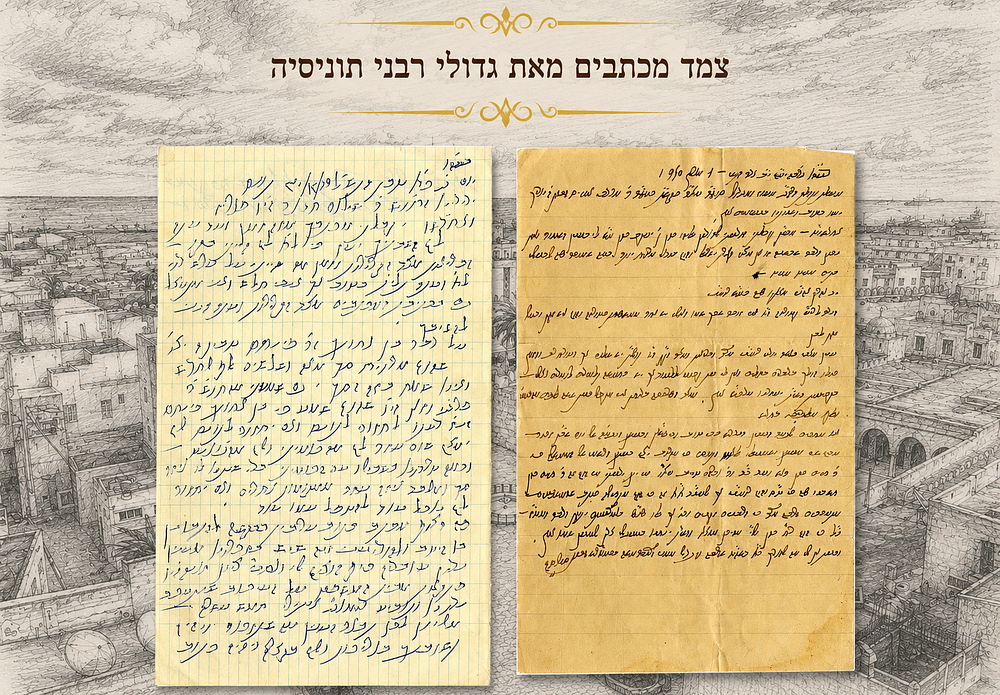
Pair of Letters from Leading Rabbis of Tunisian Jewry – Rabbi Mordechai Amies HaKohen and Rabbi Moshe HaKohen Draihem. 1970 - A pair of interesting letters authored by two of the foremost rabbinic leaders of Tunisian Jewry, dealing with communal administration, education, and Torah scholarship. 1. A letter from Rabbi Mordechai Amies HaKohen zt”l, Chief Rabbinical Judge of Tunis, concerning several communal regulations and public matters relating to the governance and organization of the Jewish community. 2. A letter from Rabbi Moshe HaKohen Draihem zt”l, in which he describes his educational activities and discusses the students studying under his guidance and their progress in Torah learning. Rabbi Mordechai Amies HaKohen was one of the most prominent rabbinic authorities of twentieth-century Tunisia and served as Chief Rabbinical Judge of Tunis for many decades. He was the revered teacher and mentor of numerous leading Tunisian sages, among them the saintly Rabbi Matzliach Mazuz zt”l and Rabbi Rahamim Hai Hwita HaKohen zt”l. His stature within Tunisian Jewry was unparalleled, and members of the community from all walks of life turned to him for guidance in both spiritual and practical matters. Through his close relationship with the authorities, Rabbi Amies worked tirelessly to strengthen Jewish religious life and improve the standing of Jews throughout Tunisia. Contemporaries viewed him as a fatherly figure to the entire community, bearing the burdens of the public with exceptional devotion, “as a nurse carries a child.” Rabbi Moshe HaKohen Draihem zt”l was among the leading Torah scholars of Djerba. After immigrating to the Land of Israel, he served as a rabbinical judge on the Rabbinical Court of Tiberias, where he continued to teach Torah and educate students. These two documents offer a fascinating glimpse into the religious, educational, and communal life of Tunisian Jewry in the modern era and highlight the leadership of two of its most distinguished rabbinic figures. [2] Letters. Approximately 14 × 22 cm. Very fine condition.