Bidspirit auction | A Dialogue Between Giants of
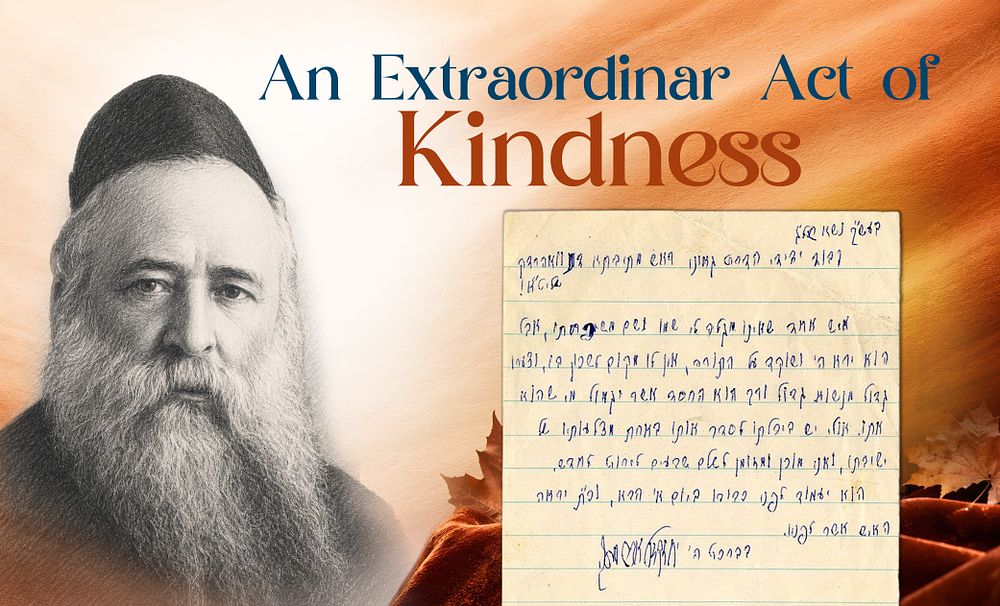
A Dialogue Between Giants of the Mussar Movement!! A Stirring Letter from the Great Rabbi Yechezkel Abramsky to the Rosh Yeshiva of Novardok – An Extraordinary Act of Kindness - An extraordinary letter, entirely handwritten by the great Rabbi Yechezkel Abramsky, author of the monumental Chazon Yechezkel series on the Tosefta. [Jerusalem], Friday, Parashat Naso, [8 Sivan] 1973. An exchange between two leading figures of the Novardok Mussar school – the letter is addressed to Rabbi Abramsky’s close friend from his youth and fellow student at the Novardok Yeshiva, Rabbi Ben Zion Brook, who later became head of the Novardok Yeshiva in Eretz Israel. Rabbi Yechezkel Abramsky was renowned first and foremost for his extraordinary Torah scholarship, as the great commentator on the Tosefta and author of Chazon Yechezkel. At the same time, he held some of the most distinguished rabbinic positions of his generation – as rabbi of the important city of Slutsk, head of the London Beth Din, and a leader of the Slabodka Yeshiva. Yet another aspect of his towering personality has been somewhat overshadowed by his immense Torah stature: he was a distinguished product of the Mussar movement and a close disciple of the “Alter of Novardok, ” who even entrusted him with the guidance and education of his own sons. This aspect of Rabbi Abramsky’s character is revealed remarkably in the present letter. A Jewish man approached Rabbi Abramsky and asked for his assistance. Yet this individual refused to reveal his identity – neither his first name nor even his surname. It was an unusual request, bordering on audacity: a man stood before one of the leading Torah authorities of the generation, asking him to exert himself on his behalf, while simultaneously refusing even to disclose his name. Such behavior might ordinarily have been sufficient reason to give the anonymous petitioner a small donation and send him on his way. Rabbi Yechezkel Abramsky, however, reacted very differently. Not only did he refuse to dismiss the man, but on Friday, shortly before Shabbat, he sat down and took the trouble to write to his longtime friend, Rabbi Ben Zion Brook, head of the Novardok Yeshiva, asking whether he could arrange a position for the anonymous man “in one of the branches of his yeshiva.” And even this was not enough. Rabbi Abramsky undertook to pay the man’s salary from his own pocket, month after month, with no stated time limit, in the considerable amount of seventy Israeli pounds per month. All this for a man whom he did not know at all and who refused even to identify himself! The result is a profoundly moving ethical document. Behind the figure of the eminent Torah scholar, celebrated rabbi and dayan, and great commentator on the Tosefta, we encounter the disciple of the Alter of Novardok in the fullest sense: not content merely to provide temporary charity, but willing to exert himself to secure a respectable livelihood for another person; to approach an old friend on his behalf on the eve of Shabbat; and even to assume responsibility for his regular salary – without knowing the name of the man for whom he was acting. Were these events not recorded in black and white in the letter itself, one might easily imagine them to be one of the remarkable stories told about the great Torah leaders of previous generations. Here, however, they are recorded in Rabbi Yechezkel Abramsky’s own handwriting – a vivid and moving testimony to the teachings of Novardok, not merely as expressed in works of Mussar, but as embodied in everyday life. [1] paper leaf, 17 cm. Very good condition. Rabbi Yechezkel Abramsky [1886–1976], author of Chazon Yechezkel, was one of the foremost leaders of Orthodox Jewry and among the leading Torah scholars of his generation. He studied at the Novardok Yeshiva, where he became close to the “Alter of Novardok” and, at his request, even studied with his sons. He also studied at the Telz Yeshiva, the Ramailes Yeshiva, and in the kibbutz of Rabbi Chaim Ozer Grodzinski in Vilna. He received rabbinic ordination at the age of seventeen and served as rabbi in several Lithuanian communities, including Slutsk. He later served as head of the London Beth Din. He was a member of the Moetzes Gedolei HaTorah, president of the Vaad HaYeshivos, and one of the leaders of the Slabodka Yeshiva. His great scholarly undertaking, the ten-volume commentary on the Tosefta, Chazon Yechezkel, became one of the most celebrated Torah works of recent generations.