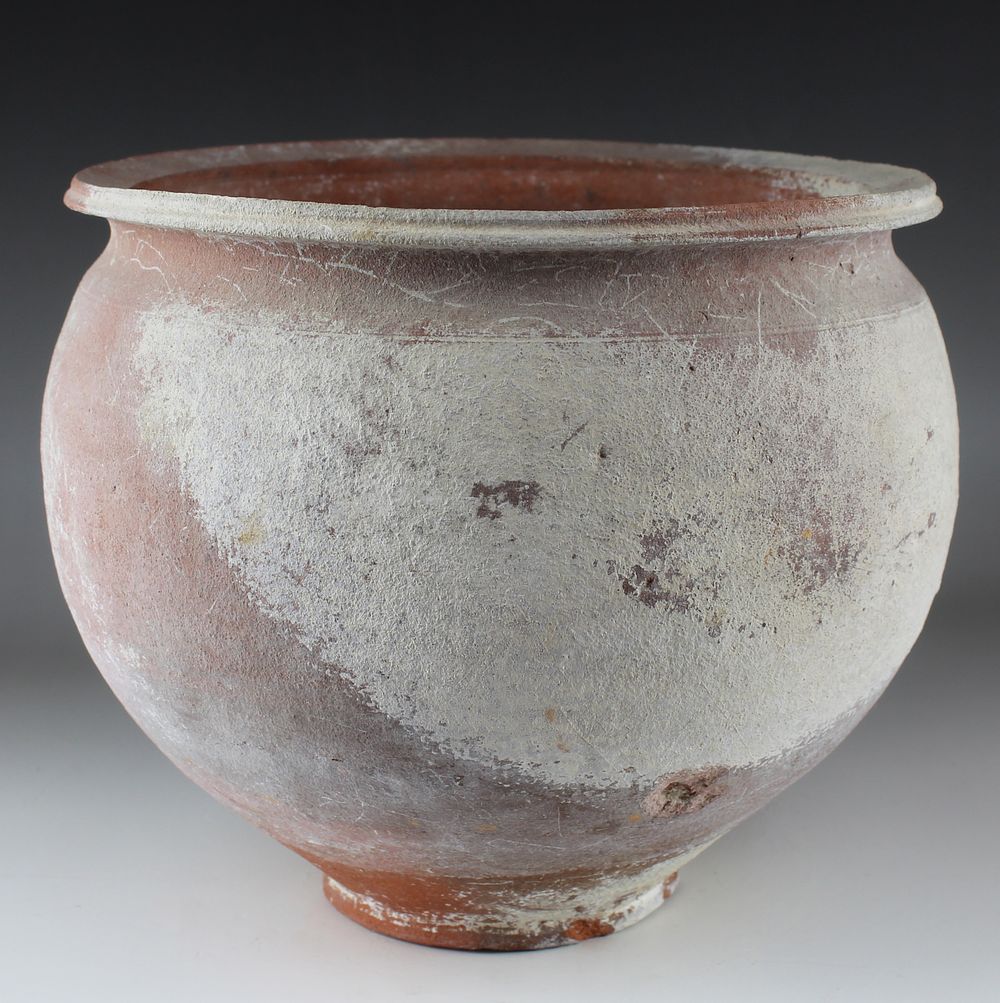
Bidspirit auction | HUGE Roman pot
HUGE Roman pot - ITEM: Pot MATERIAL: Pottery CULTURE: Roman PERIOD: 1st - 3rd Century A.D DIMENSIONS: 183 mm x 223 mm CONDITION: Good condition PROVENANCE: Ex Dutch private collection, acquired between 1980 - 1990 Comes with Certificate of Authenticity and Export Licence. If you are from outside the European Union, we will have to apply for the export licence again for your country, this takes 3 to 5 weeks and has a cost of 5% of the hammer price, this amount will be added to the final invoice. Roman pots, essential to daily life in ancient Rome, were crafted in various shapes, sizes, and materials for uses ranging from cooking to storage and serving. Common pottery types included jars, cooking pots, storage amphorae, and tableware, with many vessels made from terracotta due to its affordability and versatility. Everyday pots, often found in domestic contexts, were simple in design with minimal decoration, reflecting their utilitarian purpose. They were typically mass-produced in regional workshops, making pottery accessible to a wide demographic across the Empire. Different types of clay were used in specific regions, which often gave Roman pots distinctive characteristics and finishes depending on their geographical origin. Roman pottery, especially the fine red-slip tableware known as terra sigillata, was also an indicator of social status and aesthetic taste. This type of pottery featured smooth, glossy surfaces and sometimes intricate stamped designs or reliefs, showcasing scenes from mythology or daily life. Terra sigillata was prized for its appearance and durability and became a symbol of Roman influence as it was widely traded across the Empire. The manufacture and trade of such fine wares underscore the sophistication of Roman pottery production techniques, including wheel-throwing, kiln firing, and even early forms of assembly-line production to meet high demand. The discovery of Roman pots in archaeological sites across Europe, North Africa, and the Middle East provides insight into Roman trade routes, daily customs, and economic organization.