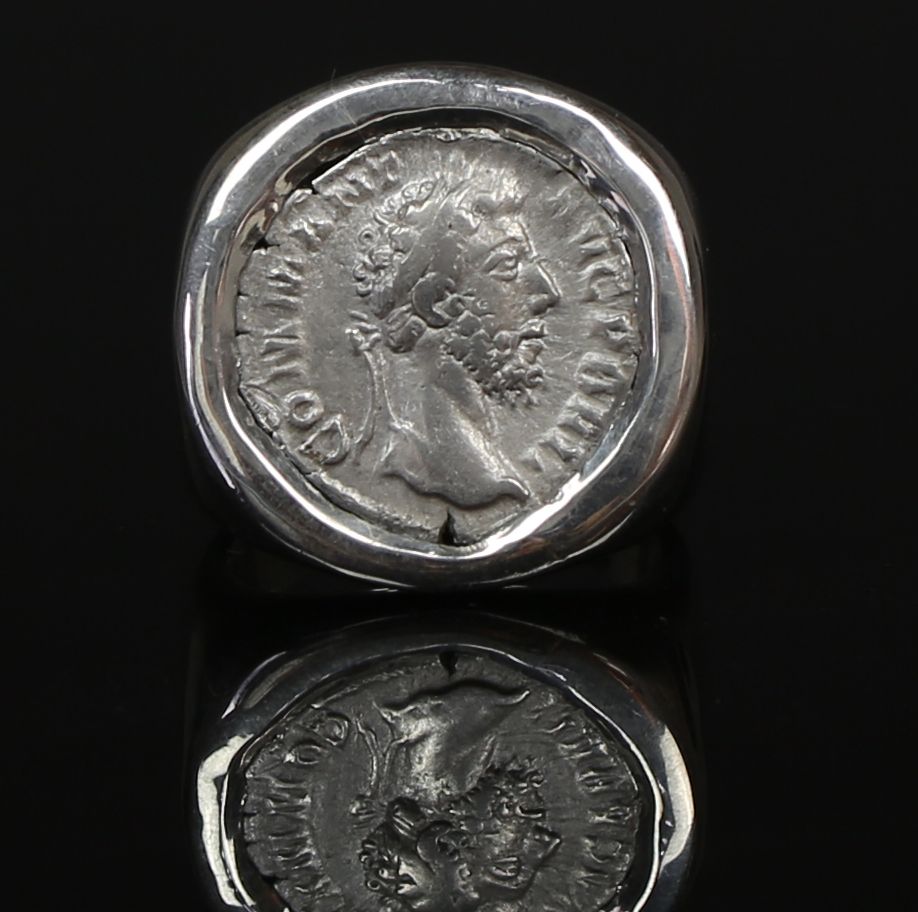
Bidspirit auction | Ring with Commodus denarius
Ring with Commodus denarius - ITEM: Ring with Commodus denarius. Obverse: COMM ANT AVG P BRIT, laureate head right. Reverse: P M TR P X IMP VII COS IIII, Jupiter seated left olding Thunderbolt and scepter. References: RSC 472a, RIC 01, BMC 151 MATERIAL: Silver CULTURE: Roman PERIOD: 180 - 192 A.D DIMENSIONS: ES 18, F 58, USA 8,5 , 25,8 gr CONDITION: Good condition. Original coin within a modern handmade silver ring. PROVENANCE: Ex Spanish private collection, bought in Austrian auction house (Coin) Comes with Certificate of Authenticity and Export Licence. If you are from outside the European Union, we will have to apply for the export licence again for your country, this takes 3 to 5 weeks and has a cost of 5% of the hammer price, this amount will be added to the final invoice. Commodus, Roman emperor from 180 to 192 CE, was a controversial figure whose reign marked a significant turning point in the history of the Roman Empire. He was the son of Emperor Marcus Aurelius, a philosopher-king whose rule represented the ideals of Stoicism and duty. Unlike his father, Commodus was notorious for his erratic behavior, vanity, and indulgence. Early in his reign, Commodus abandoned the rigorous administrative practices of his predecessors, choosing instead to enjoy a life of luxury and leaving governance in the hands of his favorites and corrupt officials. His disregard for the responsibilities of rule and the welfare of the empire eroded much of the stability that had been built during the years of the ”Five Good Emperors.” One of Commodus's most distinctive and troubling traits was his obsession with portraying himself as the Roman hero Hercules. Commodus frequently appeared in public dressed as Hercules, donning a lion's skin and carrying a club, symbols traditionally associated with the mythical hero. He even renamed Rome’s months and institutions in his own honor, reflecting a delusion of grandeur and desire to be worshipped as a god. Commodus went so far as to rename Rome ”Colonia Commodiana, ” or ”the Colony of Commodus, ” in an attempt to imprint his legacy on the city itself. His self-deification and extreme measures to be seen as a heroic figure not only alienated the Senate but also deeply disturbed the Roman people, who viewed his actions as sacrilegious and destabilizing. Commodus’s rule is often seen as the beginning of Rome’s decline, as his mismanagement and indulgent behavior depleted the empire's resources and set a precedent for unchecked imperial power. His reign ended violently in 192 CE when he was assassinated in a conspiracy involving his closest advisers, including the Praetorian Prefect and his mistress Marcia.